Turning Knowledge into Experience Through the On-Campus MVS Capstone

From research laboratories to clinical settings, students in the Master of Veterinary Science program gain hands-on experience while developing skills for careers in animal health. 

What does it take to turn classroom knowledge into workplace experience? 

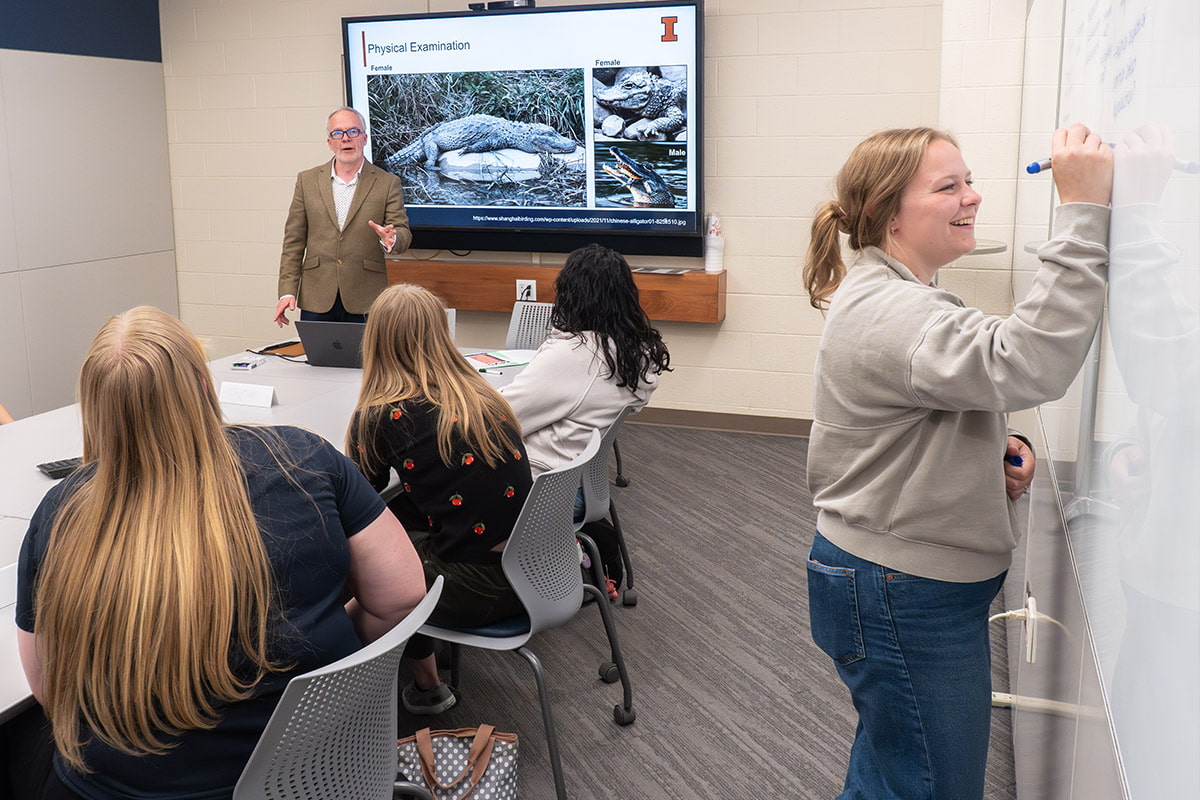
For students pursuing the on-campus Applied Veterinary Science (AVS) major within the Master of Veterinary Science (MVS) degree at the University of Illinois College of Veterinary Medicine, the capstone provides that opportunity. 

Over 24 weeks, students work alongside faculty researchers and professionals on projects addressing real-world challenges in veterinary medicine, animal health, and scientific research. Along the way, they apply what they have learned, develop new skills, and gain experience they can carry into their careers.

Finding the Right Project 

The capstone experience begins well before students start their projects. 

During onboarding, students complete an interest survey to share their career goals, areas of interest, and existing skills. Throughout the first eight weeks of the fall semester, instructors get to know students and help identify projects that align with their interests, abilities, and professional aspirations. 

Projects begin during the second eight weeks of the fall semester and continue throughout the spring, providing 24 weeks of applied experience. 

Before beginning, each student and their project mentor sign a learning contract outlining expectations, responsibilities, and learning objectives. This ensures students understand their role and how their contributions support the larger project.
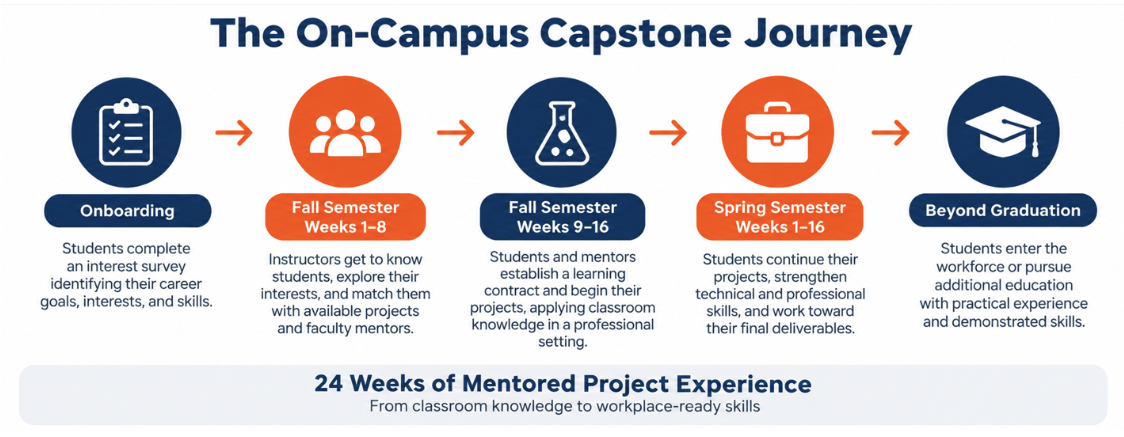
The On-Campus Capstone Journey: a five-stage pathway from onboarding and mentor matching through a 24-week mentored project experience.

Real Projects. Real Experience. 

The range of available projects reflects the many career opportunities within animal health. Students may work in research laboratories, clinical environments, or projects focused on data analysis, animal welfare, and scientific communication. 

Examples of available project areas include: 

  • Clinical medicine and diagnostics: Investigating gastrointestinal disease in horses, evaluating veterinary dermatology techniques, and exploring clinical research questions in small animal medicine. 
  • Wildlife health and animal welfare: Studying American alligator population health and developing evidence-based husbandry recommendations for nonhuman primates. 
  • Biomedical and laboratory research: Investigating cancer vaccine development, antibiotic resistance, infectious diseases, and the effects of environmental contaminants on animal health. 
  • Animal health innovation: Collaborating on the development of a canine rehabilitation device and evaluating new approaches to equine health monitoring. 
  • Livestock health and production: Exploring dairy herd health, infectious disease, and challenges affecting food animal production systems. 

While the projects differ, each provides an opportunity for students to contribute to meaningful work under the guidance of experienced professionals. 

Building Skills Employers Value 

The capstone is about more than completing a research project. It is an opportunity for students to demonstrate the knowledge and professional skills they have developed throughout the MVS program. 

Depending on their project, students may gain experience in laboratory techniques, clinical observation, data collection and analysis, scientific literature review, technical writing, or research presentations. 

Just as importantly, they practice skills that translate across animal health careers: problem-solving, critical thinking, communication, collaboration, time management, and professional accountability. 

Students learn what it means to contribute to a project, meet expectations, navigate challenges, and communicate their findings. 

More Than a Degree 

For students preparing for veterinary school or exploring careers across the animal health industry, the capstone offers something valuable: experience they can discuss with confidence. 

Rather than simply describing what they learned in a course, graduates can point to a project they helped complete, explain their contributions, and demonstrate how they applied their knowledge in a professional setting. 

“I hope students leave with a deeper understanding of how science and innovation address real-world challenges, and greater confidence in their ability to collaborate and develop meaningful solutions to complex problems in animal health.” 

— Dr. Brian Aldridge, Dean of Educational Innovation  

The goal is simple: students leave with more than a master’s degree. They leave with experience, demonstrated skills, and a clearer understanding of where their education can take them. 

Explore the on-campus Applied Veterinary Science major within the University of Illinois Master of Veterinary Science program and discover how learning extends beyond the classroom.


Beyond the Classroom
Stories of learning, discovery, and impact from the Master of Veterinary Science.
Can a Dog’s Own Immune Cells Help Fight Cancer? 

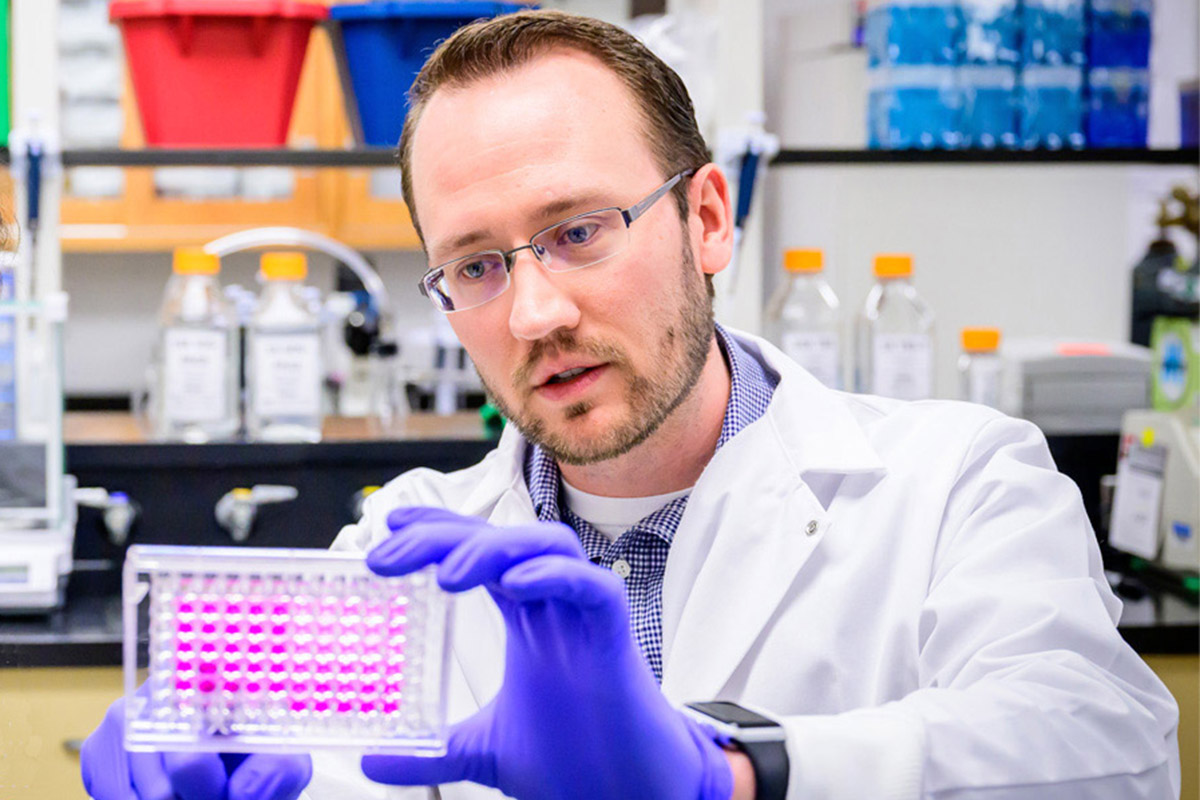
Dr. Matt Berry looking at slide

What if a patient’s own immune system could be trained to recognize and attack cancer? 

That question is helping drive new approaches to cancer treatment, including the development of individualized cancer vaccines. At the University of Illinois College of Veterinary Medicine, Dr. Matthew Berry studies novel cancer therapies in dogs and cats with the goal of improving treatment for companion animals while also contributing to discoveries that may advance cancer care more broadly. 

Master of Veterinary Science student Allison Koesler joined Dr. Berry’s research to work on an important piece of that challenge: developing a more consistent way to generate canine immune cells that could ultimately be used in cancer immunotherapy research. 

Her focus was on the dendritic cell—a powerful immune cell that helps the body recognize threats and activate an immune response. 

Faculty Investigator: Dr. Matthew Berry
Title: Assistant Professor
Department: Veterinary Clinical Medicine
Research Focus: Cancer therapies, comparative oncology, vaccine development and veterinary oncology
Graduate Scholars: Allison Koesler
Degree Program: Master of Veterinary Science
Capstone Research: Phenotypic Variability of Canine Monocyte-Derived Dendritic Cells from Generation Methodology

Research Mission 

As a clinician-scientist, Dr. Berry studies cancer in companion animals to investigate and translate new treatment strategies. 

Dogs and cats naturally develop cancer, providing opportunities to study cancer biology and treatment in veterinary patients. This comparative oncology approach can help researchers investigate promising therapies while working toward better treatment options for companion animals. 

One area of interest is harnessing the immune system to fight cancer. 

Dendritic cells play an important role because they connect the innate and adaptive immune systems. They can recognize and present antigens—including tumor-associated material—to T cells, helping initiate an immune response. 

That ability has made dendritic cells particularly interesting for the development of individualized cancer vaccines. 

But before researchers can reliably use canine dendritic cells in future studies, there is a fundamental problem to solve: 

There is no standardized method for generating them. 

Allison’s Contribution 

Researchers can generate monocyte-derived dendritic cells, or moDCs, in the laboratory, but differences in culture methods can produce cells with different characteristics. 

That variability makes research harder to reproduce and can make it difficult to determine whether differences observed in an experiment are caused by the treatment being studied—or simply by the way the cells were generated. 

Allison worked to help define and validate a more standardized system for producing canine moDCs. 

She compared eight different culture conditions that varied three primary factors: 

  • the type of base media,  
  • whether serum was present, and  
  • the concentrations of the cytokines GM-CSF and IL-4.  

After the cells were generated, the research team used spectral flow cytometry to examine several markers associated with dendritic cell activation, including CD80/86, CD40, CCR7, and MHC II. 

The project also incorporated RNA sequencing to characterize the cells’ transcriptional profiles, identify important functional genes, and examine their similarity to human monocyte-derived dendritic cells. 

What Did the Research Show?

One factor emerged as particularly important: serum. 

Allison’s analysis indicated that whether serum was included in the culture environment had a greater effect on the expression of activation markers than differences in cytokine concentrations. 

That may sound like a small laboratory detail, but standardization matters. 

If researchers generate dendritic cells differently from one experiment to another, it becomes harder to reproduce results and determine whether a potential cancer therapy is actually responsible for the biological changes they observe. 

Understanding which culture conditions produce consistent cells provides a stronger foundation for the experiments that follow. 

Additional studies will be needed to confirm the functionality of the dendritic cells produced under each condition.  

Why This Research Matters 

Developing a new cancer therapy rarely begins with the therapy itself. 

It begins with building reliable systems that allow researchers to test ideas accurately. 

For dendritic-cell-based cancer vaccines, that means first understanding how to consistently generate the immune cells researchers hope to use. 

Dendritic cells are capable of presenting tumor antigens to cytotoxic T cells, making them promising candidates for individualized cancer vaccines designed to generate an immune response against cancer. 

Creating a standardized canine dendritic cell model could therefore support future research into new immunotherapies for dogs with cancer. 

It also fits into the larger promise of comparative oncology. By studying naturally occurring cancers in companion animals, researchers can investigate therapies that may improve veterinary cancer care while also contributing to our broader understanding of cancer biology and treatment. 

For Dr. Berry’s research program, Allison’s work helps build some of the foundational science needed to move those discoveries forward.

Graduate Experience 

For Allison, the project also changed how she imagined her own future in veterinary medicine. 

Her previous experience in cell biology gave her a foundation for understanding the science, but the capstone allowed her to connect concepts she had studied in the classroom with an active veterinary cancer research program. 

She initially approached the experience with some hesitation. 

As the project progressed, that uncertainty was replaced by greater confidence in her ability to contribute to research—and curiosity about where that experience might lead. 

Allison had previously envisioned a career focused primarily on general clinical practice. Her experience in Dr. Berry’s research introduced another possibility: specialization and research could also become part of her future in veterinary medicine. 

More importantly, the experience gave her confidence to approach veterinary school with a greater willingness to explore opportunities outside the path she had originally imagined. 

Her capstone illustrates another side of research in action. Sometimes advancing cancer treatment means testing a new therapy. Other times, it means building the reliable scientific foundation that makes the next discovery possible. 

Beyond the Classroom
Stories of learning, discovery, and impact from the Master of Veterinary Science.
Turning Professional Problems into Capstone Projects

What if your graduate capstone project solved a real problem for you? 

For students in the Livestock Systems Health major of the Master of Veterinary Science degree, that is exactly the idea behind the capstone experience. 

Rather than completing a traditional research project or being assigned a hypothetical problem, students identify a real challenge or opportunity that is meaningful to them and spend two semesters developing and implementing a practical solution. 

For many students, that problem comes directly from their professional experience. 

It might involve introducing a new technology, improving an existing process, developing training or emergency resources, addressing an animal health challenge, or evaluating a new approach within an organization. And despite the name of the major, the capstone does not have to focus specifically on livestock. 

Previous project ideas have explored topics ranging from wearable technology in dogs for precision feeding to virtual fencing for livestock grazing cover crops and approaches to tuberculosis testing in cattle at ports. 

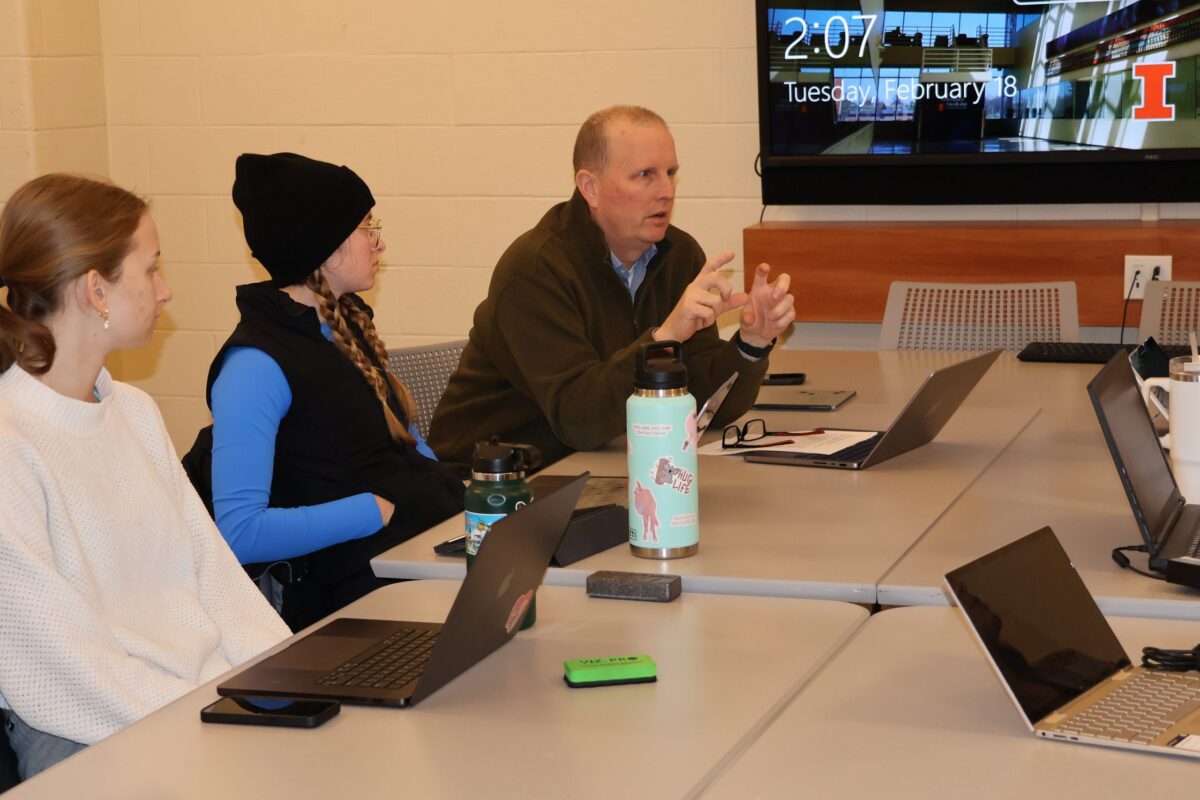
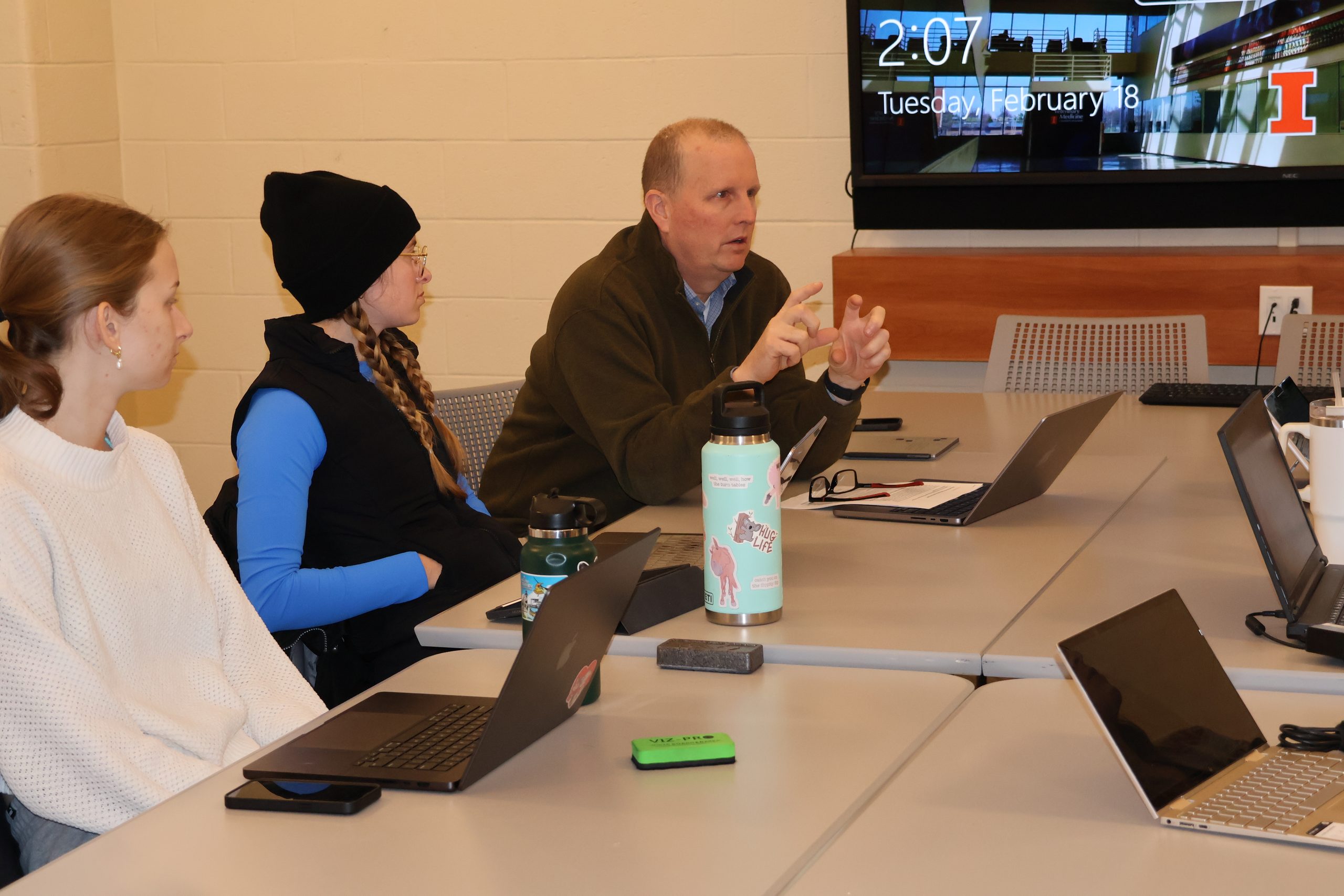
Dr. Lowe discuss projects with students.

Semester One: Turning a Problem into a Plan 

Students don’t need to begin the capstone with a fully developed project. 

The first semester is designed to help them get there. 

During the first six weeks, students work through Harvard Business School cases while building skills in problem framing, stakeholder analysis, feasibility, budgeting, risk assessment, and measuring outcomes. They then apply those same tools to their own project. 

The goal is to move from “Here’s a problem I’m interested in” to a much more important question: 

Is this a meaningful problem that I can realistically address? 

Students work closely with faculty to refine their problem statement and establish a project scope that is both valuable and achievable. 

For students who are currently employed, that process can include their employer. A student may identify an issue within their organization and work with both their employer and faculty advisor to develop a project that provides value in the workplace while meeting the learning objectives of the degree. 

Employer participation, however, is not required. Faculty can also help students determine what resources and partnerships they will need to move a project forward. 

Learning to Lead the Project 

Throughout the capstone, the student serves as the project manager. 

Faculty provide guidance, feedback, and oversight, but students are responsible for moving their projects forward. As the first semester progresses, class sessions transition into working sessions where students develop and refine the different components of their projects. 

By the end of the semester, each student has developed a Statement of Work that defines the problem, objectives, resources, responsibilities, budget, risks, measures of success, and timeline for implementation. 

Before moving forward, students present their plans for feedback from practitioners and faculty and make final revisions. 

The standard is intentionally practical: Is this project credible and executable? 

Semester Two: Putting the Plan into Action 

With an approved plan in place, students move into the second semester ready to implement their projects. 

That progression—from identifying a problem, to evaluating it, to developing a plan, to carrying it out—is what makes the capstone particularly relevant for working professionals. 

Students aren’t simply demonstrating what they have learned in the Master of Veterinary Science program. They are building and honing the skills needed to lead projects, evaluate opportunities, work with stakeholders, manage constraints, and solve complex problems throughout their careers. 

The capstone begins with a problem that matters to the student. 

By the end, they have learned a process they can use to tackle the next one. 

Note: On the side of the text, could we have a table that has some information about the degree such as:  

Master of Veterinary Science –Livestock Systems Health  

  • Designed for mid-career professionals  
  • Develop Project Management skills  
  • Determine your degree path with a flexible curriculum to meet your goals. 

32-credit-hour degree program tailored to advance your skills 


About Beyond The Classroom

Beyond the Classroom is a video series from the University of Illinois College of Veterinary Medicine featuring the real stories of Master of Veterinary Science students, alumni, and faculty.


👉 Talk with our team
👉 Applied Veterinary Science Online
👉 Master of Veterinary Science 
👉 College of Veterinary Medicine

Master of Veterinary Science
2938 Veterinary Medicine Basic Sciences Building
2001 South Lincoln Avenue
Urbana, IL 61802
217-300-7439