What if your graduate capstone project solved a real problem for you?
For students in the Livestock Systems Health major of the Master of Veterinary Science degree, that is exactly the idea behind the capstone experience.
Rather than completing a traditional research project or being assigned a hypothetical problem, students identify a real challenge or opportunity that is meaningful to them and spend two semesters developing and implementing a practical solution.
For many students, that problem comes directly from their professional experience.
It might involve introducing a new technology, improving an existing process, developing training or emergency resources, addressing an animal health challenge, or evaluating a new approach within an organization. And despite the name of the major, the capstone does not have to focus specifically on livestock.
Previous project ideas have explored topics ranging from wearable technology in dogs for precision feeding to virtual fencing for livestock grazing cover crops and approaches to tuberculosis testing in cattle at ports.
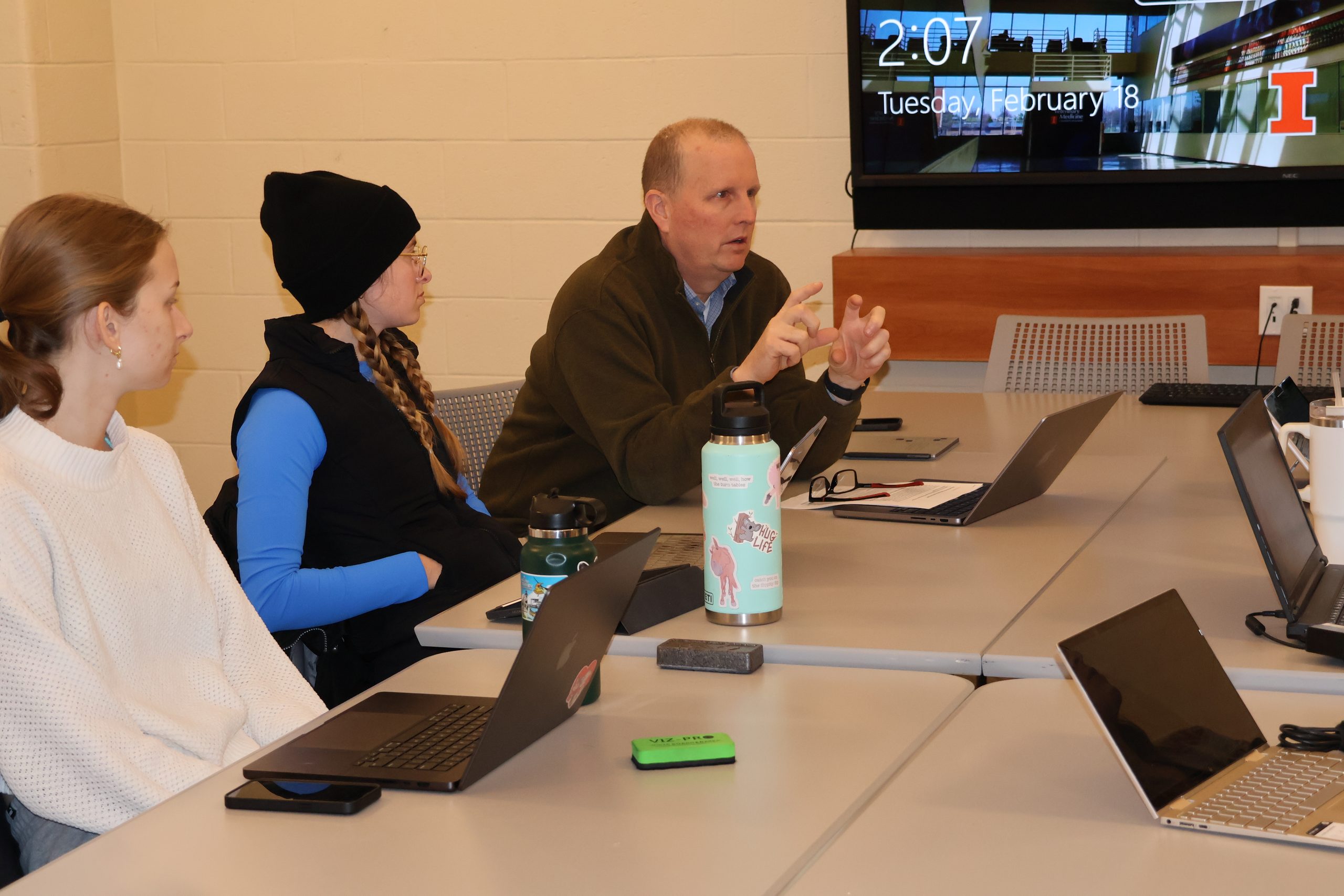
Semester One: Turning a Problem into a Plan
Students don’t need to begin the capstone with a fully developed project.
The first semester is designed to help them get there.
During the first six weeks, students work through Harvard Business School cases while building skills in problem framing, stakeholder analysis, feasibility, budgeting, risk assessment, and measuring outcomes. They then apply those same tools to their own project.
The goal is to move from “Here’s a problem I’m interested in” to a much more important question:
Is this a meaningful problem that I can realistically address?
Students work closely with faculty to refine their problem statement and establish a project scope that is both valuable and achievable.
For students who are currently employed, that process can include their employer. A student may identify an issue within their organization and work with both their employer and faculty advisor to develop a project that provides value in the workplace while meeting the learning objectives of the degree.
Employer participation, however, is not required. Faculty can also help students determine what resources and partnerships they will need to move a project forward.
Learning to Lead the Project
Throughout the capstone, the student serves as the project manager.
Faculty provide guidance, feedback, and oversight, but students are responsible for moving their projects forward. As the first semester progresses, class sessions transition into working sessions where students develop and refine the different components of their projects.
By the end of the semester, each student has developed a Statement of Work that defines the problem, objectives, resources, responsibilities, budget, risks, measures of success, and timeline for implementation.
Before moving forward, students present their plans for feedback from practitioners and faculty and make final revisions.
The standard is intentionally practical: Is this project credible and executable?
Semester Two: Putting the Plan into Action
With an approved plan in place, students move into the second semester ready to implement their projects.
That progression—from identifying a problem, to evaluating it, to developing a plan, to carrying it out—is what makes the capstone particularly relevant for working professionals.
Students aren’t simply demonstrating what they have learned in the Master of Veterinary Science program. They are building and honing the skills needed to lead projects, evaluate opportunities, work with stakeholders, manage constraints, and solve complex problems throughout their careers.
The capstone begins with a problem that matters to the student.
By the end, they have learned a process they can use to tackle the next one.
Note: On the side of the text, could we have a table that has some information about the degree such as:
Master of Veterinary Science –Livestock Systems Health
- Designed for mid-career professionals
- Develop Project Management skills
- Determine your degree path with a flexible curriculum to meet your goals.
32-credit-hour degree program tailored to advance your skills
About Beyond The Classroom
Beyond the Classroom is a video series from the University of Illinois College of Veterinary Medicine featuring the real stories of Master of Veterinary Science students, alumni, and faculty.
👉 Talk with our team
👉 Applied Veterinary Science Online
👉 Master of Veterinary Science
👉 College of Veterinary Medicine