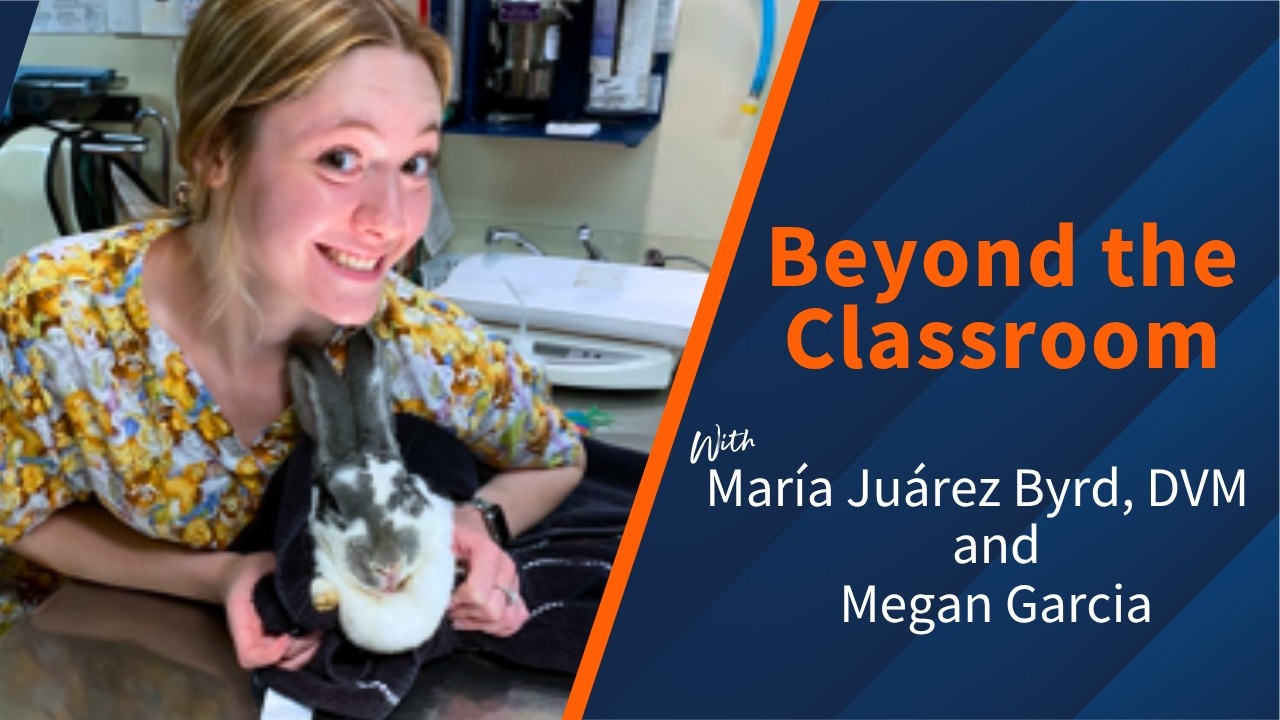
Megan Garcia has spent most of her life in veterinary medicine. Her mom owns a small animal practice in Illinois, and Megan started working there full time at 16. She’s logged more than 10,000 hours of hands-on experience.
So what could a Master of Veterinary Science add?
In this episode of Beyond the Classroom, Dr. Maria Juarez Byrd talks with Megan about her year in the online accelerated MVS. Through problem-based learning, Megan learned to slow down and ask what is actually happening in the body, instead of jumping to the diagnosis she’d seen a hundred times. That shift paid off quickly. After working through a class case on syncope, she recognized the same pattern in a patient at her mom’s clinic and asked the question that changed the diagnosis.
Megan also shares how weekly meetings with Dr. Byrd through the MVS Writing Club reshaped her approach to the personal statement. She started by writing about 20 pages of stories, then cut them down to the moments that showed who she is, not just what she saw. She stays to the end of the episode to read her own personal statement intro.
If you’re preparing for vet school and wondering whether experience alone is enough, Megan’s story shows what happens when experience meets a new way of thinking.
What You’ll Hear in This Episode
Why Megan chose the online accelerated MVS
How problem-based learning moved her beyond pattern recognition
The classroom case that helped her catch a diagnosis at her mom’s clinic
How learning issues work, and her favorite one
Her method for turning 20 pages into a 3,000-character personal statement
Why the best volunteer work is the kind you actually care about
Her advice for anyone considering the MVS
ABOUT BEYOND THE CLASSROOM
Beyond the Classroom is a video series from the University of Illinois College of Veterinary Medicine featuring the real stories of Master of Veterinary Science students, alumni, and faculty.
If you’re considering the 100% online Applied Veterinary Science major within the Master of Veterinary Science degree, you may be wondering: What does the capstone look like?
The online capstone isn’t a traditional research project. Instead, it gives you an opportunity to take what you’ve learned throughout the program and put it to work on real-world veterinary science problems.
Here’s what you need to know.
You won’t be looking for one “right” answer
Veterinary problems rarely have simple solutions.
Animal health can intersect with environmental conditions, economics, human behavior, public health, access to resources, and competing priorities. A solution that makes sense scientifically may not always be practical in the real world.
That’s the challenge at the center of the capstone.
You’ll work through veterinary science scenarios that require you to look beyond a single diagnosis or body system and consider the larger picture.
You’ll ask questions like: What’s really contributing to this problem? Who is affected? What information are we missing? What does the evidence tell us? And what solutions are both innovative and feasible?
You’ll build the evidence yourself
You won’t be handed everything you need to solve the problem.
You’ll identify what you know—and what you still need to know. Then you’ll investigate, evaluate sources, challenge assumptions, and use evidence to build a deeper understanding of the situation.
As new information emerges, your understanding of the problem may change.
That’s intentional.
The goal is to practice moving from knowing veterinary science to using veterinary science to solve problems.
You’ll learn to see the whole system
A major part of the capstone is systems thinking.
Instead of looking at an animal health issue in isolation, you’ll consider the animals, people, communities, environments, resources, and other factors connected to it.
You may discover that changing one part of a system creates consequences somewhere else—or that the most scientifically interesting solution isn’t necessarily the most realistic one.
Learning to recognize those connections is an important part of thinking like an animal health professional.
You’ll work as part of a team
The online capstone is a collaborative experience.
You’ll work with other students who bring different experiences, perspectives, and ways of thinking to the problem. One person may identify evidence others missed. Another may question an assumption. Someone else may recognize a human, economic, or environmental factor the group hasn’t considered.
Together, you’ll investigate, discuss, reconsider, and ultimately develop and defend potential solutions.
The experience puts your knowledge, communication, collaboration, critical thinking, and problem-solving skills into practice at the same time.
You’ll leave with skills you can use wherever you go next
For many Applied Veterinary Science students, veterinary school is part of the dream. For others, the program helps uncover different possibilities across the animal health industry.
Wherever you’re headed, the capstone gives you an opportunity to practice evaluating evidence, communicating ideas, collaborating with others, navigating uncertainty, and developing solutions that can work in the real world.
The capstone isn’t about proving how much veterinary science you’ve memorized.
It’s about discovering what you can do with what you’ve learned.
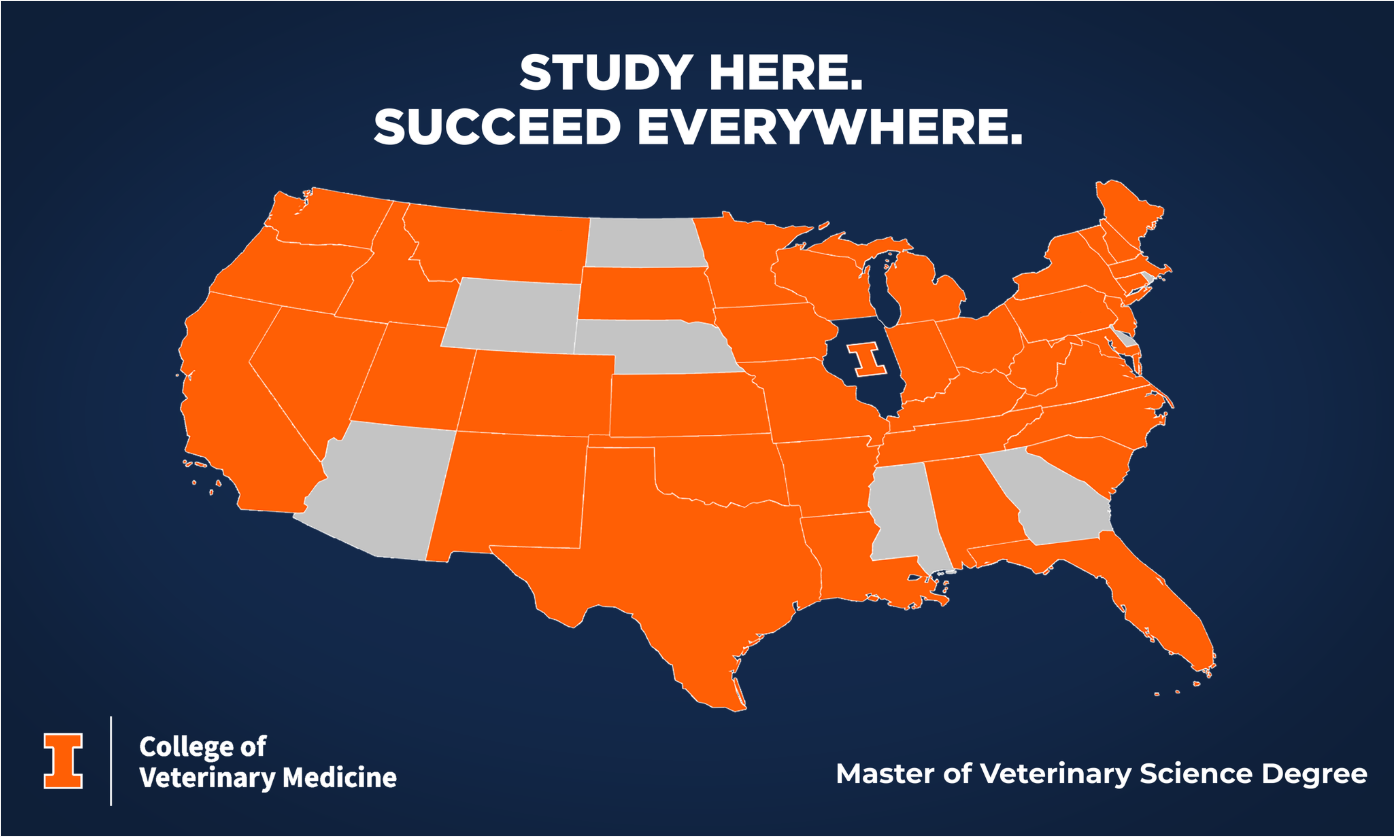
Study here. Exceed everywhere.
About Beyond The Classroom
Beyond the Classroom is a video series from the University of Illinois College of Veterinary Medicine featuring the real stories of Master of Veterinary Science students, alumni, and faculty.
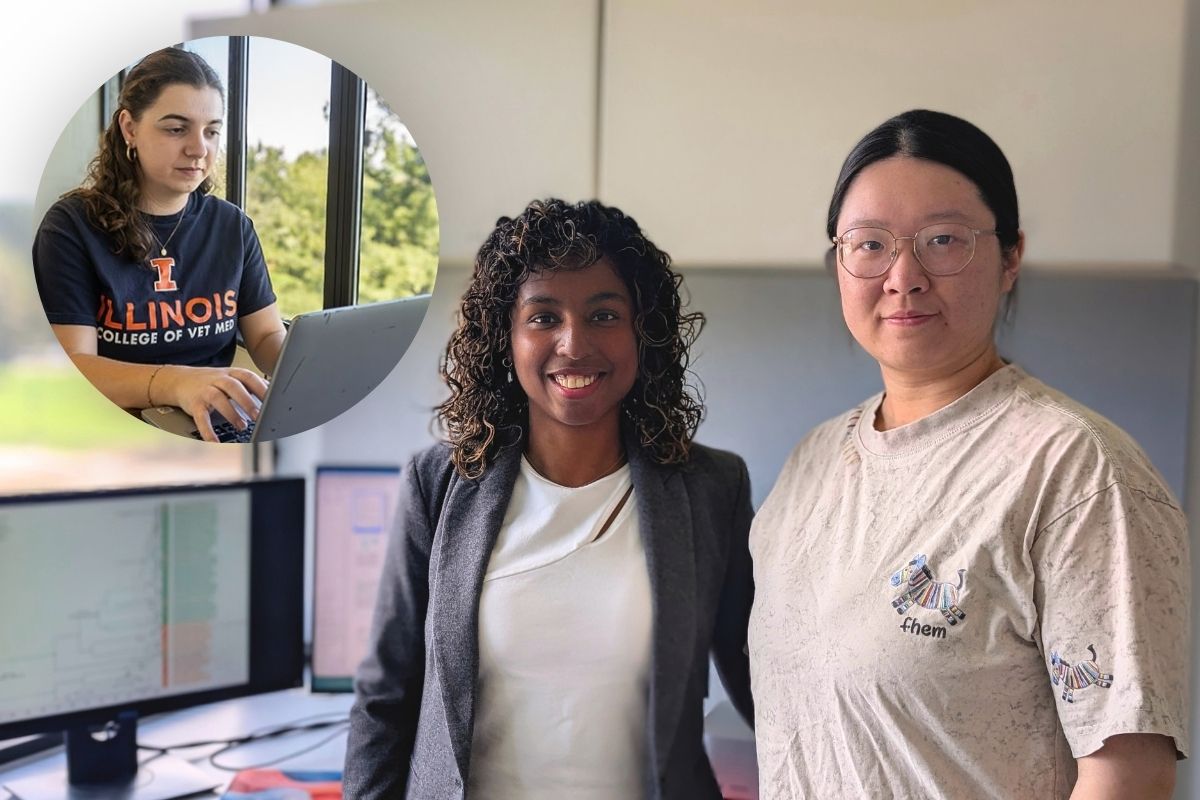
Master of Veterinary Science students Genevieve Stickelmaier and Xiongying Zheng joined Dr. Nidia Sequeira Trovao’s research to investigate the evolutionary history of Patoeapiersonii, a bacterium first identified aboard the International Space Station and later associated with human infections on Earth.
At the University of Illinois College of Veterinary Medicine, Dr. Sequeira Trovao studies how infectious pathogens evolve, spread, and move across the human-animal interface. Her research uses genomic data and advanced computational tools to reconstruct the evolutionary history and transmission of emerging and re-emerging pathogens.
This work is grounded in One Health—the recognition that human, animal, and environmental health are interconnected. By examining how pathogens change over time and move through different hosts and environments, researchers can gain insights that may ultimately inform veterinary and public health interventions.
For their MVS capstone experience, Genevieve and Xiongying contributed to this research through the study of an especially unusual organism: P. piersonii.
Meet the Research Team
Faculty Investigator: Dr. Nidia Sequeira Trovao Title: Assistant Professor Department: Pathobiology Research Focus: Genomic epidemiology, phylodynamics, pathogen evolution, zoonotic spillover, and One Health Graduate Scholars: Genevieve Stickelmaier and Xiongying Zheng Degree Program: Master of Veterinary Science Capstone Research: Phylodynamics of Pantoea piersonii on Earth and aboard the International Space Station
Research Mission
Dr. Sequeira Trovao’s research focuses on molecular epidemiology and phylodynamics, the study of how pathogens evolve and spread through populations over time.
Using genomic and computational tools, her research examines questions such as when different pathogen lineages emerged, how closely related strains are, and how infectious agents may move between hosts or environments.
The P. piersonii project applies those approaches to a bacterium with an unusual history. Identified aboard the International Space Station and later associated with human infections on Earth, the organism raises questions about its evolutionary history, adaptation, and potential movement across environments.
Understanding those relationships may also support future research into antimicrobial resistance and possible animal reservoirs.
The Graduate Scholars’ Contribution
Genevieve and Xiongying contributed to the computational work needed to reconstruct the evolutionary history of P. piersonii.
A major first step was identifying and removing genetic recombination—instances where genetic material is mixed in ways that can make evolutionary relationships more difficult to interpret. Both students worked with Recombination Detection Program 5, or RDP5, to identify and remove significant recombination signals in the gene datasets and prepare them for further analysis.
Genevieve and Xiongying each worked through more than 400 genetic datasets from a larger collection of approximately 7,000 gene datasets, and used IQ-TREE to construct maximum-likelihood phylogenetic trees. Their work contributed to the broader effort to examine how different P. piersonii strains are related and how the bacterium may have evolved across environments.
Xiongying pursued the next analytical step employing a Bayesian phylodynamic framework called BEAST, which can be used to estimate evolutionary rates and the timing of origin across P. piersonii genes. That portion of the work was still underway at the conclusion of Xiongying’s capstone experience.
Together, their contributions supported the larger effort to reconstruct the evolutionary history and transmission dynamics of this unusual bacterium.
Why This Research Matters
Infectious diseases do not stop at the boundaries between human, animal, and environmental health.
P. piersonii has demonstrated multidrug resistance, making questions about its evolution and potential reservoirs especially important. Understanding how strains are related may eventually help researchers investigate where the bacterium resides, how it changes over time, and how it may move among environments or hosts.
The project also illustrates the growing importance of bioinformatics and genomic epidemiology in veterinary medicine.
Large genetic datasets allow researchers to investigate disease evolution and transmission in ways that are not possible through traditional laboratory approaches alone. By combining biological questions with computational analysis, researchers can build a more complete picture of how emerging pathogens behave.
For Dr. Sequeira Trovao’s research program, that work contributes to a broader One Health goal: using genomic information to better understand pathogens at the human-animal interface.
Graduate Experience
Although Genevieve and Xiongying worked on the same larger research effort, each came away from the experience with a different perspective.
For Genevieve, the project meant stepping into an area of research that was completely new. Learning to use genomic analysis programs, working with genetic data, and developing basic coding and bioinformatics skills pushed her beyond her previous experience. She also gained an appreciation for collaboration and for approaching unfamiliar problems with curiosity rather than hesitation. For Genevieve, taking on an unfamiliar research problem reinforced the value of being open to new ideas, new technologies, and new ways of thinking about animal health research.
For Xiongying, the experience highlighted the scale and persistence required in computational research. Working with large datasets meant troubleshooting software limitations, rerunning analyses, documenting errors, and learning how much careful data handling is required before meaningful scientific conclusions can be drawn.
Both students gained firsthand experience with the growing role of computational tools in modern biomedical and veterinary research.
For Xiongying, the project also strengthened an interest in antimicrobial resistance and in understanding how antibiotic-resistant bacteria may affect both animal and human health. The long-term goal of the research may also help support future studies seeking to characterize potential animal reservoirs of P. piersonii.
Together, their experiences demonstrate how graduate students can contribute different pieces of a larger faculty-led research effort while developing skills that extend well beyond a single project.
Beyond the Classroom Stories of learning, discovery, and impact from the Master of Veterinary Science.
Danielle Henry’s path to veterinary school wasn’t a straight line. It was more than 20 applications, years of persistence, and a decision to invest in herself differently.
Today she’s a third-year student at the University of Michigan College of Veterinary Medicine, earning thousands of dollars in DVM scholarships, and thriving academically. But before Michigan, there was the Master of Veterinary Science program at Illinois, and in this episode of Beyond the Classroom, Danielle talks openly about what that experience actually did for her.
She walks through how the Master of Veterinary Science prepared her for vet school’s curriculum, how she strengthened her applications after years of rejection, and what her mindset looked like going into what became her final application cycle. She also shares what the Michigan interview process was like and the moment she found out she got in.
If you’ve ever wondered whether another degree is worth it, or whether persistence alone is enough, Danielle’s answer is nuanced and will provide insight that will help others.
What You’ll Hear in This Episode
How Danielle found the Master of Veterinary Science program and why she chose it
What Problem-Based Learning is — and how it mirrors vet school
How the MVS curriculum prepares you for the pace and structure of a DVM program
What she did differently to strengthen her applications
Her experience interviewing at Michigan — including the pre-interview email
The moment she got her acceptance
Her closing words for anyone still in the thick of it
ABOUT BEYOND THE CLASSROOM
Beyond the Classroom is a video series from the University of Illinois College of Veterinary Medicine featuring the real stories of Master of Veterinary Science students, alumni, and faculty.
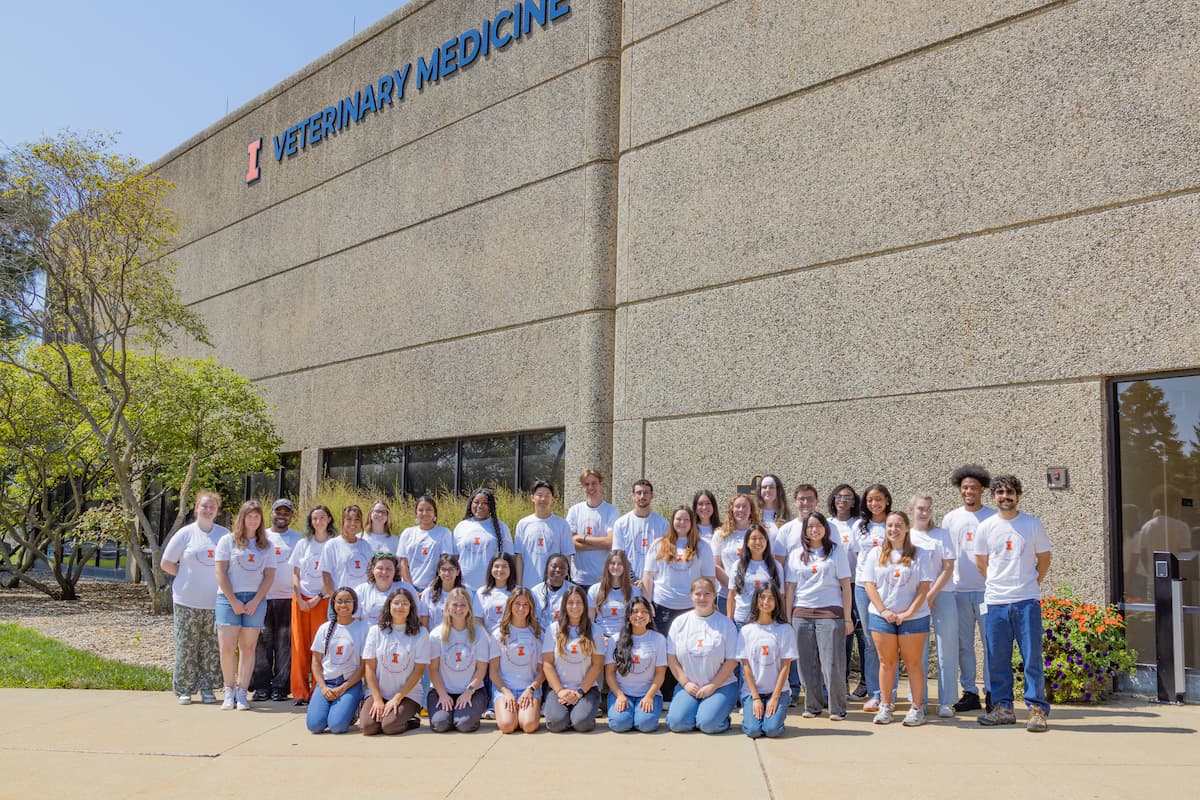
Five years ago, the Master of Veterinary Science program welcomed its first cohort: eight students, one pathway. This year, Online Programs and Extension supports 199 students across six degree and certificate pathways.
A New Way to Complete the MVS Online
Our biggest update: a one-year online pathway built around the veterinary school admissions timeline. Students start in May and finish within a calendar year: 12 credit hours over the summer, then 10 in each of fall and spring, culminating in a capstone project.
It’s accelerated and intentionally rigorous. Students should expect to work hard and think independently, with a team of faculty and staff helping them stay on track.
Growing Without Losing What Matters
As enrollment has grown, we’ve protected what makes the program work: personal connection. Foundational courses maintain roughly a 1:8 instructor-to-student ratio. Maintaining that model has meant growing our team too: more faculty, facilitators and staff, along with continued investment in academic advising, student support and individualized learning.
Students earned an average 3.79 GPA in Spring 2026, while juggling coursework, jobs, research and vet school applications.
What’s Ahead
We’ll welcome new students online and on campus, support returning students toward graduation, and keep building learning experiences that extend beyond a traditional classroom.
Faculty Research Spotlight Featuring Master of Veterinary Science Graduate Scholar Andrea Rangel
Could Everyday Chemicals Affect Reproductive Health?
Master of Veterinary Science student Andrea Rangel joined Dr. Ayelet Ziv-Gal’s research laboratory to investigate one of today’s most important questions in reproductive toxicology.Female infertility affects millions of women worldwide, yet scientists are still discovering how everyday environmental exposures may influence reproductive health.
From cosmetics and personal care products to processed foods and pharmaceuticals, people encounter countless synthetic chemicals every day. While many of these compounds have long been considered safe, researchers continue to investigate whether repeated, low-level exposure may affect the body’s most sensitive biological systems.
At the University of Illinois College of Veterinary Medicine, Dr. Ayelet Ziv-Gal leads research to better understand those connections. Her laboratory investigates how environmental chemicals influence the ovary, the oviduct, and overall female reproductive health, with the goal of developing new approaches to prevent or reduce chemically induced infertility.
As part of her Master of Veterinary Science capstone, Andrea Rangel joined Dr. Ziv-Gal’s research team to contribute to this ongoing work.
Research Spotlight: The Ziv-Gal Laboratory
Faculty Investigator: Dr. Ayelet Ziv-Gal Title: Assistant Professor Department: Department of Comparative Biosciences Research mission: Investigating how environmental chemicals influence ovarian development, hormone production, and female reproductive health. Current Mission: Understanding how parabens and other environmental chemicals affect reproductive health and fertility.
Andrea’s Research Contribution
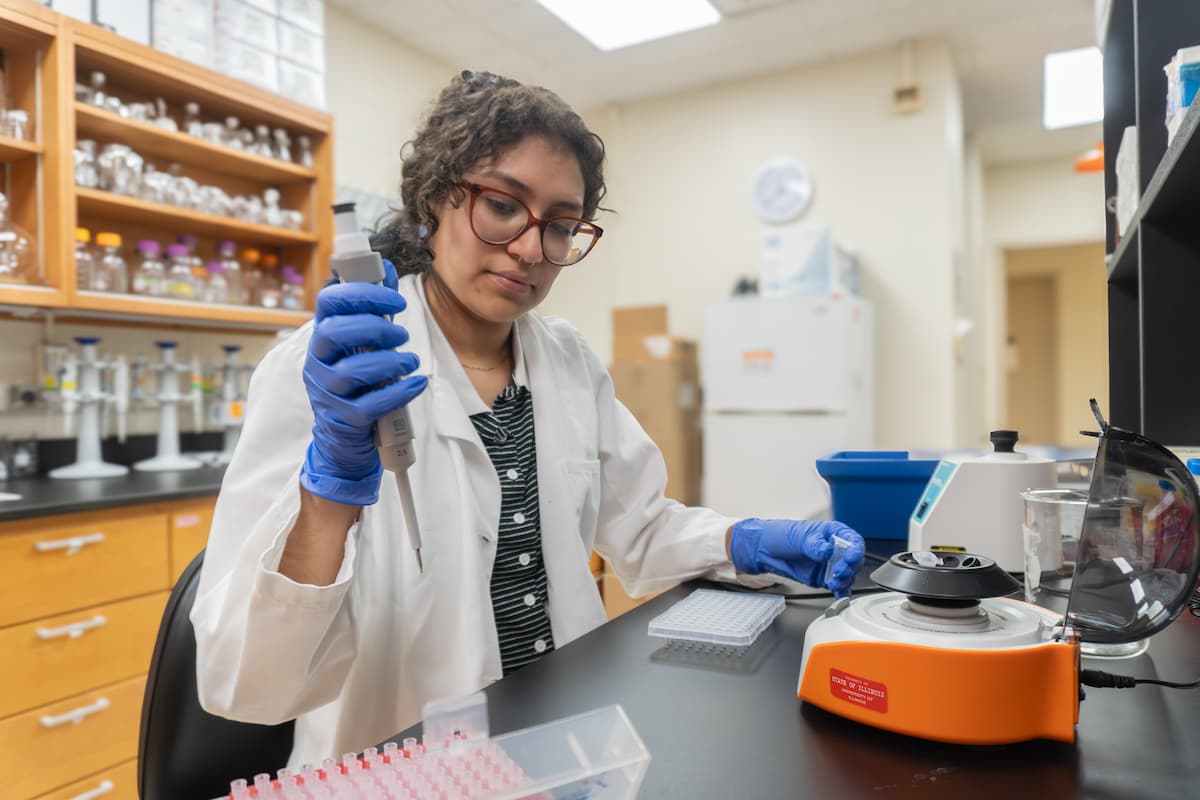
Andrea’s capstone project, ‘How Propylparaben Exposure Affects the Ovary,’ examined whether maternal exposure to propylparaben altered genes involved in sex-steroid hormone production and estrogen signaling. Working in Dr. Ziv-Gal’s laboratory, Andrea used real-time quantitative polymerase chain reaction (qPCR) to measure gene expression in offspring. While genes involved in sex-steroid hormone production did not show clear changes, her findings suggested reduced expression of one estrogen receptor (Esr2), contributing to ongoing research on how environmental chemicals may influence female fertility and long-term reproductive health.
Why This Research Matters
Environmental chemicals are part of everyday life, yet many remain poorly understood. Research from the Ziv-Gal Laboratory helps scientists better understand reproductive risks and supports advances in human health, animal health, and wildlife conservation.
Learning Through Research
Working alongside Dr. Ziv-Gal’s research team strengthened Andrea’s laboratory skills, data analysis abilities, and science communication. The experience reinforced her interest in veterinary school and a career at the intersection of reproductive biology, toxicology, and conservation.
“I want to combine these two realms.”
Andrea Rangel
Beyond the Classroom Stories of learning, discovery, and impact from the Master of Veterinary Science.