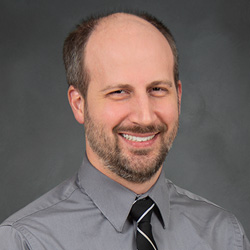
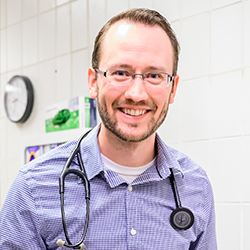
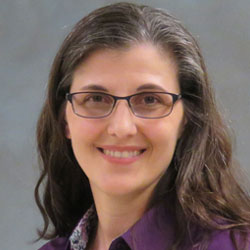
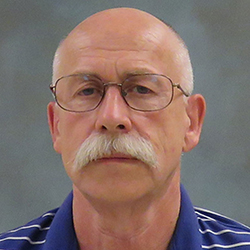
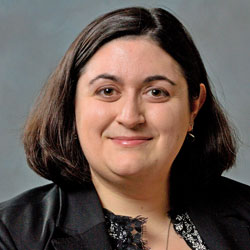
Devon Hague — DVM, DACVIM (Neurology)


Associate Dean for Academic and Student Affairs

Dr. Devon Wallis Hague earned her DVM from The Ohio State University and completed advanced training in private practice before joining the University of Illinois, where she currently serves as Associate Dean for Academic and Student Affairs. A board-certified neurologist, she engages in clinical practice, education, and collaborative care across species.

Dr. Hague is passionate about veterinary student development, with a focus on critical thinking, leadership, and resilience, and enjoys being involved in organized veterinary medicine.


College Update Session

After participating in this session, attendees will be able to describe major accomplishments, understand key strategic priorities for the coming year, recognize emerging challenges and opportunities, and identify ways to contribute to the college’s continued success.

Annette McCoy — BS, DVM, MS, PhD, DACVS

Associate Professor

Dr. Annette McCoy is an Associate Professor in Equine Surgery at the University of Illinois. She has both a clinical and research interest in equine orthopedics, particularly developmental orthopedic disease and osteoarthritis. Her research is focused on orthopedic disease, performance, and gait, incorporating genomics techniques, advanced imaging, and clinical assessment.


Managing a septic joint

Rapid recognition and appropriate treatment of septic joints is crucial to achieve the best possible outcome. This session will review the most common etiologies and clinical presentations for septic joints in foals and adults and will present current recommendations for diagnosis and treatment.

Research roundup: recently published advances in equine medicine and surgery

Join us for a review of ongoing research being conducted at the University of Illinois, as well as highlights from recently published, clinically relevant research articles in equine medicine and surgery.

Roundtable Discussion: What is the Future of Sustainable Equine Emergency Care?

Presented with other leading equine faculty.  After hours emergency work is known to be a key stressor for equine veterinarians, and is an often cited reason for leaving the profession. This has led to industry-wide discussions of what sustainable emergency care looks like moving forward. Join our faculty for a conversation about challenges and opportunities surrounding emergency care for horses in central Illinois.

Will Sander – DVM, MPH, DACVPM

Associate Professor

Dr. Sander is an Associate Professor for Preventive Medicine and Public Health and Director of the DVM/MPH Joint Degree program at University of Illinois – College of Veterinary Medicine. His research focuses on the intersection of human, animal, and ecosystem health – One Health – and includes interprofessional experience curriculum development; zoonotic disease emergence, behaviors and preventions; the human-animal bond; antimicrobial resistance; and emergency preparedness and response.


An Update on One Health Efforts in Illinois

The state of Illinois has embraced One Health in part because of the increasing One Health concerns from COVID-19 to highly pathogenic avian influenza to expanding antimicrobial resistance and tick-borne disease. This session will provide an update on those efforts including tangible ways you and the state of Illinois can push One Health forward.

  1. Describe the One Health efforts currently being led by the state of Illinois.
  2. Identify the top One Health threats currently impacting the state of Illinois that relate to veterinary practice.

Matthew Berry — DVM, DACVIM (Oncology)

Assistant Professor

Dr. Matthew Berry is a board-certified veterinary medical oncologist and clinician-scientist who joined the faculty at the University of Illinois Urbana-Champaign (U. of I.) in 2023. His clinical and research interests focus on addressing practical questions in everyday oncologic practice and advancing the clinical application of novel immunotherapy platforms. Dr. Berry is an active member of the oncology clinical trials team, where he serves as a principal investigator on multiple studies. In his clinical teaching, he emphasizes a general practice-oriented approach, helping students develop diagnostic and treatment plans that align with real-world clinical decision-making, including when to pursue additional testing, when to refer, and how to guide pet owner discussions regarding specialty oncology care.


Cytology Workshop with Dr. Joanna Schmit (2 Hours)

This interactive workshop, led by Drs. Berry and Schmit, is designed to help general practitioners confidently use cytology to guide real-time clinical decision-making.

  • The first hour will focus on slide preparation and specimen adequacy, where participants will practice the U of I oncology approach to creating multiple slides from a single aspirate while minimizing cellular damage. Emphasis will be placed on recognizing diagnostic versus non-diagnostic samples and how initial cytologic screening can influence immediate clinical decisions.
  • The second hour will consist of case-based discussion using digital slides, allowing participants to differentiate inflammatory versus neoplastic processes, recognize key cytologic features, and apply a structured framework to determine when to treat, pursue additional diagnostics, or stage and submit for interpretation. Group discussion will reinforce a practical, repeatable approach that can be immediately applied in everyday practice.

Mast Cell Tumors: Practical Diagnosis, Treatment, and Grading

This session, led by Dr. Berry, will provide practical updates on the diagnosis and management of canine mast cell tumors, with a focus on clinical decision-making in general practice. The first portion will review key diagnostic considerations, clinical features, and staging strategies, including guidance on when it is appropriate to proceed with excision without full staging. The second portion will focus on intra-tumoral therapy (focus on Stelfonta), including case selection, expected outcomes, and management of post-treatment sites. The final portion will review histologic grading for cutaneous versus subcutaneous tumors and outline our clinical stance regarding cytologic grading. Case-based discussions will be incorporated throughout to provide a practical framework for diagnosis, treatment, and referral decisions.

Canine Lymphoma: Molecular Diagnostics, Treatment Updates, & Antibodies

This session, led by Dr. Berry, will provide practical updates on the diagnosis and management of canine lymphoma, with a focus on what is most relevant to general practice. The first portion will review the diagnostic approach to lymphoma, with emphasis on the clinical utility of PARR and flow cytometry. The second portion will highlight current treatment updates, including the use of Laverdia and Tanovea. The final portion will introduce monoclonal antibody-based therapies targeting CD19 and CD20, with emphasis on their re-emerging role and potential applications in clinical practice. Case-based discussion will be used throughout to reinforce practical application in diagnosis, treatment planning, and referral.
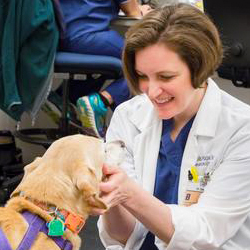
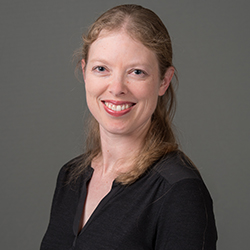
Marcella Ridgway – VMD, MS, DACVIM (SAIM)

Clinical Professor

Dr. Marcella Ridgway received her veterinary degree at the University of Pennsylvania and completed a small animal internship, small animal internal medicine residency and MS degree in Veterinary Clinical Medicine at the University of Illinois College of Veterinary Medicine. She is a Diplomate of the American College of Veterinary Internal Medicine (Small Animal Internal Medicine) with special interests in small animal infectious disease and in canine performance and occupational health. Currently, she is Clinical Professor in Small Animal Internal Medicine at the University of Illinois College of Veterinary Medicine, where she has served as a Faculty member since 1997. In addition to her activities at the University, Dr. Ridgway is a search-and-rescue K-9 handler in the specialty of trailing and provides CE at a local to international level to working dog handlers and trainers.


Leave It To Lepto: Update on Leptospirosis in Dogs and Cats

In this session you will learn to recognize clinical manifestations of leptospirosis in small animals-perform and interpret diagnostic tests to assess for pathogenic Leptospira infection-implement appropriate treatment for confirmed cases-plan effective preventative measures to protect community as well as individual animal health.

Judilee Marrow – DVM, DACZM

Clinical Assistant Professor

Judilee Marrow, DVM, DACZM, is a Clinical Assistant Professor of Zoological Medicine at the University of Illinois Urbana-Champaign. She earned her Doctor of Veterinary Medicine degree from the University of Illinois, followed by a small animal rotating internship and specialized internships and residency training in exotics, wildlife, and zoo animal medicine, including a zoological medicine residency at Smithsonian’s National Zoological Park. Dr. Marrow is a board-certified diplomate of the American College of Zoological Medicine and has held staff veterinarian positions at major accredited zoos prior to joining academia. She is an internationally invited speaker and educator, with clinical, teaching, and research interests spanning zoological companion animals, dentistry, anesthesia, radiology, and evidence-based veterinary care across diverse taxa.


Backyard Poultry Basics

Backyard Poultry Basics provides a practical, case-based approach to the evaluation and management of common health problems encountered in backyard poultry. This lecture emphasizes effective history-taking, hands-on physical examination, diagnostic decision-making, and treatment considerations unique to chickens as food-producing animals. Attendees will review common presentations—including reproductive disease, trauma, parasitism, pododermatitis, diarrhea, ocular disease, and Marek’s disease—while gaining guidance on regulatory considerations, client education, and flock-level health management.

Scott Austin — DVM, MS, DACVIM

Clinical Professor

After veterinary school and 3 years in private practice, Dr. Austin came to the University of Illinois to complete a Master of Science degree and a residency in equine internal medicine before becoming a Diplomate of the American College of Veterinary Internal Medicine. Dr. Austin joined the faculty of the University of Illinois in 2011 after a career in private practice splitting time between referral and ambulatory practice. He currently serves as the Chief of Staff of the Large Animal Hospital and is the director of residency training for the equine internal medicine program.


Managing an EHV-1 Outbreak

Neurological herpesvirus (EHV-1) has grabbed the headlines in recent months, with outbreaks having major impacts in several states. This session will discuss practical aspects of managing an EHV-1 outbreak, including biosecurity considerations and regulatory requirements, that can also be applied to other contagious diseases. | Also presented by Dr. Annette McCoy

Testing and management of the PPID patient

The latest available testing options will be discussed, and an overview of the management and treatment of this condition will be presented.

Emerging gastrointestinal diseases

Equine diarrhea is not just Salmonella and Potomac Horse Fever anymore. Diagnostic options and management of emerging gastrointestinal diseases such as Rotavirus type B, Neorickettsia findlayensis, and intestinal coronavirus will be discussed.

Roundtable Discussion: What is the Future of Sustainable Equine Emergency Care?

Presented with other leading equine faculty.  After hours emergency work is known to be a key stressor for equine veterinarians, and is an often cited reason for leaving the profession. This has led to industry-wide discussions of what sustainable emergency care looks like moving forward. Join our faculty for a conversation about challenges and opportunities surrounding emergency care for horses in central Illinois.

Jennifer Reinhart — DVM, PhD, DACVIM-SAIM, DACVCP

Associate Professor

Dr. Jennifer Reinhart received her DVM from the University of Illinois in 2010. Following a rotating internship at Cornell University, she completed her residency in small animal internal medicine at Kansas State University and was boarded in 2014.

She received her PhD in comparative biomedical sciences from the University of Wisconsin in 2017 and obtained board certification in the American College of Veterinary Clinical Pharmacology in 2019. Since 2017, Dr. Reinhart has been on faculty at her alma mater, the University of Illinois, and is currently an associate professor and service chief of small internal medicine.

Dr. Reinhart’s research interests include therapies for infectious diseases and pharmacokinetics of animal drugs.


New Kids on the Block: Newly Approved Small Animal Drugs and How to Use Them

This session will review some of the newest drugs approved and conditionally approved by the FDA for dogs and cats. Emphasis will be on safe and effective integration of these drugs into current clinical practice.

Speaker Name

NOTE: Here’s information about a speaker who has done presentations in both 2022 and 2023. By categorizing this post with “Speaker”, “2022,” and “2023,” the person’s information will appear both under the current Speakers menu (which displays “Speaker” and “2023”) and in the 2022 Archives. If you have a photo of the person, change the Featured Image to that photo under the Post Settings section (available through the gear in the upper right corner of the page).

Fall Conference
2001 S. Lincoln Avenue
Urbana, IL 61802
217-300-7439