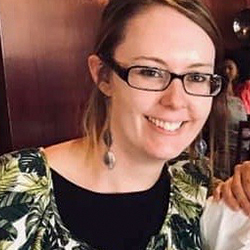
Michelle Borsdorf — DVM, DACZM

Assistant Professor

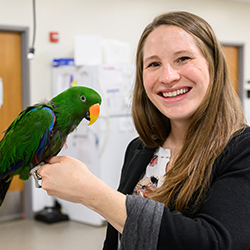
Michelle Borsdorf earned her Doctor of Veterinary Medicine degree from the University of Saskatchewan Western College of Veterinary Medicine. She completed specialty training, including a residency at North Carolina State University, and became board certified by the American College of Zoological Medicine in 2020 with a specialty in zoological companion animals. Dr. Borsdorf joined the University of Illinois in October 2022 as a Clinical Assistant Professor. She currently serves as head of the Zoological Medicine Service, providing veterinary care for zoological species with a particular focus on client-owned zoological companion animals.


Rabbit GI Stasis Syndrome

This session aims to strengthen clinicians’ ability to diagnose rabbit GI stasis syndrome, identify underlying causes and prognostic indicators, and determine when diagnostic testing or hospitalization is warranted. It also reviews appropriate treatment strategies, including fluid therapy, assisted feeding, and analgesia, incorporating pertinent literature to support evidence-based management.

Spaying Exotic Companion Mammals

This session will review the reproductive anatomy of common exotic companion mammals and discuss indications and surgical approaches for elective and medically indicated spay procedures. The session will cover ovariohysterectomy (OVH) and ovariectomy (OVE), with emphasis on key anatomical considerations, surgical planning, and practical techniques for female exotic companion mammals.
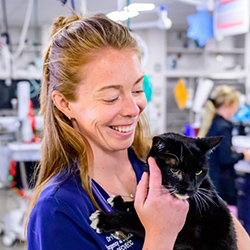
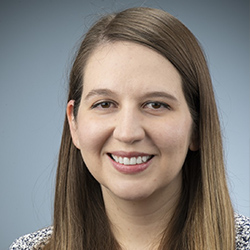
Katie Gane — BVMS, CertAVP ECC, DECVECC, MRCVS

Assistant Professor

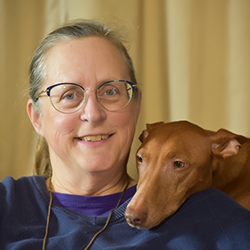
Dr. Katie Gane graduated from the University of Glasgow in 2017. After several years working in first-opinion and emergency practice, she completed an Emergency & Critical Care Internship at University College Dublin in 2022, followed by an Emergency & Critical Care residency at Dick White Referrals in Cambridge. She became a Diplomate of the European College of Veterinary Emergency and Critical Care in 2025. Dr. Gane joined the University of Illinois College of Veterinary Medicine in 2025, where she
is currently a Clinical Assistant Professor of Small Animal Emergency and Critical Care. Her clinical interests include transfusion medicine, respiratory emergencies, and the education of veterinary professionals, students, and pet owners. She is passionate about delivering practical, evidence-based teaching and improving communication around complex emergency and critical care decisions.


Red, White but Never Blue – the Colors of the Bleeding Patient

This session will provide a practical approach to managing the bleeding patient, focusing on assessing when transfusion is indicated, selecting the most appropriate blood product for each patient, and understanding the principles of compatibility testing. The session will also cover practical aspects of blood product administration, including component therapy, massive transfusion protocols, and provide evidence-based guidance on recognizing and managing transfusion reactions in veterinary patients.

Mariana Sosa-Higareda — MVZ, DACZM

Assistant Professor

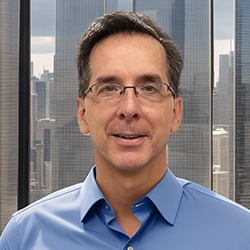
Dr. Sosa-Higareda graduated veterinary school from the National Autonomous University of Mexico, followed by a specialized training in zoological and wildlife medicine. She then completed an avian internship at the University of Minnesota’s Raptor Center, a small animal rotating internship in New York City, and a residency in zoological companion animal medicine followed by a post-doctoral research fellowship at UC Davis performing clinical research on bearded dragons and axolotls. She became a diplomat of the American college of zoological medicine in 2025, She is currently an assistant professor in zoological medicine at University of Illinois, where her research focus is in herpetological and avian medicine.


Liver Lobe Torsion in Rabbits

Liver lobe torsion is a relatively common emergency in rabbits that can be difficult to recognize and treat. This presentation reviews the clinical presentation, diagnostic approach, and current treatment options to provide practitioners with guidance for managing these cases.

Clara Moran — DVM, MS, DACVS-SA

Lecturer

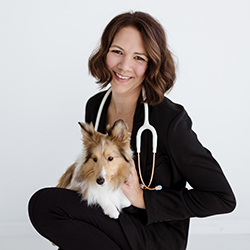
Clara Moran, DVM, MS, DACVS-SA, grew up in Savannah, Georgia, and attended UGA for undergraduate studies and veterinary school. After graduating she moved to Urbana, Illinois to begin a rotating internship at the University of Illinois, then stayed on for a surgical residency. After completing her residency and achieving board certification in 2018, she took a position at U of I as a surgical instructor, and remains at the university as a lecturer today.

Dr. Moran has a passion for soft tissue surgery in particular, and loves teaching people of all skill levels how to take their abilities further. In her free time she loves hiking, hunting for wild mushrooms, reading, and hanging out with her three cats.  


Pardon Our French

This session provides an overview of some of the most common health problems affecting the USA’s current most popular breed- the French bulldog! Presented in tandem by a surgeon and a neurologist, each specialist provides an overview of the problems they perceive as most important to the breed, discussing their management and prognosis.

Connie Austin — DVM, MpH, PhD

State Public Health Veterinarian

Dr. Austin has a background and degrees in epidemiology, veterinary medicine, and public health. She has worked in the public health field for over 25 years and has really enjoyed working and talking with local health departments, veterinarians, and citizens about their zoonotic disease issues. She says she’s never had a dull day and is always willing to talk about a zoonotic disease issues with my fellow veterinarians. One of the main issues during the summer months are animal and human rabies exposure issues.  Dr. Austin also works on human outbreaks and surveillance involving zoonotic diseases.


Rabies, Crypto and Brucella, Oh My!

Veterinarians will learn how to make a positive impact on reacting to, and reducing risk from zoonotic diseases in their clients and communities.

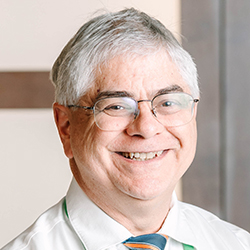
Joe Bruner — DVM, DACVIM (SAIM)

Clinical Assistant Professor

Dr. Joe Bruner is a Clinical Assistant Professor at the University of Illinois Veterinary Teaching Hospital with special interest in general Internal Medicine and Respiratory diseases. He has an extensive experience in private practice before joining the university to be a part of the Small Animal Internal Medicine service. Dr Bruner will present a lecture with an exceptional recent graduate, Dr. Grant Nickolson, to discuss the current approaches to hypercalcemia and recent therapeutic options for the more common causes.


Got Milk?… The Trials and Tribulations of Hypercalcemia with Drs. Joe Bruner and Grant Nickolson

This lecture will provide an overview to the diagnostic approach to Hypercalcemia in dogs and cats. It will further address the common scenarios seen with hypercalcemia, and present a ‘decision-making’ approach towards when diagnostic testing is warranted and when a spurious laboratory value should be suspected. In addition, newer therapeutics will be presented that can be used to treat the more common causes of hypercalcemia when surgical interventions are not possible.

Karie Johnson — DVM, BS

CEO and Veterinarian, Vitalis Vet Visit

Dr. Karie Johnson — Owner of Vitalis Vet Visit and Veterinary Communications Manager at Nestlé Purina PetCare. She is a 2019 graduate of the University of Illinois College of Veterinary Medicine. Dr. Johnson brings a rare blend of hands-on clinical experience (small animal associate, mobile practice, and clinic owner) and industry-facing communications work, giving her a deep understanding of how veterinary skills translate beyond the exam room. She is a published author in JAVMA on nutrition and osteoarthritis, has been a medical reviewer for Business Insider and Purina.com, and holds certifications in Fear Free, Low Stress Handling, Human-Animal Bond, CAETA euthanasia, and Pet Nutrition Coaching. Dr. Karie draws on clinical practice, business ownership, nutrition expertise, and corporate communications to show veterinarians practical pathways into research, industry, policy, education, and advocacy.


Beyond the Clinic: The Many Lives of a Veterinary Degree

This presentation explores the wide range of career paths, roles, and impact areas available to veterinary graduates beyond traditional clinical practice. Through real-world examples and practical guidance, attendees will discover opportunities in research, public health, government policy, industry (pharmaceuticals, biotech, animal nutrition), shelter and wildlife medicine, education, entrepreneurship, nonprofit and advocacy work, and communications.

The session highlights transferable skills developed in veterinary training — critical thinking, diagnostics, animal and population health expertise, client communication, and systems thinking — and shows how to translate them into non-clinical careers.

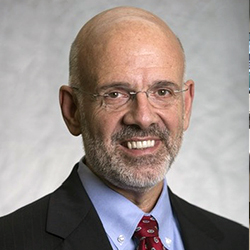
Joseph DiPietro — DVM, MS

President Emeritus

Dr. Joseph DiPietro served as the 25th president of the University of Tennessee from 2011 to 2018. He is regarded as one of the University’s great leaders, and the UT Board of Trustees bestowed upon him the status of president emeritus upon his retirement.

During his tenure, he oversaw a record four years of low tuition increases, including a zero percent tuition increase this year for UT Knoxville and UT Chattanooga. In 2017, UT research achieved a record-high, system-wide $481 million in sponsored-program expenditures. The UT Foundation experienced a record fundraising year of more than $397 million given during the 2017-18 fiscal year. The record year of giving included the naming of two colleges at the UT Institute of Agriculture and UT Chattanooga, which join two other colleges named at UT Knoxville since 2014. The UT Institute of Agriculture and the Institute for Public Service had more than 5 million contacts with Tennesseans statewide.

Prior to becoming president, Dr. DiPietro served as chancellor of the UT Institute of Agriculture from 2006 to 2010. Under his leadership, the institute began interdisciplinary programs such as the Center for Renewable Carbon, the Tennessee Biofuels Initiative and the master’s degree in landscape architecture. Between 2006 and 2010, external grant support for the Institute of Agriculture increased 30% from $26.6 million to $34.8 million annually.

A veterinarian by training, Dr. DiPietro’s research emphasis was veterinary parasitology, and his clinical interest was equine field practice. He earned his bachelor’s, Doctor of Veterinary Medicine, and master’s degrees at the University of Illinois Urbana-Champaign. After graduating from veterinary school, he joined a rural community practice in Peotone, Illinois, before returning to the University of Illinois faculty.

Before coming to UT, Dr. DiPietro served as dean of the College of Veterinary Medicine at the University of Florida from 1997 to 2006. Prior to that, he rose to tenured professor of veterinary clinical medicine and veterinary pathobiology at the University of Illinois Urbana-Champaign and held administrative positions there, including assistant director of the Agriculture Experiment Station and associate dean for research of the College of Veterinary Medicine.


Trust, Truth, Teams, and Mentorship

Dr. Joe DiPietro will share his journey and what he has learned along the way, from a horse-loving kid growing up in Central Illinois, to large animal clinician, veterinary researcher, dean, chancellor, and university president. He will characterize the qualities of veterinary training that equipped and helped him as a university administrator, explain how leadership development should be routine, and provide insights that will help you build or be part of a stronger team, increase career commitment, and produce greater organizational success.

Kim Selting — DVM, MS, DACVIM (Oncology), DACVR (Radiation Oncology)

Associate Professor

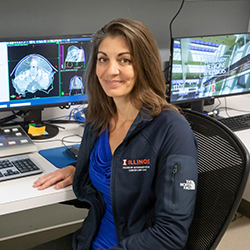
A native of Colorado, Dr. Kim Selting completed her undergraduate and veterinary studies at Colorado State University (CSU).  Following a one year rotating small animal internship in medicine and surgery at the Animal Medical Center in New York City, she spent 4 years in private practice in St. Louis, MO.  She then returned to the CSU Animal Cancer Center for a residency to become board-certified by the American College of Veterinary Internal Medicine in the specialty of medical Oncology. 

Dr. Selting then joined the faculty at the University of Missouri from 2002-2017.  In 2013, she completed a non-traditional residency in Radiation Oncology and achieved board certification by the American College of Veterinary Radiology.  In July 2017, Dr. Selting accepted a position as Associate Professor at the University of Illinois to develop a radiation therapy program.  Current research interests include biomarkers of cancer and toxicity of cancer treatment, novel anticancer drugs, and effects of radiation dose rate modifications on the tumor microenvironment. 

Dr. Selting is the Past President of the Veterinary Cancer Society (VCS), the past President of the Veterinary Cooperative Oncology Group and past member-at-large for VCS, and past Chair of the American College of Veterinary Internal Medicine (ACVIM) Oncology Certifying Examination Committee and the American College of Veterinary Radiology (ACVR) Certifying Examination Committee.  Dr. Selting currently serves as the President for the American College of Veterinary Radiology (Radiation Oncology subspecialty, ACVR-RO).


Navigating the Radiation Maze

Applications for radiation therapy range from non-neoplastic inflammatory or immune mediated conditions to combination with chemotherapy for better outcomes when treating lymphoma to palliative care of aggressive local tumors as well as treatment of limited metastatic disease. This talk will review the basic concepts behind radiation therapy as well as indications, side effects, and prognosis for commonly treated tumors.

Raymond J Ramirez — DVM, RCFC

Locum tenens relief, Chair Illinois Veterinary Licensing and Disciplinary Board

Raymond J Ramirez graduated from the University of Illinois College of Veterinary Medicine in 1986. After working in Schaumburg, IL Emergency Clinic the first year after graduation, he worked at an AHAA hospital in Milwaukee, WI.

In 1989 started doing relief work in Wisconsin full time. He moved his entire relief practice to central Illinois, serving colleagues in Springfield, Champaign/Urbana, Bloomington/Normal, Decatur, Peoria and all areas in between. He had an 85% return rate request rate.

After working in over 100 practices in Wisconsin and Illinois, he finally found a practice to purchase in December 2007, just as the great recession of 2008-2009 hit. His CVT made more money than he did the first two years in practice. Through utilizing the management skills learned in the many practices he served, the practice thrived, and currently is a two doctor practice in East Peoria, IL. He sold that practice to a local colleague who wanted a second location, because “it’s better to sell your practice five years too early than five years too late- Mark Opperman”.
He has gone back to relief work.

Dr. Ramirez is past board president and board member of the local shareholder owned Emergency clinic in Peoria, IL., was past president of the Mississippi Valley VMA, and has been a mentor through the Illinois VMA mentor program. Dr. Ramirez was appointed to the Illinois Veterinary Licensing and Disciplinary Board in 2022 and was elected chairperson in 2025. He is married to his wife Kelly (they met in ballroom dance class), and have five children.


Five Simple Steps to Keep Yourself Out of Regulatory Hot Water

The fear of the unknown is the most scary. In this presentation, we will learn ‘what happens if a license complaint occurs?’ Then we will go over some common scenario’s that department investigators and the presenter have seen that, if corrected, will minimize the chance of receiving a board complaint. Dr. Ramirez had a license complaint filed against him in 2007, and was appointed to the Veterinary Licensing and Disciplinary Board in Nov, 2023. These views are based on my experience as a DVM and a member of the board, but it is not endorsed by the Department.” (Illinois Department of Finance and Professional Regulation).

Fall Conference
2001 S. Lincoln Avenue
Urbana, IL 61802
217-300-7439