VCM 509: Biology of Veterinary Pathogens

Student looking at laptop outside of building.

VCM 509: Biology of Veterinary Pathogens

Enroll

Overview

The course includes an overview of relevant veterinary microbiology and the interaction between microbes and their hosts. The course will build upon knowledge acquired in VCM 507, and relevant physiology pertaining to disease prevalence, prevention, and pathology will be discussed. The host immune system will be highlighted, and important bacteria, viruses, fungi, and parasites will be studied. Current and emerging pathogens, and the relevance of potential zoonotic spillovers into human populations will be discussion points.

Students will be guided through the process of applying foundational scientific principles in the solving of common clinical cases using a problem-based learning format. Students will be asked to work in teams to explore and explain learning issues needed to solve each week’s clinical case. The learning process will be supported with the provision of a series of short, online micro lectures. Students will also be encouraged to develop adaptive learning and information literacy competencies in developing cooperative learning resources, crowd coursing visual representations and executive summaries of the learning topics.

Each week the student learning will be scaffolded and assessed using low stakes quizzes, and group participation. One final exam will be assessed for a final grade in the class.

Learning Objectives

Upon successful completion of this course, students will be able to:

  • Identify host defenses and summarize similarities and differences between body systems.
  • Identify and explain tissue tropism and disease patterns of different veterinary pathogens.
  • Predict which body systems will be targeted by pathogens, comparing primary and secondary pathological insults.
  • Use a problem-based approach to identify, monitor, and respond to health problems for a particular body system in a specific animal context.
  • Discuss and collaborate with others in solving animal health and disease problems
    • Formulate scientific questions that inform problem-solving
    • Identify personal and team deficits in knowledge and understanding
    • actively search and use micro lectures and other appropriate evidence-based resources to acquire information and knowledge that can help promote effective problem solving
    • formulate newly acquired knowledge in a way that can cultivate and optimize team-based problem solving effectiveness

Course Topics

  • Module 1: Host Defenses
    • Host defenses: physical, chemical, immunological
    • Structure and function of the immune system
  • Module 2: Introduction to Pathogens
    • Virus basics
    • Bacteria basics
    • Protozoa and fungi
  • Module 3: Respiratory Pathogens
    • Tissues of the respiratory tract
    • Respiratory pathology/transmission
  • Module 4: Enteric Pathogens
    • Tissues of the alimentary tract
    • Enteric pathology/transmission
  • Module 5: Other Pathogens
    • Other pathogens, transmission, and pathology
    • Immunology of affected systems
    • Physiology of non-affected system
  • Module 6: Emerging and Zoonotic Diseases
    • Emerging pathogens and recent outbreaks
  • Module 7: Pathogens in Populations, and Their Control
    • Pathogen behavior
    • Infection prevention, control, and biosecurity
    • Life with and without pathogens

Recommended Prerequisites

Speak to an advisor to learn more.

We would be happy to answer any questions you have.
Contact an Advisor

VCM 507: Veterinary Form and Function

Student looking at laptop outside of building.

VCM 507: Veterinary Form and Function

Enroll

Overview

This course uses a series of clinical problems to provide students with a veterinary medical context for understanding the structure and function of the major body systems (cardiovascular, gastrointestinal, renal, nervous, and reproductive, etc. Students will be guided through the process of applying foundational scientific principles in the solving of common clinical cases using a problem-based learning format.

Students will be asked to work in teams to explore and explain learning issues needed to solve each week’s clinical case. The learning process will be supported with the provision of a series of short, online micro lectures. Students will also be encouraged to develop adaptive learning and information literacy competencies in developing cooperative learning resources, crowd coursing visual representations and executive summaries of the learning topics.

Each week the student learning will be scaffolded and assessed using low stakes quizzes, and group participation. One final exam will be assessed for a final grade in the class.

Learning Objectives

Upon successful completion of this course, students will be able to:

  • Identify anatomical structures in different body systems and summarize similarities and differences between species.
  • Identify and explain normal physiological systems in domestic animal species.
  • Predict which body systems are abnormal with case-based discussions.
  • Develop professional attitudes, outlooks, and competencies in teamwork, critical thinking, problem solving, and information management, specifically:
    • discuss and collaborate with others in solving animal health and disease problems.
    • formulate scientific questions that inform problem-solving.
    • identify personal and team deficits in knowledge and understanding.
    • actively search and use micro lectures and other appropriate evidence-based resources to acquire information and knowledge that can help promote effective problem solving.
    • formulate newly acquired knowledge in a way that can cultivate and optimize team-based problem solving effectiveness.

Course Topics

  • Module 1: Respiratory System Structure and Organization
    • Respiratory System Structure and Organization
    • Cardiovascular Structure and Organization
    • Respiratory Physiology
    • Cardiovascular Physiology and Accessory Organs
    • Comparative Cardiovascular Physiology
    • Comparative Pulmonary Physiology
  • Module 2: Gastrointestinal System
    • Introduction to Gastrointestinal Tract Structure and Function
    • Regulation of Gastrointestinal Function
    • Functions and Motility of Organs of the Upper Gastrointestinal Tract
    • Lower Gastrointestinal Function and Secretion
    • Comparative Gastrointestinal Anatomy and Physiology
  • Module 3: Renal System
    • Renal Structure and Organization
    • Glomerular Filtration Rate and Reabsorption
    • The Regulation of NaCl and Water Reabsorption
    • Comparative Renal Anatomy and Physiology
  • Module 4: Nervous System
    • Introduction to the Nervous System
    • The Neuron and Its Support
    • Forebrain Structure and Function
    • Midbrain Structure and Function
    • Hindbrain Structure and Function
    • Parasympathetic Divisions of the Autonomic Nervous System
    • Reflexes, Balance, and Movement
    • Comparative Neuroanatomy and Physiology
  • Module 5: Reproductive System
    • Overview of the Structure of the Reproductive Tracts
    • The Male Reproductive Tract
    • Reproductive Cyclicity
    • Female Reproductive Tract
    • Hormones of the Reproductive System
    • Comparative Reproductive Biology
  • Module 6: Integumentary
    • Integumentary Form and Function
    • Integumentary Structures
    • Integumentary Comparative Anatomy and Physiology
  • Module 7: Metabolism and Endocrine
    • Introduction to Endocrine Homeostasis
    • Endocrine Glands – Thyroid, Parathyroid, and Pancreas
    • Energy and Electrolytes

Recommended Prerequisites

  • None

Speak to an advisor to learn more.

We would be happy to answer any questions you have.
Contact an Advisor

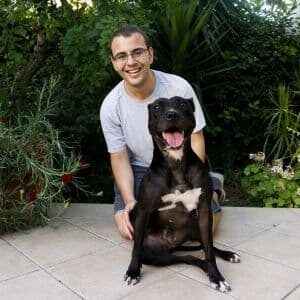
Pavlos Stavrou

Part-Time and Online Student

Tell us about your background (education and current work experience).

I finished my Veterinary Medicine studies in 2021 and worked for a few months in a small animal clinic as a veterinarian. I was doing mainly spaying and neutering surgeries, wound treatment, and other treatment for stray animals or housed animals.

All my patients were cats and dogs and only in rare cases were some exotic animals that we referred to other specialized veterinarians.

How did you become interested in the Master of Veterinary Science degree program?

I wanted to change my career path and pivot away from small animal practice. Client interactions within our small animal clinic were growing increasingly frustrating, and I was looking for a new environment and change within my career. I always loved livestock animals even before starting my studies in Veterinary Medicine. The University in my city did not offer any Master’s Degree and the tuition cost for their newly opened Veterinary Medicine department is very high for me or other people I know. However, I came across the advertisement for the University of Illinois online Master of Veterinary Science with a simple search online during a busy day at work. Making this career change and starting the Master of Veterinary Science degree in my opinion was the best decision I ever made in my studies. The program fits all my needs. With the flexibility of choosing every class, I love to learn more and that will help me in the future. With the program being online, I also have the benefit of the reduced to zero cost of moving to a different country, paying extra costs for rent living, etc.

What sets the MVS degree/program apart from other programs you’ve either participated in or considered?

The program is not just a set of courses; you are calling the shots as a future professional in a challenging industry. Everything is available to fit your needs, and the staff is always readily available each semester to discuss which courses best suit your interests and goals, as well as assist in any setback or problem I have faced related to the program.

In my opinion, the individual with the most knowledge and ability to think critically is the person set to overcome every challenge easily within the industry. This program will set me up to do just that! Some job positions in Cyprus where I live, specifically need to have in-depth knowledge in subjects only available in this: biosecurity, managing a farm in the best cost-effective way possible, and One Health (which is very important for the veterinarians working in the EU).  

Tell us about a course in the program that impacted you. How was the content useful?

It is difficult to separate a specific course from the others, as it is not the course alone that is important but what goals and skills you want to develop more through the course. For example, I loved the biosecurity classes because I found it’s better to take preventative measures than try to fix everything when the “storm” comes. Also, as a new veterinarian with limited experience in livestock farms, I had the best result possible when visiting farms, from the guidance of our teachers.  The main takeaways from the courses that I have found most useful are limiting the cost of diagnosis/test and implementing small changes to see the biggest impact on the health of the animals and the sustainability of a farm.

The MVS degree helps students “discover what’s next” in their career. What’s next for you?

I have a few ideas on what I want to do next and every day new opportunities open up. I applied to job openings for Veterinarians working in the Veterinary Service of the government here (to do the same things I am learning in the MVS program). Also, because of the growing popularity of Veterinary studies in my country, I may apply to work as a staff member or apply for PhD at a University in my city.

What is one thing about the program you would say to someone considering this degree?

When choosing the program, you are not only making the best decision in your career, but you also get to know many professors who are at the top in their industry who teach you how you make the best decision in any situation (small animal or farm system).  Through the program, you can get the best ideas on how to reach any goals you have for your future career.

Return to Student Spotlight

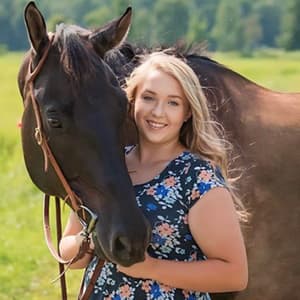
Megan Cochran

Part-Time and Online Student

Tell us about your background (education and current work experience).

I obtained my Bachelor of Science in Biological Sciences from Alfred University in May 2022. During my academics, I pursued a minor in chemistry and concentrated my studies in the field of pre-veterinary medicine. I am currently working as a veterinary assistant at a small animal hospital called Erie Canal Animal Hospital and its sister hospital Apple Country Veterinary Hospital.

How did you become interested in the Master of Veterinary Science degree program?

I came across the MVS program last fall when I was searching for programs that would allow me to continue my education, involved something I was passionate about, and could complete prior to vet school, which I hope to be accepted into one for Fall of 2024.

What sets the MVS degree/program apart from other programs you’ve either participated in or considered?

The MVS program sparked my interest as I am able to complete my degree completely online and at my own pace! I was able to plan my courses ahead of time so I could complete the degree in a year and be able to finish in time to hopefully start vet school. Also, the program’s emphasis on livestock stood out to me as someone who wants to pursue large animal medicine.

Tell us about a course in the program that impacted you? How was the content useful?

My favorite course so far was VCM509 Biology of Veterinary Pathogens. This course sparked my interest as I knew it would be a beneficial curriculum for someone wanting to go to vet school. Beyond that, the Problem-Based Learning approach taught me how to work through real case studies and was not only fun but great at teaching the information.

The MVS degree helps students “discover what’s next” in their career? What’s next for you?

Ideally vet school! This is my second cycle applying and I hope this program gives me a leg up for admissions and will help me with the curriculum once I get in.

What is one thing about the program you would say to someone considering this degree?

I cannot say enough great things about all the staff and professors I have had the privilege of working with! Their kindness, understanding, and exemplary mentorship have left an indelible mark on my educational journey.

Return to Student Spotlight

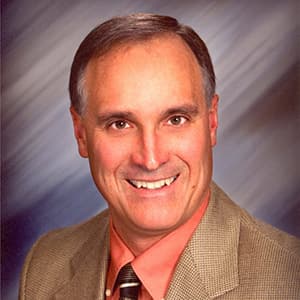
Brian D. Roggow, DVM

Part-Time and Online Student

Tell us about your background (education and current work experience).

I am a consulting Swine Veterinarian and Director of Swine Health for the Fairmont Veterinary Clinic in Fairmont Minnesota. I am a DVM graduate of the University of Minnesota College of Veterinary Medicine and an EVP graduate of the University of Illinois College of Veterinary Medicine.

How did you become interested in the Master of Veterinary Science degree program?

It was a personal goal of mine to complete a master’s degree right after I completed the EVP program but life outside of veterinary medicine got in the way. Many years later I received an email from the U of I notifying me that my EVP credits were still available for a master’s degree through the MVS program. I realized that my personal goal was still a possibility even after a nearly 25-year wait! Better late than never!

What sets the MVS degree/program apart from other programs you’ve either participated in or considered?

The use of technology sets the MVS program apart from the other programs. I could perform my job duties and not have to travel for course work.

Tell us about a course in the program that impacted you? How was the content useful?

Livestock Systems with Dr. Lowe. It was very useful for me to interact with others in the class and see different ways to solve the livestock production issues I see on a daily basis.

The MVS degree helps students “discover what’s next” in their career? What’s next for you?

Slowing down is the next move for my career. Instead of working 60+ hours a week, I am planning to work half-time (30 hours a week) and I would like to use that time for research projects within our veterinary group.

What is one thing about the program you would say to someone considering this degree?

You can accomplish your degree goal with this program while holding down a full time-plus career. The technology of this program makes it possible.

Return to Student Spotlight

Mallareigh Moser

Part-Time and Online Student

Tell us about your background (education and current work experience).

Hello! I am Mallareigh Moser and I am a graduate of Iowa State University with a bachelor’s in Animal Science (Spring 2022)! I currently work as a Study Technician at Labcorp Drug Development in Madison, Wisconsin working with non-human primates and canines in drug metabolism studies.

How did you become interested in the Master of Veterinary Science degree program?

I found the program a week before my graduation from Iowa State and also, unfortunately, received my last denial to veterinary school at that time as well. The program fits very well with my large animal background and career goals in the future. The cost and convenience of being all online was another factor in my decision.

What sets the MVS degree/program apart from other programs you’ve either participated in or considered?

I feel that the MVS professors genuinely care about your well-being while also challenging you academically. It also allows you to continue working and gaining valuable experience outside of an academic setting which many other programs can’t say they allow this flexibility.

Tell us about a course in the program that impacted you? How was the content useful?

I had a fantastic experience in the VCM 513- Science of Health Homeostasis (from the certificate program) class. This class not only helped me immensely in my job considering it is in drug metabolism, but also because it really gave me the feeling that we aren’t inferior to veterinary students. It was challenging and rewarding, especially considering the group structure of the course.

The MVS degree helps students “discover what’s next” in their career? What’s next for you?

I plan to attend veterinary school to become a large animal practitioner! Long term goal, I plan to teach at a veterinary school or work in research/government.

What is one thing about the program you would say to someone considering this degree?

This program has genuinely made me a better overall person, student, and scientist. Even if you aren’t interested in livestock, please consider the program anyway. There are so many valuable resources and content that is learned as part of this program.

Return to Student Spotlight

Cristina Gross

Part-Time and Online Student

Tell us about your background (education and current work experience).

In 2020, I graduated from Universidad San Francisco de Quito in my home country, Ecuador, with a degree in veterinary medicine. I worked at a small, family-owned dairy farm for 2 years before moving to the United States with the goal to pursue a career in the dairy industry.

How did you become interested in the Master of Veterinary Science degree program?

I was looking for a degree related to the food animal industry that would provide me with the tools that are needed to kickstart the career I want and that would complement my veterinary background. 

What sets the MVS degree/program apart from other programs you’ve either participated in or considered?

The MVS degree is exactly what I wanted: 100% online, flexible, and with a broad industry scope. As a veterinarian who wants to be more than just a clinician, this is the program that will allow me to do more than I previously could.

Tell us about a course in the program that impacted you? How was the content useful?

VCM 568 – Operation of Livestock-Based Food Production Systems I was a fantastic, challenging course that really put me out of my comfort zone and expanded my horizons and understanding of the industry. It has developed my critical thinking skills further and has given me the tools I need to be able to solve problems in real-life situations.

The MVS degree helps students “discover what’s next” in their career? What’s next for you?

At this point, anything could be next! I started the degree thinking the dairy business would be my end goal, but I’ve discovered that there are more possibilities than I previously thought. Farm manager, consultant, auditor, or even starting my own homestead, I am open to the opportunities that are out there. Dairy and beekeeping industries are two of my main interests.

What is one thing about the program you would say to someone considering this degree?

The quality of the courses is top-notch and the instructors will always be the best aids to student learning.

Return to Student Spotlight

Anne Barger

DVM, MS, DACVP

Dr. Anne Barger earned her veterinary degree from Illinois in 1996 and became a faculty member at the college in 2002. She currently lives in Champaign with her partner, Patty and their two dogs, Penne (miniature dachshund) and  Reggie (hound mix).  Dr. Barger truly loves all dogs with golden retrievers being her favorite. Clinical pathology became her true interest in veterinary school when she served as an emergency technician for the clinical pathology lab as a third and fourth-year student.

“Clinical pathology allows us to put the pieces of a puzzle together and start to answer questions about the diagnosis and the underlying pathology” Dr. Barger

View Dr. Barger’s full bio here

Courses by this Instructor

A Simple Approach to In-House Cytology

Interpretation of Laboratory Data

Return to MVS Directory

Trying to decide if this program is the right fit for you?

We would be happy to answer any questions you have.
Contact Us

Brian Aldridge

BVSC, PHD, MS, DACVIM, RCVS

Assistant Dean of Educational Innovation

ba311@illinois.edu

Education

  • BVSc, 1984, University of Liverpool
  • Resident, Food Animal Medicine and Surgery, Department of Clinical Sciences, College of Veterinary Medicine and Biomedical Sciences, Colorado State University, 1992.
  • MS, Department of Clinical Sciences, College of Veterinary Medicine and Biomedical Sciences, Colorado State University, focusing on bovine neonatal septicemia, 1992.
  • PhD., University of Wisconsin-Madison, Dissertation: Role of maternal lymphocytes in the immune system of the newborn calf., August 1992-August 1993

Professional Certifications

  • Royal College of Veterinary Surgeons
  • American College of Veterinary Internal Medicine

Industry Positions

  • Clinical Farm Animal Veterinarian, Department of Veterinary Medicine, University of Cambridge, UK,October 2011-October 2012.
  • Director, eVeterinary Academy, TGS Illuminate, Harpenden, Herts, UK, January 2011-October 2012.
  • Chair, Farm Animal Health and Production Group, Department of Veterinary Clinical Sciences, RoyalVeterinary College, University of London, North Mymms, Herts, UK, October 2005-December 2010.
  • Head, Population Medicine Group, Department of Veterinary Clinical Sciences, Royal Veterinary College, University of London, North Mymms, Herts, UK, October 2005-December 2010.
  • Associate Professor, Large Animal Medicine, College of Veterinary Medicine, Western University of Health Sciences, Pomona, CA, September 2003-October 2005.
  • Adjunct Professor, Department of Animal and Veterinary Sciences, College of Agriculture, California State Polytechnic University, Pomona, CA, July 2004-October 2012.
  • Postdoctoral Research Fellow, Department of Pathology, Microbiology and Immunology, School of Veterinary Medicine, University of California-Davis, USA, and The Marine Mammal Center, GGNRA, Marin Headlands, Sausalito, CA, February 1999-September 2003.
  • Postdoctoral Research Associate, Department of Animal Health and Biomedical Sciences, University of Wisconsin-Madison, USA.,December 1998-January 1999.
  • PhD, Department of Animal Health and Biomedical Sciences, University of Wisconsin-Madison, USA, August 1993 to December 1998. 
  • General Practitioner; self-employed veterinary locum, August 1992-August 1993.

Honors and Awards

  • American Association of Veterinary Immunologists Graduate Student Award for paper entitled “Transfer of maternal immune cells to the newborn calf” presented at the Conference of Research Workers in Animal Diseases, Chicago, November 1998.
  • Department of Animal Health and Biomedical Sciences Travel Award to attend summer program studying the design and analysis of clinical trials. New England Epidemiology Institute, Tufts University, Boston, June 1997.
  • American Association of Veterinary Immunologists Graduate Student Award for paper entitled “Denaturing gradient gel electrophoresis: a rapid method for differentiating bovine class II MHC alleles” presented at the Conference of Research Workers in Animal Diseases, Chicago, November 1996.
  • American Association of Bovine Practitioners Graduate Student Research Award: $10,000 to examine the influence of colostral lymphocytes on the immune system of the newborn calf, 1994.
  • Pfizer Food Animal Teaching Award. Outstanding teacher in Food Animal Section, Colorado State University, 1992.
  • Student Chapter of the American Veterinary Medical Association Award. Contributions to the student body, Colorado State University, 1992.
Return to MVS Directory

Trying to decide if this program is the right fit for you?

We would be happy to answer any questions you have.
Contact Us

Master of Veterinary Science
2938 Veterinary Medicine Basic Sciences Building
2001 South Lincoln Avenue
Urbana, IL 61802
217-300-7439