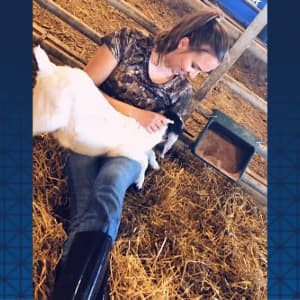
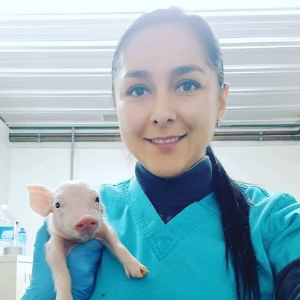
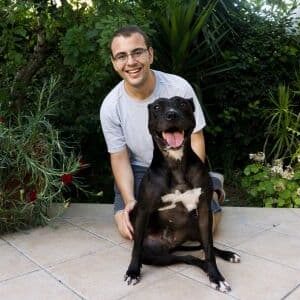
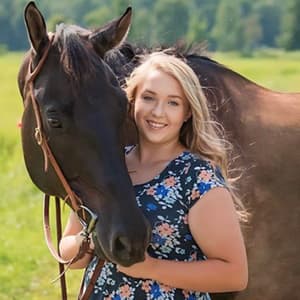
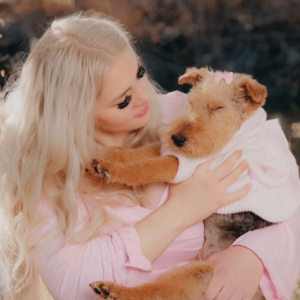
Vanessa DePino

Full-Time and Online Student

Tell us about your background (education and current work experience).

In August of 2025, I completed my bachelor’s degree at Kansas State University, majoring in Animal Science with a pre-veterinary option. Before my bachelor’s degree, I obtained my associate’s degree in Business from the College of Lake County in December 2023. My previous coursework has given me a strong foundation to build on for this program. I have experience shadowing in veterinary clinics, but the majority of my experience comes from animal caregiving. I have pet sat for years, and in my childhood dog’s later years, she became special needs, and I provided 24/7 intensive care for her. I also have experience with exotics such as leopard geckos and axolotls.

How did you become interested in the Master of Veterinary Science degree program?

I first learned about this program while searching for master’s programs that I could complete after my bachelor’s degree and before applying to veterinary school. I wanted a program that would help me feel better prepared for the application process and also give me the best chance of succeeding once I am in veterinary school.

What sets the MVS degree/program apart from other programs you’ve either participated in or considered?

The MVS program is unique from other programs in numerous ways. The professors are all DVMs who want to offer mentorship and help you in any way they can; they want to really get to know you. The program’s overall class size is small, and you will likely see your professors in other classes. This helps to personalize the experience so they can better mentor you while supporting your goals.

Tell us about a course in the program that impacted you. How was the content useful?

I’m almost halfway into my first semester, and so far, one of my favorite courses has been VCM 507 Veterinary Form and Function. Dr. Aldridge, who is my pod leader for this class, has been amazing at teaching us to approach cases in new ways and making sure we don’t miss important information by connecting problems back to body systems. I have also enjoyed learning more about anatomy and physiology, as well as learning about a new body system each week. This course is helping me to think differently and learn in new ways, which helps me better understand the material and apply it.

The MVS degree helps students “discover what’s next” in their career. What’s next for you?

The next step for me is to apply to veterinary school, and I plan to apply next cycle. I intend to gain more hands-on experience along the way, while strengthening my application, and I will continue to learn from the professors here and use their guidance to support me. I am especially interested in veterinary neurology and hope to continue exploring it as I move forward.

What is one thing about the program you would say to someone considering this degree?

I would tell them to go for it. In the MVS program, the professors want to mentor you and take the time to get to know you personally. You will learn to think in new ways, apply that knowledge, and grow. Whether your goal is to become a veterinarian or just continue your education, the MVS program is an extremely unique and special opportunity. It serves as the perfect stepping stone to help you continue on your path.

Return to Student Spotlight

Genevieve Stickelmaier

Full-Time and On Campus Student

Tell us about your background (education and current work experience).

I graduated from UIUC with my Bachelor’s of Science in Animal Sciences. I loved the entire program there and wanted to work towards continuing my education within the animal agriculture world.

How did you become interested in the Master of Veterinary Science degree program?

I first became interested in the Master of Veterinary Science degree program during my freshman year of undergrad. I heard about it from a small advertisement in one of our classes and was drawn to the opportunities that graduate school could offer me, especially in line with the goals I had set for myself.

What sets the MVS degree/program apart from other programs you’ve either participated in or considered?

I think that being able to participate in the MVS program on campus drew me to the program, as well as the options that this graduate program opens for me.

Tell us about a course in the program that impacted you. How was the content useful?

One course that has impacted me so far is VCM 504, Intro to Veterinary Science. I really enjoy this course because it has taught me how to better understand the meaning of graduate school and allowed me to grow in my knowledge of the veterinary science world, as well as working within groups.

The MVS degree helps students “discover what’s next” in their career. What’s next for you?

I think that my next step in my career is to work towards a full time career within animal agriculture. I am very drawn to food animal agriculture and would like to help grow the food animal agriculture sector within our state.

What is one thing about the program you would say to someone considering this degree?

Take the next step! You will be able to grow in your education and explore various aspects of the veterinary science world, you did not even think of before. The MVS program opens so many doors and allows you to make connections within the veterinary science and animal science world to help create a better future for everyone.

Return to Student Spotlight

Kailee DiRienzo

Part-Time and Online Student

Tell us about your background (education and current work experience).

I have always had a love for school and furthering my education. I received a Bachelor of Science in Biomedical Science: Medical & Veterinary Sciences from the University of New Hampshire in 2023, completing the degree in 3.5 years instead of the normal 4 years. I have been involved in FFA (Future Farmers of America) in New Hampshire since 2018, and was our state’s National FFA Officer Candidate in 2022, previously serving as a NH FFA State Officer from 2020-2022. I’ve worked a variety of jobs since the age of 14. I went from working as a cashier, babysitting, pet sitting, a farm hand at a local rabbitry, and then started a job at a dog daycare, boarding, and training facility. I worked there for 3 years and finally moved into the veterinary field in January 2022. At my first clinic, I worked as a Veterinary Technician Assistant and helped all creatures great and small; running blood work, urine and fecal samples, assisting with radiographs, packing surgical packs, and so much more! I then accepted a position as a Client Service Representative at a small animal integrative hospital in June 2024 and have been there ever since! In veterinary medicine, you are constantly learning new things every day, which I am incredibly grateful for! I love listening to the stories from our clients and their stories about their pets!

How did you become interested in the Master of Veterinary Science degree program?

I first applied to veterinary school in 2023, which was between my Junior and Senior years of college. I did not receive any acceptances at that time and knew that I needed to do something different to improve my GPA and the knowledge gaps that I knew I had. I needed a program that would help me grow and understand what it means to be in the veterinary field, but I also needed it to be financially feasible since I had just graduated from undergrad. After much research, I found the MVS degree program at UIUC, as I could still work while being in school, and it was an affordable online program. I also took the initiative to interview current students, after looking through and listening to real student experiences through Facebook groups. I also got in contact with faculty and staff about the program before applying. Everyone was incredibly welcoming and friendly, and I knew this program was for me!

What sets the MVS degree/program apart from other programs you’ve either participated in or considered?

This program ensures that you grasp knowledge gaps and understand how to analyze good and bad data. Not all of the program is data-based, but the faculty and staff here truly want you to learn and grow. This program is relatively new, so they are constantly seeking feedback about courses and online materials. I had no trouble at all navigating Canvas — the system UIUC uses — which was the same system my undergraduate college used as well. I have loved being able to build off my knowledge gaps and truly learn, whether that be about course material or my classmates.

Tell us about a course in the program that impacted you. How was the content useful?

I really enjoyed VCM 507/509 and VCM 513/514. These courses are meant to challenge your knowledge gaps, but you work through them with your classmates through each case. And, on top of that, each case is different, and you or your classmates may have more understanding of the presentation of the cases. You all learn and grow from the experience and truly get to use critical thinking skills while solving problems and creating a plan as a group. No one enjoys group work — believe me, I’ve been through it — but these courses highlight the importance of working as a team through tough, long cases that you may or may not experience in this field or even in other fields. These courses were incredibly useful and challenged everything I knew and didn’t know.

The MVS degree helps students “discover what’s next” in their career. What’s next for you?

I knew I wanted to be a veterinarian before high school, but the main reason was different than most. At first, I wanted to be an author because I loved telling and creating stories. I had written a book and was too scared to self-publish it as a 16-year-old, so I stopped there, but kept writing when I had free time. As I’ve grown older and reflected on stories by James Herriott, I realized that there are so many unique stories in the veterinary field. Whether that be our clients, patients, or co-workers, it’s truly a small but wonderful world of growth and learning. As a CSR, I listen to each one of them, not just because it’s part of my job, but since they are all different and unique. I love my job, and I know I will continue to love it once I become a mixed animal veterinarian in the near future. I can’t wait to not only serve animals, but the people who love them, too!

What is one thing about the program you would say to someone considering this degree?

The MVS degree at UIUC is filled with an incredible level of community. The faculty, staff, advisors, and classmates want you to succeed. Everyone is welcoming, friendly, and willing to learn and grow the program with YOU, as the student. As a part-time, online student, I have been so grateful for this program as it fits my needs and my classmates’ needs, as well. Everyone is understanding of work schedules and is flexible with you as long as you communicate what you need. I HIGHLY recommend this program, whether you are looking to elevate your veterinary knowledge, trying to get into veterinary school, or simply trying to learn about various fields. This program is for you.

Return to Student Spotlight

Lillian Rogalski

Full-Time and In-Person Student

Tell us about your background (education and current work experience).

I got my associates in science at ICC in Peoria IL.  I then got my bachelor’s in animal science last semester at UIUC. I am currently pursuing my masters in veterinary science. I have been in the air national guard for 5 years now. While doing my undergrad I was working on the Lincoln dairy farm where I milked cows and helped with research. Currently I am a vet assistant at Curtis Road Animal Hospital in Savoy.

How did you become interested in the Master of Veterinary Science degree program?

I realized I was not ready to apply to vet school yet. I feared my GPA was to low amd I also had 3 prerequisite I needed to complete.   While pursuing my degree it should help raise my GPA and hopefully stand out when applying for vet school.

What sets the MVS degree/program apart from other programs you’ve either participated in or considered?

I love the small class size for the in-person students. The main goal is to really expand your understanding and knowledge not just memorize the material.

Tell us about a course in the program that impacted you. How was the content useful?

One of my favorite class this semester is VCM 507. In there we learn about form and function and you learn as much as you are willing to put in. It is not a class where you are told to know this about a system instead you ask questions about it and dive deeper in the areas you find interesting and important.

The MVS degree helps students “discover what’s next” in their career. What’s next for you?

I will be applying for the next cycle of vet school. My goal is to be accepted at UIUC and become a companion animal vet with my own practice one day.

What is one thing about the program you would say to someone considering this degree?

If you are unsure about applying to vet school, look into this program. You will gain knowledge and experience and will make some great connections.

Return to Student Spotlight

Suzie Migut

Full-Time and In-Person Student

Tell us about your background (education and current work experience).

I graduated from the University of Illinois at Urbana-Champaign with a Bachelor’s degree in Animal Sciences. I have worked as a veterinary assistant and am currently working as a teaching assistant.

How did you become interested in the Master of Veterinary Science degree program?

I have always wanted to expand my knowledge and experience different paths in my career. I learned about the Master of Veterinary Science degree through my college advisors and fellow ANSC peers. The program immediately felt right for me.

What sets the MVS degree/program apart from other programs you’ve either participated in or considered?

The MVS degree has been so incredibly different in a great way than other programs I considered. This program has already helped me grow as a person as well as academically. I have been learning many useful things and have met incredible people through this program that will stick with me forever.

Tell us about a course in the program that impacted you. How was the content useful?

The courses in this program are all very impactful and fulfilling, but I have especially loved VCM 507/509 so far. The content is very intriguing and relevant while the format of the class has helped me be successful as a student and prepare me for a future career.

The MVS degree helps students “discover what’s next” in their career. What’s next for you?

My path hasn’t always been clear, but the MVS degree has helped me develop my passion(s) that I didn’t know would be so important for me. I plan on starting off working in conservation programs and helping design new efforts! I also will be considering applying for veterinary school in the future as well.

What is one thing about the program you would say to someone considering this degree?

The MVS degree is incredibly helpful even if you aren’t planning on going to veterinary school. It has so many options and opportunities for you to really explore and dive into.

Return to Student Spotlight

Elisabeth Sullivan

Full-Time and In-Person Student

Tell us about your background (education and current work experience).

I completed my undergraduate studies in Animal Science at the University of Illinois Urbana-Champaign and am currently pursuing a Master’s in Veterinary Science. Alongside my academic journey, I work as a veterinary assistant, where I find great fulfillment in caring for large animals. My passion for animal care and veterinary medicine continues to grow as I gain hands-on experience and expand my knowledge in this field.

How did you become interested in the Master of Veterinary Science degree program?

I first became interested in the program during my undergraduate studies when my advisors introduced me to it. After exploring the UIUC program page, I quickly realized it was the perfect fit for my goals and aspirations.

What sets the MVS degree/program apart from other programs you’ve either participated in or considered?

The high quality of the in-person classes in the MVS program, coupled with its one-year structure, has allowed me to achieve more in a shorter period of time than I ever anticipated. This intensive program has provided me with a depth of knowledge and hands-on experience that far exceeds my expectations, enabling me to grow both personally and professionally at an accelerated pace.

Tell us about a course in the program that impacted you. How was the content useful?

VCM 568, taught by Dr. Lowe, has had the greatest impact on me because it offers a real-world perspective on business and management. This course has provided a valuable opportunity to expand my knowledge beyond animal health, enriching my understanding of broader concepts that will benefit me both professionally and personally.

The MVS degree helps students “discover what’s next” in their career. What’s next for you?

The MVS program has truly set me up for greater career opportunities, with the guidance of faculty who are always eager to advise and support your future goals. Dr. Lowe, in particular, has been instrumental in helping me define the next steps in my career. While I plan to apply to veterinary school, I will be pursuing farm management in the meantime to gain further experience and broaden my skill set.

What is one thing about the program you would say to someone considering this degree?

I would tell someone considering this degree that the MVS program offers a unique combination of hands-on experience and expert guidance, which not only deepens your knowledge in animal health but also expands your understanding of business and management. The faculty are incredibly supportive and invested in helping you achieve your career goals, providing invaluable advice and opportunities for personal and professional growth.

Return to Student Spotlight

Alicyn Tilk

Full-Time and In-Person Student

Tell us about your background (education and current work experience).

I graduated in 2021 from the University of Findlay (OH) with a BS in Animal Science, with a Pre-Veterinary emphasis. I spent the last three years working with Case Western Reserve’s Animal Resource Center, first as a husbandry technician, and later as a veterinary assistant, where I got to work with a multitude of species! Now I’m attending U of I’s Master of Veterinary Science program, while working full time as a vet assistant with the Veterinary Teaching Hospital’s Intermediate Care team.

How did you become interested in the Master of Veterinary Science degree program?

After I didn’t get into vet school last cycle, it was recommended that I take a few post-baccalaureate classes or a master’s program to increase my GPA and experience. A few Google searches brought me across the MVS degree, and it checked all the boxes!

What sets the MVS degree/program apart from other programs you’ve either participated in or considered?

The MVS degree at U of I offered a well-rounded course list that allowed me the freedom to explore my interests while targeting skills I could utilize in any animal science career. With the accelerated timeline that I was looking for (1 year), I was really excited that they offered an in-person degree option. The face-to-face interactions with faculty and fellow students truly help solidify the material covered while allowing us substantial networking opportunities around campus.

Additionally, I toured the vet school campus and the “Chambana” community a few years ago, and it immediately felt like a second home. I knew if I was going to succeed in any fast-tracked opportunity, I would be able to have the support and resources available to do so here.

Tell us about a course in the program that impacted you. How was the content useful?

I’ve had a few impactful courses! I just started VCM 568 “Livestock Systems I” with Dr. Jim Lowe on campus. So far, we’ve had some deep, thought-provoking discussions about the concepts of company/ production goals and the psychology of managing any livestock operation.

I also liked taking BADM 509, “Managing Organizations” through the business college as an approved elective for my degree last fall. While I historically struggled with online courses, the U of I faculty and staff truly put the effort into engaging with the students and connecting us to the material, and each other.

Right now, my goal is to be a well-rounded professional, and adaptable to any career path I might find myself in. I hope to stay in animal science and medicine, as I love the hands-on aspect of problem solving, but I would be open to moving into administration one day if the opportunity arises.

In alignment, material from these courses has helped me develop into a better coworker and team member for group projects. Science is my forte, and the MVS courses do well to cover those in-depth. But, the opportunity to take a “break” from the science-intense course work was a welcome challenge and I believe what takes this program to the next level!

The MVS degree helps students “discover what’s next” in their career. What’s next for you?

Taking a full-time course load in a master’s program can be intense. With the MVS, I’m finding it just as rewarding! It is solidifying that animal science/ medicine is the industry in which I’d like to develop a career.

I’m currently waiting to hear back from a few veterinary schools to see if I’ll be starting as a student this fall. However, the MVS program is truly reinforcing my confidence that I would succeed in a rigorous professional degree program, whenever that time comes. If I end up applying in the next vet school application cycle too, I’ll be going into the process feeling more prepared than before.

What is one thing about the program you would say to someone considering this degree?

Go in with an open mind! I feel like some of my cohort, myself included, came in with the idea that this would “just boost the GPA.” While straight-A’s can help your overall GPA a little (as a veterinary school hopeful), but that isn’t the sole purpose. The lessons surrounding industry and life you come across have much more impact if you’re willing to be receptive to them.

As with any post-baccalaureate program, there’s a lot you’ll have to do and figure out on your own, and that’s ok! It’s not undergraduate, the professors won’t hold your hand, but they are readily available and willing to guide you if you need it. It’s an incredible balance of challenging and supporting the students that I believe the majority of the MVS program faculty and staff have mastered.

Return to Student Spotlight

Camila Mendez

Part-Time and Online Student

Tell us about your background (education and current work experience).

I hold a diverse educational background and extensive work experience in the field of veterinary science. My educational journey began at the Universidad del Tolima in Colombia, where I earned my degree as a Veterinary Zootechnician. Since then, I have been committed to continuous learning and professional development, pursuing various specialized courses and degrees to enhance my skills and knowledge.

I furthered my education with a Specialization in Animal Nutrition at the Universidad de Ciencias Aplicadas y Ambientales, followed by a postgraduate course in University Teaching at the Universidad del Tolima. Additionally, I completed a Specialization in Animal Health at the same institution. Most recently, I embarked on the Master of Veterinary Science at the University of Illinois Urbana-Champaign, which has been a transformative experience in broadening my understanding of veterinary science and its applications in livestock systems.

My work experience spans over 17 years, during which I have held various roles in both academic and industry settings. From teaching pig production, nutrition, and reproductive management at universities to serving as a Technical Assistant at porcine farms, I have gained hands-on experience in all aspects of animal care and management. Currently, I serve as a Sr. Animal Technician Specialist at the Center for Discovery and Innovation in Nutley, New Jersey, focusing on research for infectious diseases like COVID-19 and tuberculosis.

How did you become interested in the Master of Veterinary Science degree program?

My journey into the Master of Veterinary Science program at the University of Illinois Urbana-Champaign was fueled by my passion for the swine industry and my desire to advance both personally and professionally. Living and working in the United States, I’ve witnessed firsthand the advancements and innovations in veterinary science that contribute to the sustainability and profitability of the swine industry. However, my ultimate goal is not only to excel in my career here but also to bring back enriched knowledge and expertise to my home country. I am driven by the desire to contribute to the development of the swine industry in Colombia, where I can apply the insights and skills gained from the MVS program to make a meaningful impact.

What sets the MVS degree/program apart from other programs you’ve either participated in or considered?

The Master of Veterinary Science (MVS) degree program distinguishes itself through its comprehensive curriculum covering a wide array of subjects crucial for effective animal care and management. Unlike other programs I have explored, which tend to focus narrowly on specific disciplines such as business or science, the MVS program offers a multifaceted approach to veterinary science. It equips students with diverse knowledge and skills essential for addressing various challenges in animal welfare and husbandry.

Moreover, the flexibility of online learning distinguishes the MVS program, enabling students to pursue their education without interrupting their professional commitments. This aspect is particularly valuable for individuals like myself, allowing for the seamless integration of academic pursuits with ongoing professional responsibilities.

Tell us about a course in the program that impacted you. How was the content useful?

One course that significantly impacted me in the Master of Veterinary Science program is VCM 565 (Biostatistics, Information Management, & Data Analytics). This course was particularly influential because it introduced me to the importance of statistical analysis and data interpretation in veterinary science.

Additionally, VCM 568 (A Systems-Based Approach to the Operation of Livestock-Based Food Production Systems I) was another impactful course. It challenged me to consider the interconnectedness of various components within livestock production systems and evaluate the holistic impact of proposed changes. This systems-based approach broadened my perspective on animal health and management, enabling me to identify constraints within systems and devise comprehensive solutions.

The content covered in both VCM 565 and VCM 568 provided me with valuable insights into how data can be utilized to enhance decision-making processes in animal health and production management. Learning about statistical methods, data analytics, and systems thinking empowered me to analyze large datasets effectively, identify trends, and derive meaningful conclusions.

Moreover, the practical applications of the course content were immensely useful in my professional endeavors. As a veterinarian, being able to interpret data accurately and understand the broader context of livestock production systems allows me to make informed recommendations for optimizing animal welfare, improving production efficiency, and mitigating health risks.

The MVS degree helps students “discover what’s next” in their career. What’s next for you?

The Master of Veterinary Science (MVS) degree program indeed fosters a sense of exploration and discovery, empowering students to envision their future career paths and pursue their aspirations with confidence. For me, the MVS program has been instrumental in broadening my horizons and equipping me with the skills and knowledge necessary to navigate the dynamic landscape of veterinary science. As I near the completion of my MVS degree, I am excited to embark on the next chapter of my professional journey. One option that I am considering is pursuing a Ph.D. in veterinary science. Building upon the foundation laid by the MVS program, a Ph.D. would offer me the opportunity to delve deeper into a specific area of interest within veterinary science, conduct advanced research, and contribute to the advancement of knowledge in the field.

What is one thing about the program you would say to someone considering this degree?

I would encourage anyone considering the Master of Veterinary Science (MVS) degree program to embrace the opportunity for growth and exploration it offers. This program is not just about acquiring knowledge; it’s about discovering new perspectives, challenging assumptions, and unlocking your potential as a veterinary professional.

The interdisciplinary nature of the MVS program is truly remarkable. It exposes students to a diverse range of subjects, from animal health and nutrition to data analytics and management principles. This breadth of knowledge not only expands your skill set but also broadens your understanding of the complex issues facing the veterinary profession today.

Moreover, the flexibility of online learning makes the MVS program accessible to students from diverse backgrounds and geographic locations. Whether you’re a practicing veterinarian looking to enhance your expertise or a recent graduate eager to jumpstart your career, this program offers the flexibility you need to pursue your educational goals without sacrificing your professional or personal commitments.

Ultimately, the MVS degree equips you with the tools and knowledge you need to make a meaningful impact in the field of veterinary science. Whether you aspire to work in clinical practice, research, academia, or industry, this program provides a solid foundation upon which to build your career and make a difference in the lives of animals and the communities you serve.

Return to Student Spotlight
Pavlos Stavrou

Part-Time and Online Student

Tell us about your background (education and current work experience).

I finished my Veterinary Medicine studies in 2021 and worked for a few months in a small animal clinic as a veterinarian. I was doing mainly spaying and neutering surgeries, wound treatment, and other treatment for stray animals or housed animals.

All my patients were cats and dogs and only in rare cases were some exotic animals that we referred to other specialized veterinarians.

How did you become interested in the Master of Veterinary Science degree program?

I wanted to change my career path and pivot away from small animal practice. Client interactions within our small animal clinic were growing increasingly frustrating, and I was looking for a new environment and change within my career. I always loved livestock animals even before starting my studies in Veterinary Medicine. The University in my city did not offer any Master’s Degree and the tuition cost for their newly opened Veterinary Medicine department is very high for me or other people I know. However, I came across the advertisement for the University of Illinois online Master of Veterinary Science with a simple search online during a busy day at work. Making this career change and starting the Master of Veterinary Science degree in my opinion was the best decision I ever made in my studies. The program fits all my needs. With the flexibility of choosing every class, I love to learn more and that will help me in the future. With the program being online, I also have the benefit of the reduced to zero cost of moving to a different country, paying extra costs for rent living, etc.

What sets the MVS degree/program apart from other programs you’ve either participated in or considered?

The program is not just a set of courses; you are calling the shots as a future professional in a challenging industry. Everything is available to fit your needs, and the staff is always readily available each semester to discuss which courses best suit your interests and goals, as well as assist in any setback or problem I have faced related to the program.

In my opinion, the individual with the most knowledge and ability to think critically is the person set to overcome every challenge easily within the industry. This program will set me up to do just that! Some job positions in Cyprus where I live, specifically need to have in-depth knowledge in subjects only available in this: biosecurity, managing a farm in the best cost-effective way possible, and One Health (which is very important for the veterinarians working in the EU).  

Tell us about a course in the program that impacted you. How was the content useful?

It is difficult to separate a specific course from the others, as it is not the course alone that is important but what goals and skills you want to develop more through the course. For example, I loved the biosecurity classes because I found it’s better to take preventative measures than try to fix everything when the “storm” comes. Also, as a new veterinarian with limited experience in livestock farms, I had the best result possible when visiting farms, from the guidance of our teachers.  The main takeaways from the courses that I have found most useful are limiting the cost of diagnosis/test and implementing small changes to see the biggest impact on the health of the animals and the sustainability of a farm.

The MVS degree helps students “discover what’s next” in their career. What’s next for you?

I have a few ideas on what I want to do next and every day new opportunities open up. I applied to job openings for Veterinarians working in the Veterinary Service of the government here (to do the same things I am learning in the MVS program). Also, because of the growing popularity of Veterinary studies in my country, I may apply to work as a staff member or apply for PhD at a University in my city.

What is one thing about the program you would say to someone considering this degree?

When choosing the program, you are not only making the best decision in your career, but you also get to know many professors who are at the top in their industry who teach you how you make the best decision in any situation (small animal or farm system).  Through the program, you can get the best ideas on how to reach any goals you have for your future career.

Return to Student Spotlight

Megan Cochran

Part-Time and Online Student

Tell us about your background (education and current work experience).

I obtained my Bachelor of Science in Biological Sciences from Alfred University in May 2022. During my academics, I pursued a minor in chemistry and concentrated my studies in the field of pre-veterinary medicine. I am currently working as a veterinary assistant at a small animal hospital called Erie Canal Animal Hospital and its sister hospital Apple Country Veterinary Hospital.

How did you become interested in the Master of Veterinary Science degree program?

I came across the MVS program last fall when I was searching for programs that would allow me to continue my education, involved something I was passionate about, and could complete prior to vet school, which I hope to be accepted into one for Fall of 2024.

What sets the MVS degree/program apart from other programs you’ve either participated in or considered?

The MVS program sparked my interest as I am able to complete my degree completely online and at my own pace! I was able to plan my courses ahead of time so I could complete the degree in a year and be able to finish in time to hopefully start vet school. Also, the program’s emphasis on livestock stood out to me as someone who wants to pursue large animal medicine.

Tell us about a course in the program that impacted you? How was the content useful?

My favorite course so far was VCM509 Biology of Veterinary Pathogens. This course sparked my interest as I knew it would be a beneficial curriculum for someone wanting to go to vet school. Beyond that, the Problem-Based Learning approach taught me how to work through real case studies and was not only fun but great at teaching the information.

The MVS degree helps students “discover what’s next” in their career? What’s next for you?

Ideally vet school! This is my second cycle applying and I hope this program gives me a leg up for admissions and will help me with the curriculum once I get in.

What is one thing about the program you would say to someone considering this degree?

I cannot say enough great things about all the staff and professors I have had the privilege of working with! Their kindness, understanding, and exemplary mentorship have left an indelible mark on my educational journey.

Return to Student Spotlight
Master of Veterinary Science
2938 Veterinary Medicine Basic Sciences Building
2001 South Lincoln Avenue
Urbana, IL 61802
217-300-7439