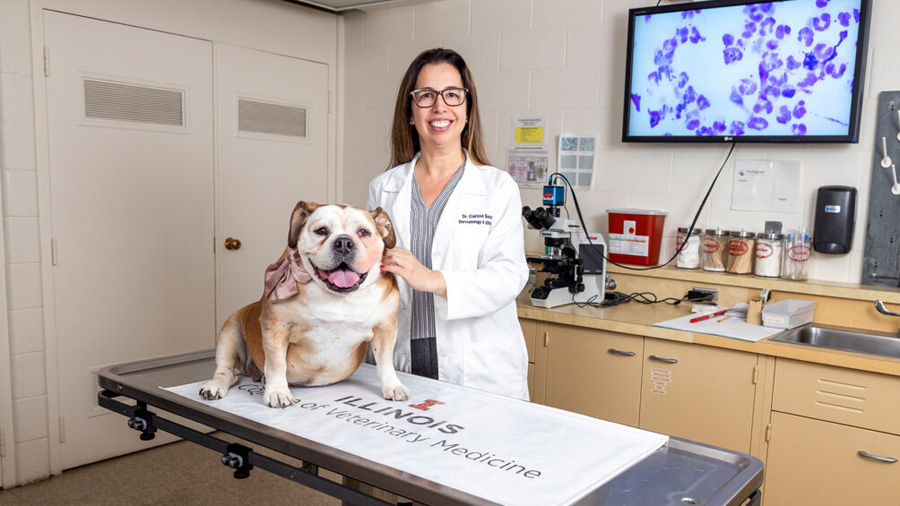
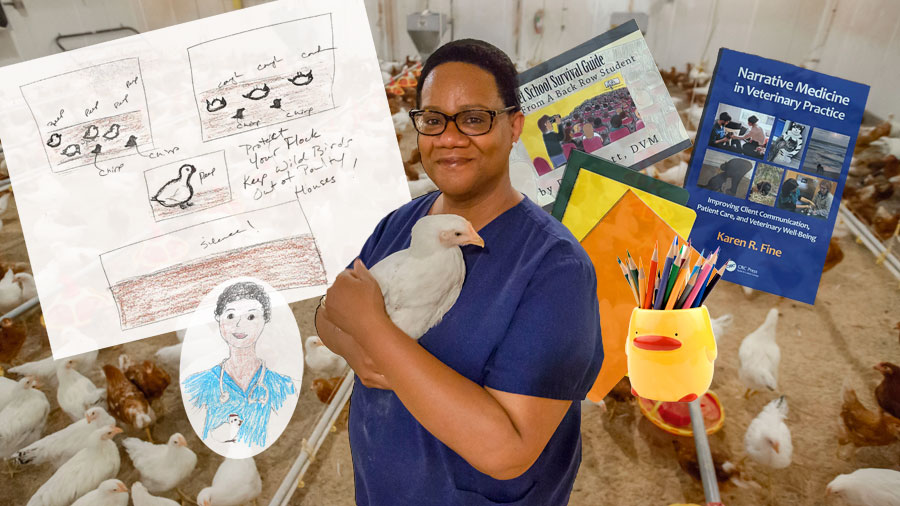
The Department of Veterinary Clinical Medicine conducts discovery, instruction, and service relevant to companion animals, horses, food and fiber animals, and exotic, wildlife, and zoological species.

Welcome from the Department Head
With around 90 faculty positions, the Department of Veterinary Clinical Medicine is among the largest departments on the University of Illinois campus. Our diverse faculty deliver high-quality and comprehensive veterinary care and diagnostic services. We teach in every year and every semester of the veterinary curriculum. And we engage in scholarship to advance health and biomedical discovery. Our faculty enjoy flexibility in balancing their appointment’s focus within these complementary missions of teaching, research, and service.
We value a culture of inclusiveness, collegiality, professionalism, and service. As a growing department united in our contributions toward healthy animals, people, and environment, we welcome new team members who share this vision.
Anne Barger, DVM, MS, DACVP
Department of Veterinary
Clinical Medicine
244 Small Animal Clinic
1008 West Hazelwood Drive
Urbana, Illinois 61802
P: (217) 333-5310
F: (217) 244-1475
Anne Barger, DVM, MS
DACVP –
Professor and Head
Overview
Expertise in the Department of Veterinary Clinical Medicine spans a wide range of clinical specialties. Most faculty spend a significant proportion of their time delivering or supervising the care of patients in the Veterinary Teaching Hospital. This clinical service integrates the training and education of residents, interns, and veterinary students who are engaged with patient care
In addition to teaching as part of patient care delivery, departmental faculty teach and lecture in core courses and electives in the veterinary degree program, in graduate student seminars, and in the college’s online Master of Veterinary Science program. Most also engage in continuing education for veterinary professionals through publications in practice-oriented journals, presentations at professional meetings, or delivery of online continuing education modules. Many take on leadership roles nationally or internationally in the professional associations devoted to their area of specialty.
Research is very often focused on advancing the standards of patient care, addressing problems that arise in the patient population that they see. Innovations developed for human patients are frequently adapted to animal patients. For example, a real-time imaging device that could allow oncologic surgeons to ensure that they have excised all of a tumor without having to wait for a pathologist’s report is being borrowed from breast cancer surgery and applied to canine cancers.
Medical advances sometimes originate in veterinary medicine and move to human medicine: chemotherapeutic approaches to osteosarcoma that have proven effective in naturally occurring cancers of dogs treated at our hospital are beginning trials in people with cancer.
Veterinary Clinical Medicine faculty frequently use clinical trials to answer specific questions about new therapies and drugs. Patients at the Veterinary Teaching Hospital may be eligible to enroll in a clinical trial that offers cutting-edge treatments at a reduced cost to the animal owner.
Faculty are dedicated not only to animal health and welfare, but to improvement of human and environmental well-being through improved understanding of the human-animal bond, food production systems, and ecosystem health.
Selected Areas of Research
Emergency Medicine/Critical Care
- Monitoring coagulation and other blood parameters in the critical equine and canine patient
- Efficacy of stored blood products
- Regulation of temperature in small animal patients during anesthesia
- Methods to evaluate and improve recovery from anesthesia in horses
Equine Orthopedics and Regenerative Biology
- Lameness in sports horses and their related musculoskeletal injuries
- Stem cell therapies for the treatment of musculoskeletal conditions
Imaging
- Stereolithography (3D printing) for surgical planning and training
- Advanced CT imaging of emergency and critical care patients
Microvascular Surgery
- Microvascular tissue transfer surgery, reconstructive surgery, and urogenital surgery
Oncology
- Investigating procaspase-3 activators as novel anticancer agents
Production Medicine
- Management and control of infectious disease in swine production systems
- Pharmacokinetics of a non-steroidal anti-inflammatory transmucosal spray in piglets
- Adaptive and transitional health in young animals
- Using massive open online courses to advance animal health, welfare, and production globally
Respiratory Medicine
- Structure, function, diseases, and therapeutics of the respiratory system in dogs and cats
Theriogenology
- Reproductive management, physiology, uterine immunobiology and microbiology in cattle
- Mare fertility and problems in conception and delivery
Zoological Medicine
- Care and husbandry of domesticated small mammals
- Collection and characterization of semen from reptiles
- Anesthetic protocols for penguins, toads, tarantulas, and other exotic species