Bats – Those that get a bad rap are under attack
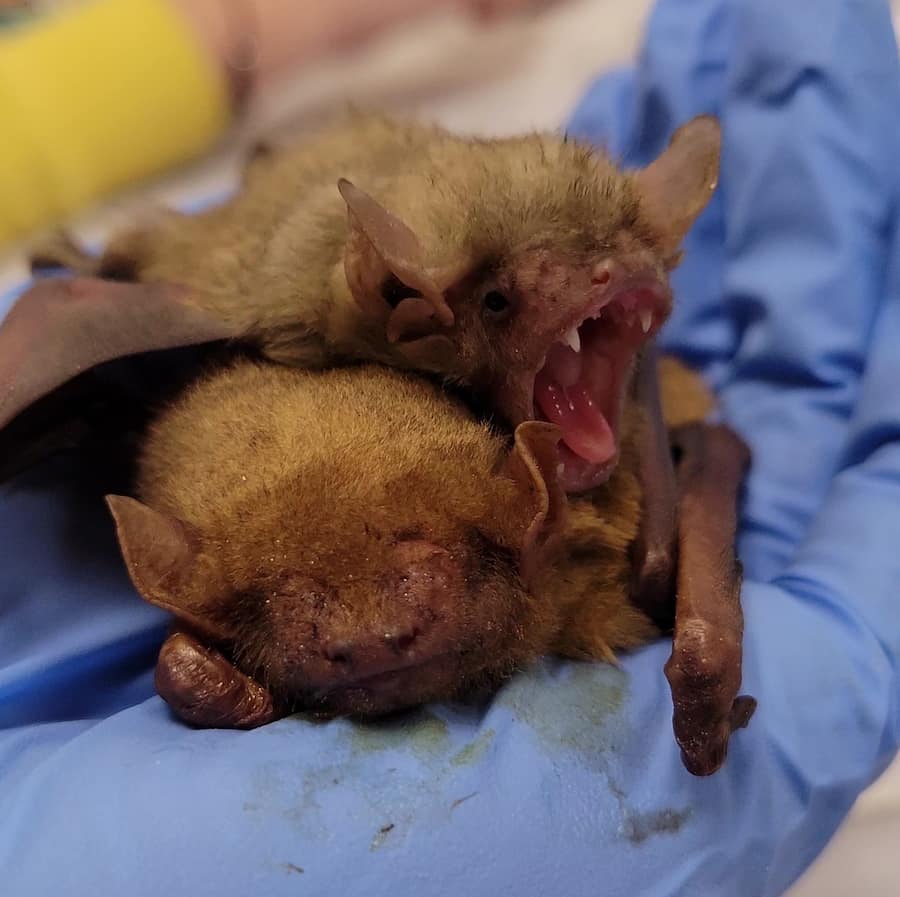
Bats are agile winged mammals that use echolocation to navigate at night as well as to hunt for prey. Bats usually live in caves in large colonies and vary in size and diet depending on the species. In recent years, bats have been under fire for being the source for several zoonotic diseases that can and have caused thousands of deaths in populations of other species. However, bats are an extremely important part within the ecosystem’s food web by clearing invasive and an overwhelming number of insects every night. For a place like Illinois, which thrives in the agricultural field, bats are a huge reason for healthy crop yields. Specifically in Illinois, there are five species of interest that are close to extinction due to the devastating effects of White Nose Syndrome (WNS). These species include the Little Brown Bat (myotis lucifugus), Indiana Bat (myotis sodalis), Gray Bat (myotis grisescens), Eastern Small-Footed Bat (Myotis leibii), and the Tricolored Bat (Perimyotis subflavus).
White Nose Syndrome
White Nose Syndrome (WNS) is a devastatingly infectious fungal disease stemming from the causative fungus, Pseudogymnoascus destructans (Pd). It is a disease that mostly affects hibernating bats, and it spreads rapidly from bat to bat. Pseudogymnoascus destructans (Pd) infects the skin on the ears, wings, and muzzle. This fungus erodes deep into the skin and disrupts the hibernation process of the bats causing physical and mental damage as they fight the infection while disrupted from their normal physiological sleeping cycles. Scientists found that the fungus is documented in the soil surrounding the caves providing easy access to the sleeping bats as well as their skin microbiome being a comparable community like the normal settling surface of P. destructans. Humans may also be potential carriers of P. destructans when they travel to national parks and caves, thus increasing the rate of infection.
WNS was first discovered in New York in the winter of 2006-2007. This disease has been devastating to many different bat species across North America, as the rise in total deaths caused by WNS has hit six million. In each bat population affected by WNS, it usually causes devastating effects of wiping out 90-100% of bat colonies. One of the main reasons that bat species have had debilitating effects from WNS is their low reproduction rate, as most bats usually have only one pup per year. Thus, if a bat population is almost completely wiped out from a WNS outbreak, it is difficult to recover the colony back to appropriate and healthy numbers.
How to Prevent the Spread and What are the Treatments
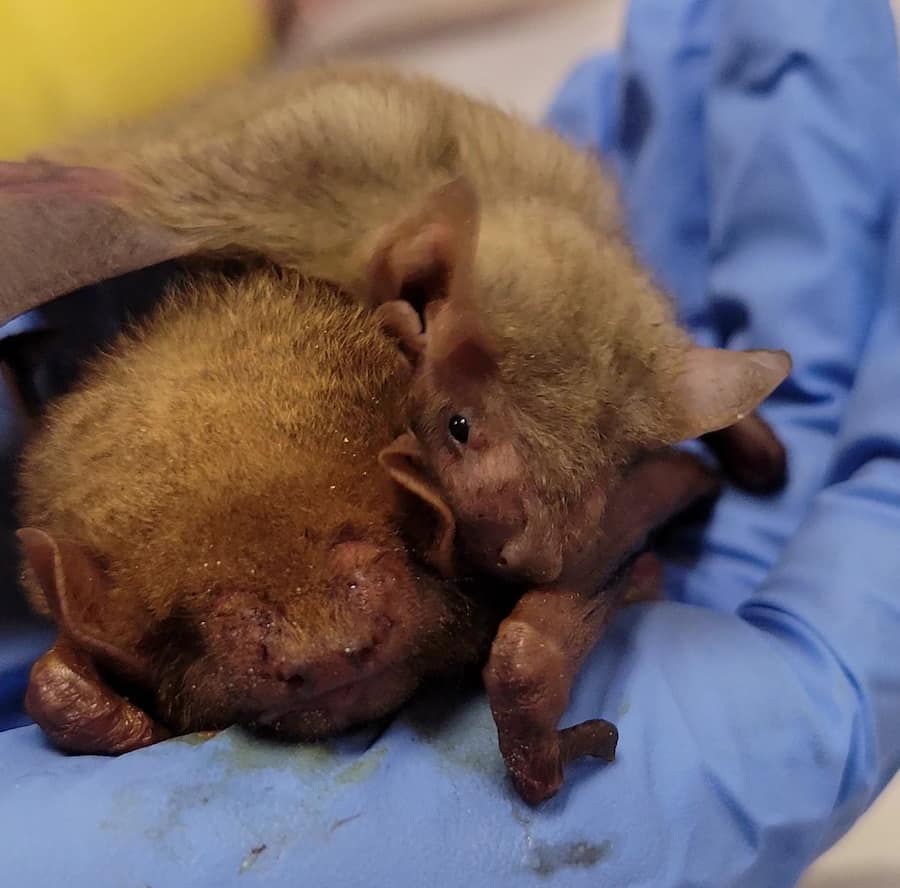
As this disease is devastating many species across North America, the U.S. Government has been monitoring bat colonies to prevent continual spread and to help recover the already affected populations. The National Park Service has personnel monitoring bat populations, educating visitors about WNS and overall protecting their habitats. Decontamination processes, such as properly cleaning shoes and gear, are recommended as forms of prevention of further fungal spread as humans can be vehicles of transmission when entering multiple caves or mines. As for treatment, scientists have produced a vaccine that uses a modified raccoon pox virus to express and attack fungal antigens as a protective measure. This is an oral vaccine that is given to bats in the fall or summer before hibernation processes begin. Scientists have noted that it takes about 3 years before the vaccine provides ample immunity in a colony; however, Idaho noticed a spread in 2021, after giving the vaccine the same year, they noticed in 2024 that they have no mortality in a specific cave bat colony. Since this vaccine is oral and requires human handling and capture, scientists are working on making aerosol sprays or larger scale vaccines and preventative treatments to minimize stress, human contact, and handling. While these diseases and animals can be scary to come into close contact with, if noticed while hiking or caving, it is important to identify the disease and report it to the proper local and federal authorities to better manage the spread of disease and limit devastating effects.
Written by: Madison D., Class of 2028
Works Cited
Fighting white-nose syndrome in bats benefits agriculture, study shows | College of Agricultural, Consumer & Environmental Sciences | UIUC. (2022). Illinois.edu. https://aces.illinois.edu/news/fighting-white-nose-syndrome-bats-benefits-agriculture-study-shows
Powers, L., & Francis, B. (n.d.). Effects of white-nose syndrome on reproduction and survival in Illinois cave-hibernating bat species. Retrieved October 13, 2025, from https://dnr.illinois.gov/content/dam/soi/en/web/dnr/grants/documents/wpfgrantreports/20 14l16w.pdf
Project T-78-R1. (2023). Illinois.gov. https://dnr.illinois.gov/conservation/iwap/white-nosesyndrome-and-il-bats.html
What species of bats are affected by White-nose Syndrome? | U.S. Geological Survey. (n.d.). Www.usgs.gov. https://www.usgs.gov/faqs/what-species-bats-are-affected-whitenose-syndrome White-nose Syndrome FAQs (U.S. National Park Service). (n.d.). Www.nps.gov. https://www.nps.gov/articles/white-nose-syndrome-faqs.html
White-Nose Syndrome in North American Bats. (2025). USGS. https://www.usgs.gov/tools/white-nose-syndrome-north-american-bats
Will the killer White Nose Syndrome infect bats in Illinois? – News Bureau. (2025). Illinois.edu. https://news.illinois.edu/will-the-killer-white-nose-syndrome-infect-bats-in-illinois/
Wilson, D. (2020). bat | Description, Habitat, Diet, Classification, & Facts | Britannica. In Encyclopedia Britannica. https://www.britannica.com/animal/bat-mammal
Vachula, L. (2024). Preventing and treating white-nose syndrome | U.S. Fish & Wildlife Service. www.fws.gov. https://www.fws.gov/story/preventing-and-treating-white-nosesyndrome