Why is it so important to keep our domestic animals inside and on a leash?
While pets love to have outside time and their pet owners love it too, it is important to be aware of your pet’s activities and supervise their time outdoors. They may come across wildlife that will not be as keen to meet them as they are to meet the wildlife! At the University of Illinois Wildlife Medical Clinic, we get many cases of cats and dogs interacting with wildlife that require our medical management. It is important to note that this can be risky both for our native wildlife and for our pets as well. The best way to limit interaction is to keep cats indoors or in a catio and walk dogs on a leash, even in the backyard.
What do we see most often at the clinic?
Throughout the year, we see Eastern Cottontail rabbits present to the clinic for different severities of wounds, including lacerations and broken bones often from being attacked by feral or outdoor domestic cats as well as domestic dogs. Treating patients who have been bitten or scratched by a cat can be challenging, and they must receive antibiotics promptly because cats harbor a bacterium called Pasteurella multocida. This specific bacterium can cause severe inflammation, redness, and even septicemia if it infects the bloodstream in rabbits, as well as our other mammalian and avian patients.
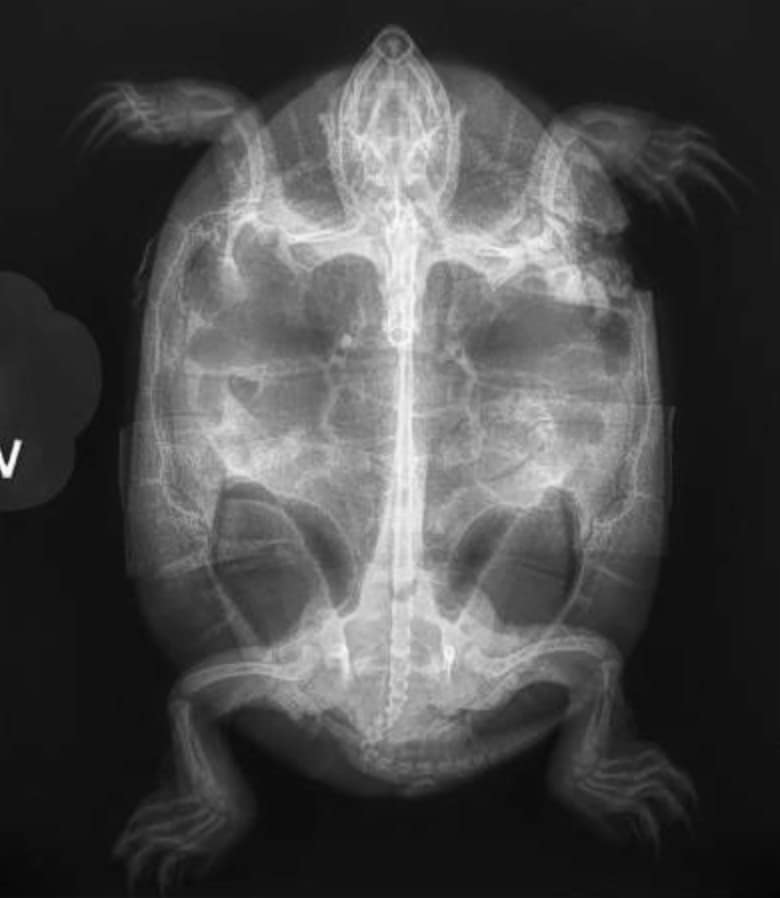
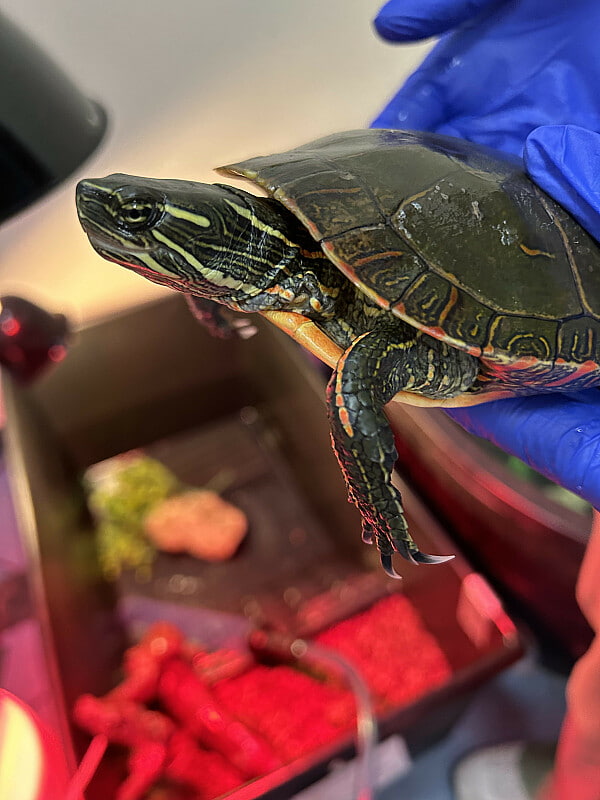
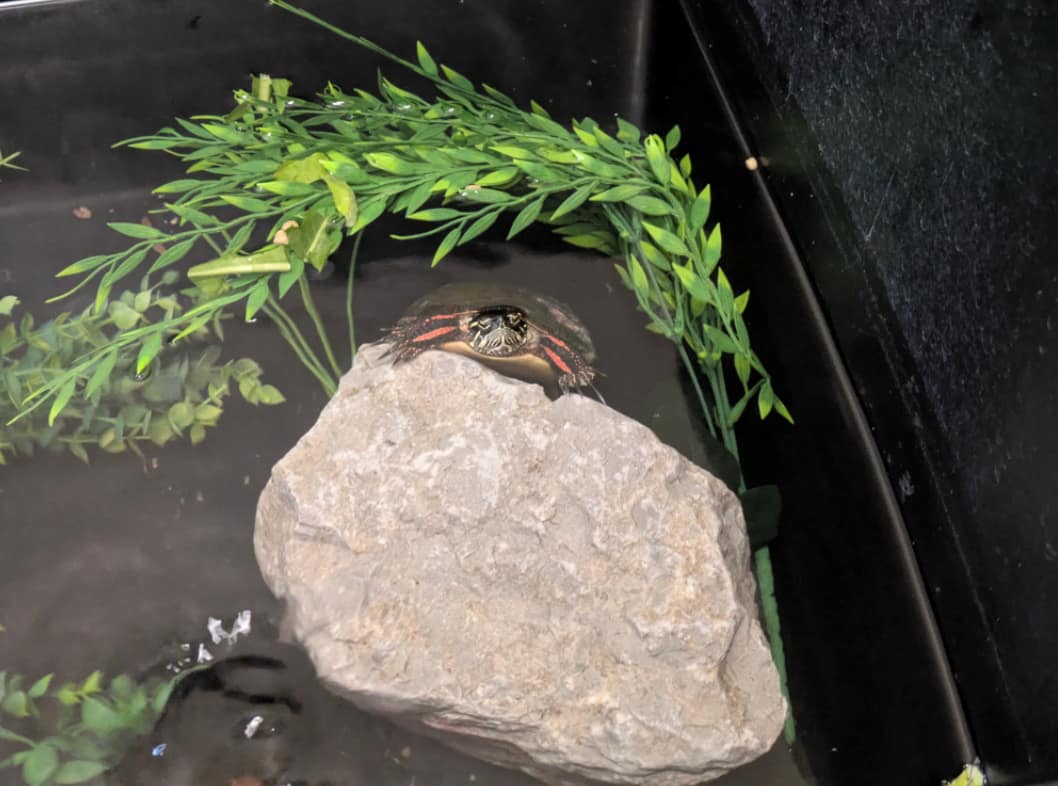
Along with rabbits, we also receive cases of turtles that sustain shell fractures when they are picked up by dogs. An example of this is Painted Turtle 25-966, who has been in our care since early June 2025, presenting to the clinic for several carapacial puncture wounds and shell fractures. The carapace is the upper portion of a turtle’s shell. After the initial intake exam, this patient was given the appropriate pain medication, antibiotics, and wound treatment. 25-996 will continue to heal in our care over winter, as it can take several months for these types of shell injuries to mend! He has been healing well, and the veterinary staff have seen positive improvements in his shell in the few months he has been with us.
How does all of this affect my pet?
While the Wildlife Medical Clinic does not treat domestic animals like our small animal medicine
colleagues do, we think it’s important to share how your furry family members can be adversely affected by wildlife interactions.
One type of infection that companion animals can pick up from wildlife is Salmonella. When dogs pick turtles up in their mouths, whether or not they think they look like their tennis ball or not, they can be susceptible to contracting an infection. Symptoms from this type of infection can include, but are not limited to, vomiting, fever, diarrhea, and lethargy.
Tularemia can also be a concern for outdoor cats and dogs that interact with wild rabbits in Illinois. This can be transmitted through direct contact with an infected rabbit or their body fluids, infected water sources, or blood sucking insects like ticks. Tularemia is a highly zoonotic disease (meaning it can spread between species and, in this case, to humans as well) and can cause symptoms such as fever, lethargy, poor appetite, enlarged lymph nodes, and abscesses. In humans, Tularemia can also present as ulcerating blisters that can spread the bacteria throughout the bloodstream.
What about birds? With the cooler season approaching, it is important to be aware of Highly Pathogenic Avian Influenza, or HPAI. While the name suggests, birds are the main susceptible species, cases have been seen in both cats and dogs, as well as people. One of the best ways to prevent your pets from contracting this influenza strain is by keeping pets indoors. Many cats and dogs outside may be attracted to birds, diseased or alive, or bird feces left behind, which can lead to the transmission of HPAI if touched or consumed. The main type of bird affected is waterfowl, but HPAI can be seen in any bird, including raptors and songbirds. Clinical signs in dogs and cats can consist of fever, lethargy, watery eyes, runny nose, difficulty breathing, and seizures.
If your pet interacts with any wildlife or is presenting with any symptoms, it is important to consult your primary veterinarian.
Helpful Links
https://vcahospitals.com/know-your-pet/tularemia-in-dogs
Written by: Emily B., Class of 2028