Have you ever spotted an adorable animal wandering about and wondered where it came from, or what impact it might have on its surroundings? While many of these creatures appear harmless, some end up in environments where they don’t naturally belong. When this happens, they are called invasive species, often an uninvited guest that disrupts local ecosystems and threatens native wildlife.
Invasive species are animals that are not native to a specific location and can cause serious harm to the environment, economy, and native wildlife. These species are often introduced, sometimes intentionally, in an attempt to solve another problem, and other times accidentally, through travel, trade, or the pet industry.
I’m here to share a few invasive species that I’ve come across while living in one of the most biodiverse places on Earth, Hawai‘i! Most people recognize the islands for their incredible natural beauty, lush landscapes, and diverse wildlife. Hawai‘i is home to over 25,000 unique species, and about 90% of its land animals and plants and more than a quarter of its marine life are found nowhere else in the world. This makes Hawai‘i’s ecosystems incredibly special, but also extremely fragile.
Because so many of these species evolved in isolation, they have no natural defense against new predators or competitors. When invasive species arrive, they often outcompete native animals for food and space, spread disease, or directly prey on species that have no way to protect themselves. Even a small change, like introducing one new predator or competitor, can throw off the delicate balance that has existed on the islands for thousands of years. That’s why understanding invasive species is so important, especially in a place as unique and vulnerable as Hawai‘i. Protecting these ecosystems helps ensure that the islands’ native plants and animals can continue to thrive for generations to come.
Trouble in Paradise: The Mongoose, Day Gecko, and Feral Pigs
Mongoose
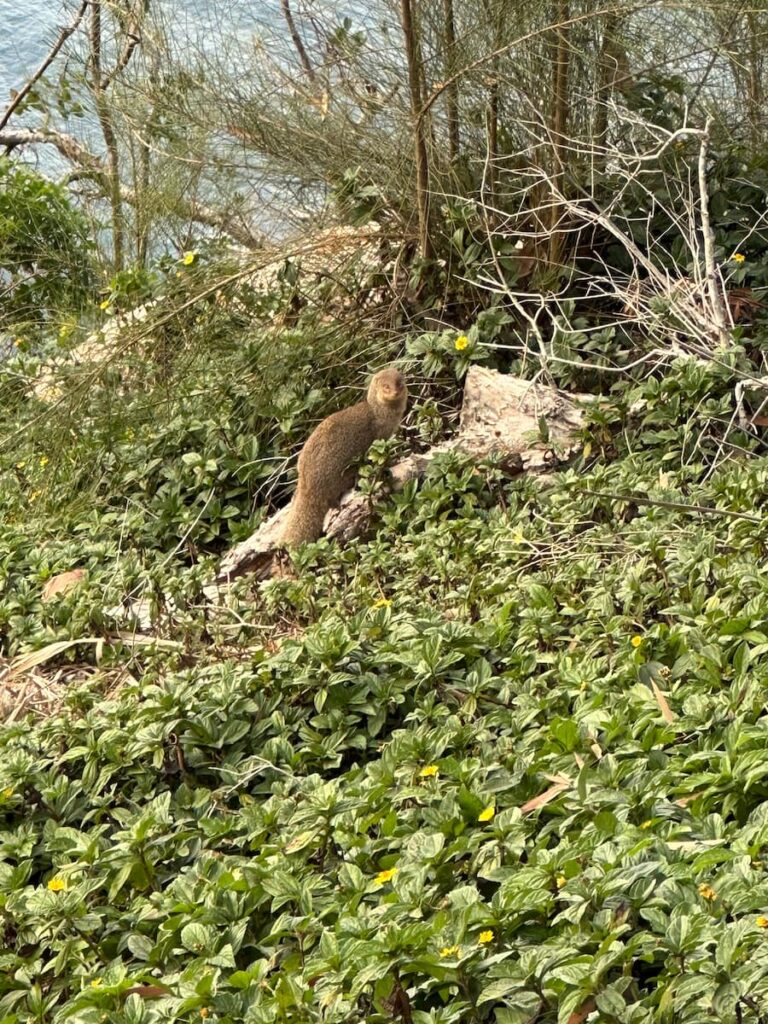
A mongoose is a small terrestrial mammal from the Herpestidae family that looks similar to a weasel or ferret. They have a carnivorous diet and are famous for their resistance to snake venom and their ability to kill venomous snakes. The mongoose was introduced to Hawai‘i in an attempt to control the rat population, which was wreaking havoc on sugarcane fields. Since mongooses prey on rats, it seemed like a simple solution. However, this plan backfired because rats are nocturnal, meaning they’re active at night, while mongooses are diurnal or active during the day. As a result, mongooses couldn’t effectively reduce the rat population, since the rats were never awake during the mongoose’s active hours. Instead, mongooses turned to preying on Hawai‘i’s native species, disrupting local ecosystems. Their presence caused the populations of several native species to decline dramatically, so much so that special fencing had to be installed around nature reserves and sanctuaries to keep mongoose out and protect vulnerable wildlife.
Gecko
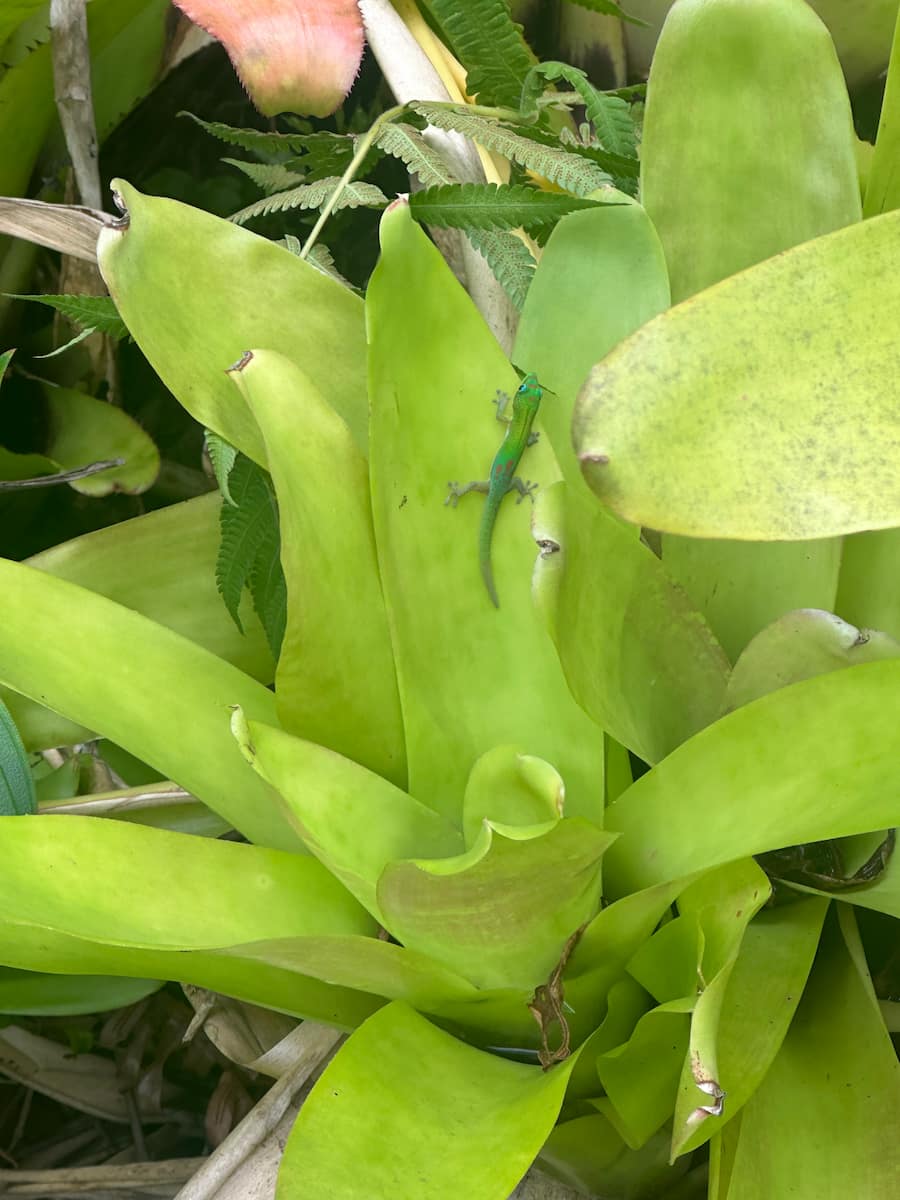
The gold dust day gecko and giant day gecko are two more invasive species affecting Hawai‘i’s native wildlife. These brightly colored lizards may look beautiful, but their introduction has made competition for food and territory much more difficult for native species. The geckos were first brought to the islands unintentionally by early Polynesian settlers, likely stowing away on voyaging canoes. More recently, they have been introduced through the pet trade, either by accidental escape or intentional release. A significant modern population of gold dust day geckos can actually be traced back to a University of Hawai‘i student, who released eight geckos in 1974. Since then, their numbers have spread rapidly across the islands. These invasive geckos compete with native insects and smaller lizards for food, and they can outcompete or displace native species due to their adaptability and fast reproduction. Their growing presence continues to challenge Hawai‘i’s delicate ecosystems, where even small changes can have lasting impacts.
Feral Pigs
Feral pigs are another major invasive species in Hawai‘i. Originally brought to the islands by Polynesian settlers and later by European explorers, these pigs have become one of the most destructive animals in the islands’ ecosystems. Their rooting and digging behavior uproots native plants, damages crops, and creates large muddy wallows that contribute to soil erosion and flooding. They also disturb the natural habitats of native animals by destroying nests and burrows. Feral pigs will even go after ground-nesting birds, pushing them out of their homes and eating their eggs. Even worse, their wallowing pools create perfect breeding grounds for mosquitoes that spread avian malaria, a deadly disease for Hawai‘i’s native forest birds. Because of their size and adaptability, controlling feral pig populations is extremely difficult, and their impact continues to threaten forests, watersheds, and native wildlife.
Preventing the Spread of Invasive Species
Moving animals, whether intentionally or accidentally, is one of the main ways invasive species spread. It’s important to be cautious when transporting any living creature between regions or countries, as this can introduce species to new environments where they have no natural predators or competitors to keep their populations in check which can disrupt entire ecosystems and native species.
What might seem harmless, such as releasing a pet into the wild, can actually cause serious harm not only to the pet but to the environment. Even seemingly harmless animals can disrupt ecosystems or outcompete native wildlife. The best way to help is to always rehome pets responsibly instead of releasing them.
When hiking or traveling, respect local wildlife regulations and avoid feeding or disturbing wild animals. These small actions help maintain balance within ecosystems and protect native species from being displaced by newcomers.
Education also plays a huge role. The more people understand local ecosystems and invasive species, the better equipped we all are to prevent their spread. Sharing what you learn with friends, family, and your community can make a lasting difference in protecting native wildlife, whether in Hawai‘i or anywhere else in the world.
While it might seem like the challenges of invasive species are far away in tropical Hawai‘i, this issue affects every corner of the world, including right here in Illinois. Feral pigs aren’t just a problem in Hawai‘i; they’re an issue here in Illinois too. Every region around the world faces its own challenges with invasive species, and their presence can cause significant changes to the environment. Whether you live on an island or in the Midwest, being aware of how species travel and spread helps protect the natural places we all love. Simple choices, like cleaning your hiking boots, not releasing pets into the wild, and supporting local conservation efforts, can make a real difference. By learning from places like Hawai‘i, we can take steps to protect Illinois’ own beautiful and diverse environments for future generations.
Written by: Gabriella N., Class of 2028