Case Intake
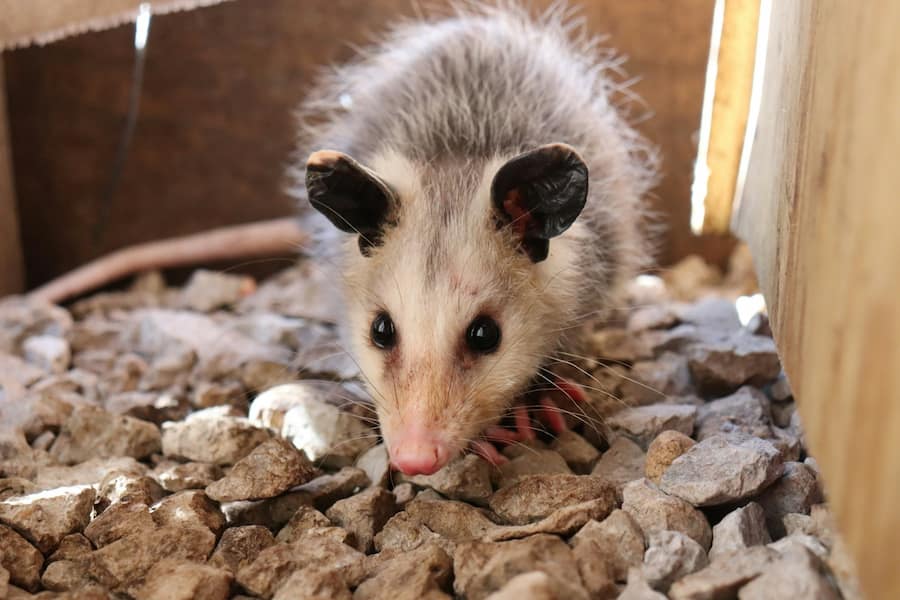
The Wildlife Medical Clinic has seen quite a few Virginia opossums this year and these are often a favorite species in the clinic due to their more agreeable attitudes and interesting anatomy. I had the opportunity to work closely with a few Virginia opossums this year, and DIVI 25-2152 was the first one where I was the veterinary student primarily in charge of his medical plan. DIVI 25-2152 was a male juvenile opossum who was brought into the clinic on October 10, 2025, after being found in someone’s septic tank. On his intake exam, we didn’t notice any apparent abnormalities or injuries, other than that he was a little bit dehydrated and that he had some gunk from the septic tank in his fur. He was displaying normal behaviors and proper defensive actions for his age. We gave him some subcutaneous (under the skin) fluids to help with his hydration status, cleaned up his fur, set him up in a comfortable cage, and offered food. As all seemed normal with him, we expected to just monitor for a couple days and then release after one last exam.
We ran bloodwork on the opossum a few days later to ensure that he was stable before releasing him. We tested his protein levels and red blood cell level (known as a PCV or packed cell volume), where we discovered that he did have slightly low protein levels and red blood cell levels, indicating that he was anemic. We additionally ran a test to see his blood lead level, which showed slightly elevated levels.
The Need for Lead Testing
Obtaining a blood lead level is a very important diagnostic test for the Virginia opossums that we receive at the clinic. Lead naturally occurs in the environment, but this environmental load has been greatly increased by human activity. Due to its previous use in paint, as well as its current use in batteries, shotgun pellets, bullets, and more, lead is pretty widespread within the environment. Virginia opossums are scavengers, which means that they do not directly hunt for their food and instead eat pretty much anything they can find, including dead animals. Due to this, it is highly likely for them to come into contact with and ingest lead, whether that is ingesting lead pieces accidentally, consuming roadkill with lead toxicosis, or consuming animals that contain lead pellets from hunting. With this in mind, almost all of the Virigina opossums that stay in the wildlife clinic will have their blood lead level tested. Many of them will have elevated levels slightly above zero, but they may or may not require treatment depending on how high that number is and how clinically affected they are.
Lead toxicity results in neurological problems in wildlife, causing things like head tremors, lethargy, paralysis, weakness, incoordination, seizures, and death in severe cases. With these issues, affected wildlife are generally less aware and are more likely to be injured, often being hit by cars or attacked by predators. These animals will often also lose weight due to their neurological condition and may end up fairly emaciated. The death of animals that have lead toxicosis tends to exacerbate the cycle, as scavengers, like birds of prey and opossums, will then potentially consume lead when feeding and become affected themselves.
Luckily, there are treatment options available for the opossums and other animals that present to the Wildlife Medical Clinic with lead toxicosis. Typically, they will receive chelation therapy, where medications like calcium EDTA or dimercaptosuccinic acid (DMSA) are used to bind to the lead in the body and help excrete it. After their initial chelation therapy has ended, we will collect blood again to check their blood lead level. Often, this will have decreased, and chelation therapy may either be discontinued or continued for another round depending on how high the animals level is and how clinically affected or symptomatic the animal is. Sometimes though, the blood lead level will increase. This doesn’t initially seem to make sense if treatments have been used to reduce the lead level, but this has to do with how lead is stored in the body. Some lead is present in the bloodstream and is targeted by our chelation agents, but a lot of the lead is stored in the bones of the animal, especially if they have had chronic lead exposure. This means that more lead will leak out into the bloodstream overtime and can increase the blood lead level from what it was originally despite treatment. In these cases, additional rounds of chelation therapy are conducted to continue to lower the animal’s overall lead level overtime, ideally getting their blood lead level down to a tolerable level for release.
Back to the Wild
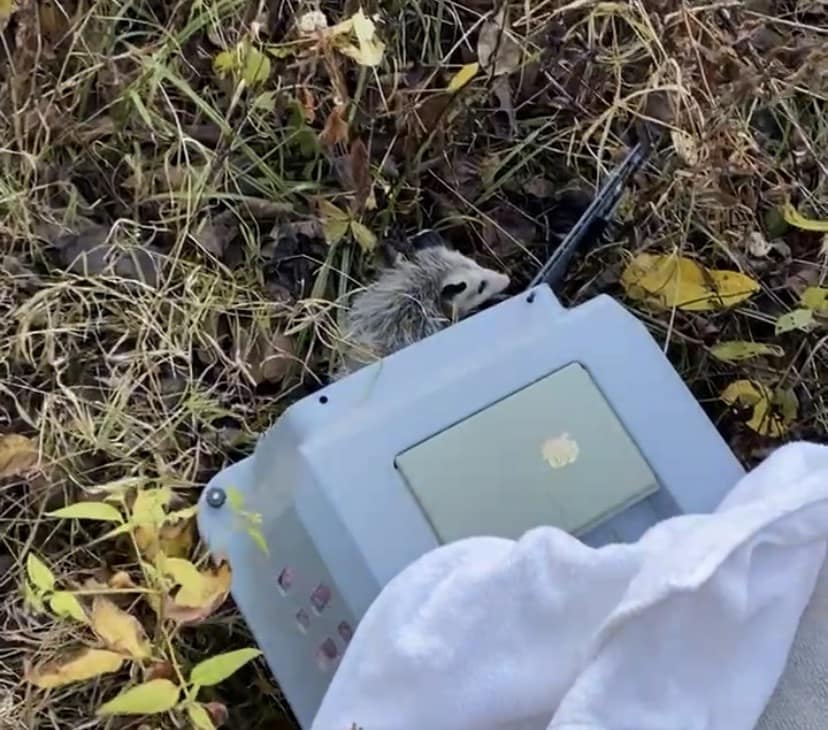
While this opossum’s blood lead level was higher than zero (12.4 μL/dL), we elected to not chelate this patient due to his normal attitude, behavior, and defensive actions, and his lack of apparent neurological signs. Additionally, he was overall pretty healthy and almost ready for release. To manage his anemia (low red blood cell levels) and hypoproteinemia (low blood protein levels), we kept this opossum in the clinic for about a week and offered him lots of food and fluids as he needed them. Since he didn’t appear to have any physical abnormalities or illnesses, it is likely that these low test values were due to him not having the best nutrition and likely being stuck in that septic tank for an extended period. A week later, he had gained over 300 grams, and his red blood cell and protein levels were within normal limits, so he was cleared for release by our veterinarians. He was released near where he was originally found, slowing venturing out into the forest. I was very glad to see this patient be released back into the wild and wish him the best!
Written By: Sarah F., Class of 2027