We’ve all heard those sweet trills of our avian friends perched atop branches. They beckon our attention, but beyond the birds exhibiting their vast vocal range for every passing audience, have you ever stopped to consider what that song means? Or how birds come to perform their tunes so perfectly?
Who is doing the singing?
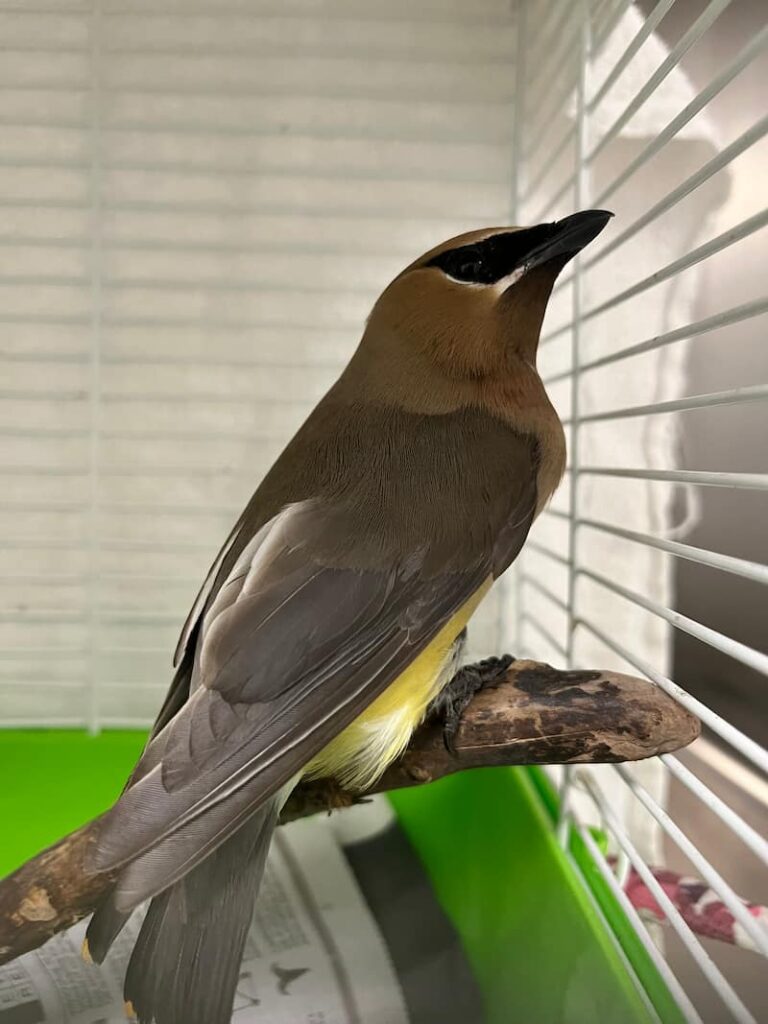
Birdsong is a feature unique to certain Passeriformes, which is the largest evolutionary order, encompassing >50% of bird species worldwide. Passeriformes are everywhere‒robins, sparrows, blue jays, and warblers, to name a few, can be seen throughout Illinois. Songs are often unique to each species, allowing them to communicate with conspecifics when looking for a mate and ward off other birds encroaching on their territory. These are importantly distinct from calls, which are short bursts of vocalization that are produced when a bird is threatened or in flight. A song is a prolonged, complicated arrangement of syllables and phrases, much like a theatrical monologue.
A commonly held misconception is that only males sing. This may be because, for a long time, male songbirds have dominated much of the academic literature investigating the mechanisms of learning and producing birdsong; however, females too sing in roughly 70% of songbird species, and it’s thought that they do so for much the same reason as males‒they communicate with mates and defend their territory. The evolutionary underpinnings that have led to existing dimorphisms are an area of active research. Recent studies have shown that females of migratory species are less likely to vocalize compared to stationary species, and there may be a correlation between biparental care and likelihood of the female to sing. Why this may be the case is still being investigated.
How does a bird learn their song?
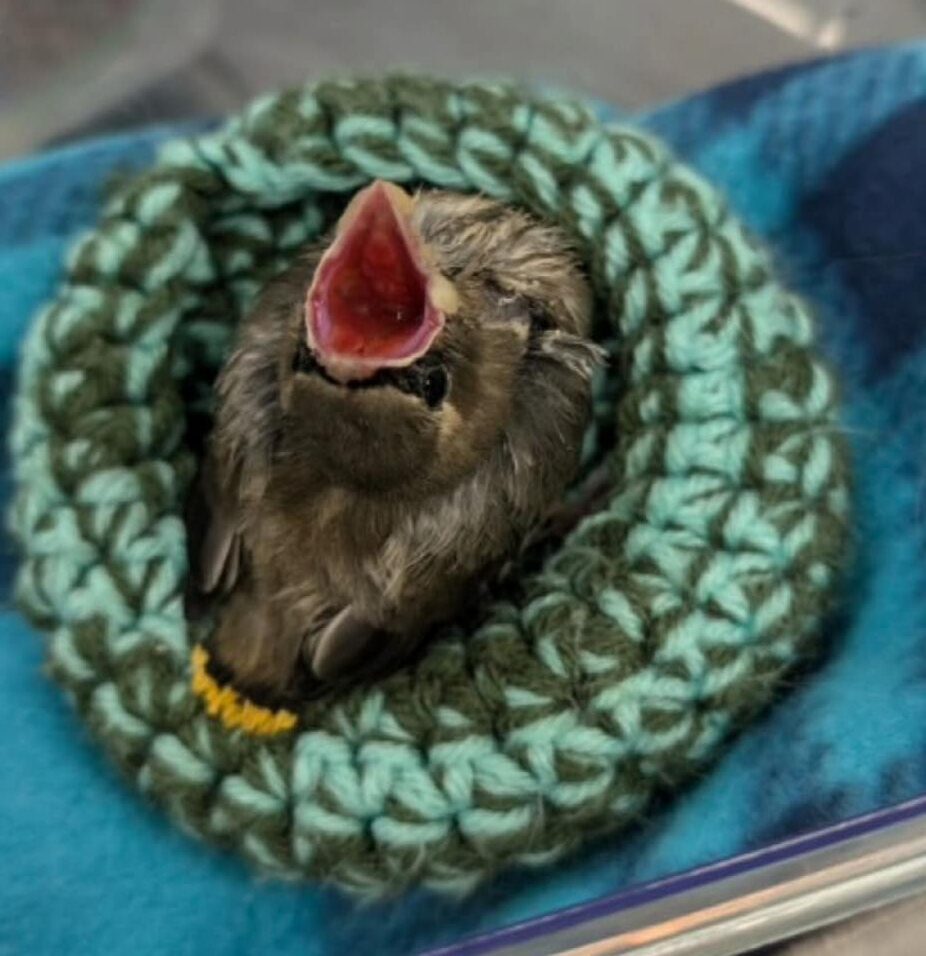
When a bird hatches, it has a brief window of time when their song must be learned and perfected, otherwise the song will never develop. This period of time is known as a “critical period”. In this regard, birdsong has remarkable parallels to the development of human speech. Humans similarly possess a critical window of time when speech must be acquired, otherwise cadence and enunciation is difficult to attain, which is also true in our songbirds.
Hatchling birds are amazing sponges of songs. First, a young bird must hear their species-specific song from an adult who acts as a tutor. This sensory phase allows the juvenile to commit their tutor’s song to memory. Then, during the sensorimotor phase, the juvenile practices their newly learned song. In the earliest phases, birds even perform their own version of babbling, producing quiet and generic notes as they test out their voice. Then, as they begin to practice their tutor’s song, each repetition evolves, allowing the song to become closer in tone and cadence to that of their tutor. Once the song is perfected, the bird’s song is committed to memory. Now, the bird has their crystalized song ready to sing whenever needed! Listen to those amazing feats of biology on your next stroll!
Resources-
https://www.nature.com/scitable/knowledge/library/the-development-of-birdsong-16133266
https://pmc.ncbi.nlm.nih.gov/articles/PMC5066577
https://www.nature.com/articles/nrn1904
https://www.nature.com/articles/s41467-025-60810-5
Written By: Maddie R., Class of 2028