Connie Austin — DVM, MpH, PhD

State Public Health Veterinarian

Dr. Austin has a background and degrees in epidemiology, veterinary medicine, and public health. She has worked in the public health field for over 25 years and has really enjoyed working and talking with local health departments, veterinarians, and citizens about their zoonotic disease issues. She says she’s never had a dull day and is always willing to talk about a zoonotic disease issues with my fellow veterinarians. One of the main issues during the summer months are animal and human rabies exposure issues.  Dr. Austin also works on human outbreaks and surveillance involving zoonotic diseases.


Rabies, Crypto and Brucella, Oh My!

Veterinarians will learn how to make a positive impact on reacting to, and reducing risk from zoonotic diseases in their clients and communities.

Joe Bruner — DVM, DACVIM (SAIM)

Clinical Assistant Professor

Dr. Joe Bruner is a Clinical Assistant Professor at the University of Illinois Veterinary Teaching Hospital with special interest in general Internal Medicine and Respiratory diseases. He has an extensive experience in private practice before joining the university to be a part of the Small Animal Internal Medicine service. Dr Bruner will present a lecture with an exceptional recent graduate, Dr. Grant Nickolson, to discuss the current approaches to hypercalcemia and recent therapeutic options for the more common causes.


Got Milk?… The Trials and Tribulations of Hypercalcemia with Drs. Joe Bruner and Grant Nickolson

This lecture will provide an overview to the diagnostic approach to Hypercalcemia in dogs and cats. It will further address the common scenarios seen with hypercalcemia, and present a ‘decision-making’ approach towards when diagnostic testing is warranted and when a spurious laboratory value should be suspected. In addition, newer therapeutics will be presented that can be used to treat the more common causes of hypercalcemia when surgical interventions are not possible.

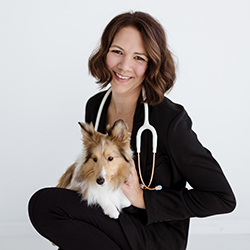
Karie Johnson — DVM, BS

CEO and Veterinarian, Vitalis Vet Visit

Dr. Karie Johnson — Owner of Vitalis Vet Visit and Veterinary Communications Manager at Nestlé Purina PetCare. She is a 2019 graduate of the University of Illinois College of Veterinary Medicine. Dr. Johnson brings a rare blend of hands-on clinical experience (small animal associate, mobile practice, and clinic owner) and industry-facing communications work, giving her a deep understanding of how veterinary skills translate beyond the exam room. She is a published author in JAVMA on nutrition and osteoarthritis, has been a medical reviewer for Business Insider and Purina.com, and holds certifications in Fear Free, Low Stress Handling, Human-Animal Bond, CAETA euthanasia, and Pet Nutrition Coaching. Dr. Karie draws on clinical practice, business ownership, nutrition expertise, and corporate communications to show veterinarians practical pathways into research, industry, policy, education, and advocacy.


Beyond the Clinic: The Many Lives of a Veterinary Degree

This presentation explores the wide range of career paths, roles, and impact areas available to veterinary graduates beyond traditional clinical practice. Through real-world examples and practical guidance, attendees will discover opportunities in research, public health, government policy, industry (pharmaceuticals, biotech, animal nutrition), shelter and wildlife medicine, education, entrepreneurship, nonprofit and advocacy work, and communications.

The session highlights transferable skills developed in veterinary training — critical thinking, diagnostics, animal and population health expertise, client communication, and systems thinking — and shows how to translate them into non-clinical careers.

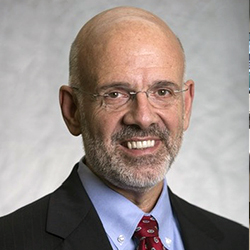
Joseph DiPietro — DVM, MS

President Emeritus

Dr. Joseph DiPietro served as the 25th president of the University of Tennessee from 2011 to 2018. He is regarded as one of the University’s great leaders, and the UT Board of Trustees bestowed upon him the status of president emeritus upon his retirement.

During his tenure, he oversaw a record four years of low tuition increases, including a zero percent tuition increase this year for UT Knoxville and UT Chattanooga. In 2017, UT research achieved a record-high, system-wide $481 million in sponsored-program expenditures. The UT Foundation experienced a record fundraising year of more than $397 million given during the 2017-18 fiscal year. The record year of giving included the naming of two colleges at the UT Institute of Agriculture and UT Chattanooga, which join two other colleges named at UT Knoxville since 2014. The UT Institute of Agriculture and the Institute for Public Service had more than 5 million contacts with Tennesseans statewide.

Prior to becoming president, Dr. DiPietro served as chancellor of the UT Institute of Agriculture from 2006 to 2010. Under his leadership, the institute began interdisciplinary programs such as the Center for Renewable Carbon, the Tennessee Biofuels Initiative and the master’s degree in landscape architecture. Between 2006 and 2010, external grant support for the Institute of Agriculture increased 30% from $26.6 million to $34.8 million annually.

A veterinarian by training, Dr. DiPietro’s research emphasis was veterinary parasitology, and his clinical interest was equine field practice. He earned his bachelor’s, Doctor of Veterinary Medicine, and master’s degrees at the University of Illinois Urbana-Champaign. After graduating from veterinary school, he joined a rural community practice in Peotone, Illinois, before returning to the University of Illinois faculty.

Before coming to UT, Dr. DiPietro served as dean of the College of Veterinary Medicine at the University of Florida from 1997 to 2006. Prior to that, he rose to tenured professor of veterinary clinical medicine and veterinary pathobiology at the University of Illinois Urbana-Champaign and held administrative positions there, including assistant director of the Agriculture Experiment Station and associate dean for research of the College of Veterinary Medicine.


Trust, Truth, Teams, and Mentorship

Dr. Joe DiPietro will share his journey and what he has learned along the way, from a horse-loving kid growing up in Central Illinois, to large animal clinician, veterinary researcher, dean, chancellor, and university president. He will characterize the qualities of veterinary training that equipped and helped him as a university administrator, explain how leadership development should be routine, and provide insights that will help you build or be part of a stronger team, increase career commitment, and produce greater organizational success.
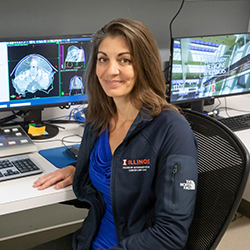
Kim Selting — DVM, MS, DACVIM (Oncology), DACVR (Radiation Oncology)

Associate Professor

A native of Colorado, Dr. Kim Selting completed her undergraduate and veterinary studies at Colorado State University (CSU).  Following a one year rotating small animal internship in medicine and surgery at the Animal Medical Center in New York City, she spent 4 years in private practice in St. Louis, MO.  She then returned to the CSU Animal Cancer Center for a residency to become board-certified by the American College of Veterinary Internal Medicine in the specialty of medical Oncology. 

Dr. Selting then joined the faculty at the University of Missouri from 2002-2017.  In 2013, she completed a non-traditional residency in Radiation Oncology and achieved board certification by the American College of Veterinary Radiology.  In July 2017, Dr. Selting accepted a position as Associate Professor at the University of Illinois to develop a radiation therapy program.  Current research interests include biomarkers of cancer and toxicity of cancer treatment, novel anticancer drugs, and effects of radiation dose rate modifications on the tumor microenvironment. 

Dr. Selting is the Past President of the Veterinary Cancer Society (VCS), the past President of the Veterinary Cooperative Oncology Group and past member-at-large for VCS, and past Chair of the American College of Veterinary Internal Medicine (ACVIM) Oncology Certifying Examination Committee and the American College of Veterinary Radiology (ACVR) Certifying Examination Committee.  Dr. Selting currently serves as the President for the American College of Veterinary Radiology (Radiation Oncology subspecialty, ACVR-RO).


Navigating the Radiation Maze

Applications for radiation therapy range from non-neoplastic inflammatory or immune mediated conditions to combination with chemotherapy for better outcomes when treating lymphoma to palliative care of aggressive local tumors as well as treatment of limited metastatic disease. This talk will review the basic concepts behind radiation therapy as well as indications, side effects, and prognosis for commonly treated tumors.

Raymond J Ramirez — DVM, RCFC

Locum tenens relief, Chair Illinois Veterinary Licensing and Disciplinary Board

Raymond J Ramirez graduated from the University of Illinois College of Veterinary Medicine in 1986. After working in Schaumburg, IL Emergency Clinic the first year after graduation, he worked at an AHAA hospital in Milwaukee, WI.

In 1989 started doing relief work in Wisconsin full time. He moved his entire relief practice to central Illinois, serving colleagues in Springfield, Champaign/Urbana, Bloomington/Normal, Decatur, Peoria and all areas in between. He had an 85% return rate request rate.

After working in over 100 practices in Wisconsin and Illinois, he finally found a practice to purchase in December 2007, just as the great recession of 2008-2009 hit. His CVT made more money than he did the first two years in practice. Through utilizing the management skills learned in the many practices he served, the practice thrived, and currently is a two doctor practice in East Peoria, IL. He sold that practice to a local colleague who wanted a second location, because “it’s better to sell your practice five years too early than five years too late- Mark Opperman”.
He has gone back to relief work.

Dr. Ramirez is past board president and board member of the local shareholder owned Emergency clinic in Peoria, IL., was past president of the Mississippi Valley VMA, and has been a mentor through the Illinois VMA mentor program. Dr. Ramirez was appointed to the Illinois Veterinary Licensing and Disciplinary Board in 2022 and was elected chairperson in 2025. He is married to his wife Kelly (they met in ballroom dance class), and have five children.


Five Simple Steps to Keep Yourself Out of Regulatory Hot Water

The fear of the unknown is the most scary. In this presentation, we will learn ‘what happens if a license complaint occurs?’ Then we will go over some common scenario’s that department investigators and the presenter have seen that, if corrected, will minimize the chance of receiving a board complaint. Dr. Ramirez had a license complaint filed against him in 2007, and was appointed to the Veterinary Licensing and Disciplinary Board in Nov, 2023. These views are based on my experience as a DVM and a member of the board, but it is not endorsed by the Department.” (Illinois Department of Finance and Professional Regulation).

Grant Nickolson — DVM

Veterinarian

As a recent graduate veterinarian entering general practice, I believe that high-level medicine should not be limited to specialty hospitals or board-certified clinicians. General practice is often the first and most important point of care for patients, and I am committed to approaching every case with curiosity, thoroughness, and evidence-based medicine. I strive to perform complete diagnostic workups, think critically through complex cases, and continue growing my knowledge so I can provide the highest standard of care possible for my patients and clients.


Got MIlk?… The Trials and Tribulations of Hypercalcemia with Drs. Joe Bruner and Grant Nickolson

This lecture will provide an overview to the diagnostic approach to Hypercalcemia in dogs and cats. It will further address the common scenarios seen with hypercalcemia, and present a ‘decision-making’ approach towards when diagnostic testing is warranted and when a spurious laboratory value should be suspected. In addition, newer therapeutics will be presented that can be used to treat the more common causes of hypercalcemia when surgical interventions are not possible.

Caitlin DeWilde — DVM

CEO

Dr. Caitlin DeWilde is the founder of The Social DVM, a consulting firm devoted to helping veterinary professionals learn how to manage and grow their social media, online reputation and marketing strategies. Working with large industry groups and individual practices alike, Caitlin and her team are passionate about translating the “geek speak” to “veterinary speak,” and helping vets reach more clients and pets. 

Caitlin is a graduate of the University of Illinois College of Veterinary Medicine and a recipient of their Outstanding Young Alumni Award, and also an alum of the AVMA’s Future Leaders Program. She served as medical director for a large AAHA/Fear Free/Cat-Friendly certified hospital in St. Louis before stepping back to focus on her marketing passion. Today, she divides her time between practice, consulting, and writing. She is the author of a book, “Social Media and Marketing for Veterinary Professionals,” and a columnist for Today’s Veterinary Business. 


Beyond Social Media

In today’s competitive veterinary landscape, marketing requires more than just a strong social media presence. This course dives into multimodal marketing strategies, showing how platforms like Google Business, Nextdoor, and Yelp can boost your online reputation and drive engagement. You’ll also learn how to integrate email marketing to encourage booked appointments, generate more client reviews, and attract top talent to your practice. Discover how a cohesive, multimodal approach can elevate your marketing efforts and help your clinic stand out in your community.

What to Do When Appointment Numbers are Down

Appointment volumes are shifting. Across U.S. veterinary clinics, a quiet but consistent decline is taking hold — and ignoring it won’t make it reverse. This data-driven session breaks down exactly what’s driving appointment trends in 2026 and which marketing strategies are actually moving the needle. From automated reminders to online booking to Google tools, you’ll leave with a clear, actionable playbook tailored to your clinic’s workflow. Keep your schedule full and your care uninterrupted.

Your Team Is Already Using AI. Is It Helping or Hurting?

Your team is probably already using AI. The question is whether they’re using it well. Ungoverned AI use in a veterinary practice creates real risks — clinical errors, miscommunicated diagnoses, data exposure — but overly cautious avoidance leaves efficiency and revenue on the table. This session cuts through both extremes with practical guidance on building a culture of smart AI use: crafting effective prompts and instructions, driving team adoption, integrating tools into medical, communication, and business workflows, and knowing where the guardrails need to be. Designed for the veterinary team that’s past “what is AI” and ready for “how do we actually do this right.”

Kara Escutia — DVM

Trust Veterinarian

Dr. Kara Escutia has spent most of her life in Illinois—growing up in the Chicago suburbs, then attending the University of Illinois for both her undergraduate degree and Doctorate in Veterinary Medicine. After graduation, she worked in companion animal practice for ten years prior to joining the AVMA Insurance Services team in January 2021. As a Trust Veterinarian, Dr. Escutia plays a key role in the activities of AVMA Insurance Services, including providing guidance to the brokers and carriers on veterinary topics and protocols, reviewing professional liability claims, discussing claim situations with members, and developing and presenting educational programs to veterinary teams regarding liability and risk management. The Trust Veterinarians also keep an eye out for trending claim topics and develop newsletters, pamphlets, and other materials to educate our insured members to help prevent future claims.


Words Matter: Communication and Liability in Veterinary Practice

This 1-hour course will begin with an overview of common claim scenarios and the types of coverage available to help protect your professional license. Next will be a deeper dive into some common communication pitfalls that play a role in liability claims and discussion of some strategies to help you in these areas. We will also touch on strategies for delivering difficult news in the face of a medical error as well as reviewing some best practices for medical record keeping.

Facing Challenging Situations and Protecting Your License in Veterinary Practice

This 1-hour course will begin with an overview of common malpractice allegations and the types of coverage available to help protect your professional license. We will then take a deeper dive into the increasing trend of veterinary board complaints. We will review best practices to help mitigate malpractice and licensing complaints through common claim examples. We will also touch on the role veterinary ethics plays in claim situations including disclosure of medical errors.

Timothy Fan — DVM, PhD, DACVIM-SAIM, DACVIM (Oncology)

Professor

Dr. Timothy Fan is a professor of veterinary medical oncology and serves as the principal investigator of the Comparative Oncology Research Laboratory housed in the Small Animal Clinic, Department of Veterinary Clinical Medicine. Dr. Fan’s research focuses on identifying molecular and immunotherapeutic targets for improving treatment for canine and feline cancers.

Dr. Fan is a core member at the Carl R. Woese Institute for Genomic Biology in the Anticancer Discovery from Pets to People theme, and also serves as the Associate Director for Translational Research and Development for the Cancer Center at Illinois that focuses on the inclusion of companion animals as sophisticated model systems to study cancer. Dr. Fan’s training as a scientist and veterinarian, has allowed him the opportunity to rapidly investigate and translate novel treatment strategies in dogs and cats with spontaneously-arising cancers, and conduct meaningful comparative oncology research which is hoped to eventually aid in treating cancer in not only companion animals, but also human beings.


Immunotherapy Strategies for Improving Cancer Treatments

This session will review how the immune system works to protect the host organism and how immunotherapy can be leveraged for fighting against cancer. Attendees will be refamiliarized with what immune cells are most important in fighting cancer, strategies that are being developed to enhance immunotherapy activities, and learn about the newest immune strategies that are in development for the treatment of dogs and cats with cancer.

Fall Conference
2001 S. Lincoln Avenue
Urbana, IL 61802
217-300-7439