Bobcat (Lynx rufus)
American bobcats are a medium sized cat that can be up to two feet tall at the shoulders and weigh upwards of thirty pounds. They often have a mostly brown coat with black spots speckled throughout with a white stomach. They are found all throughout the United States and are very adaptable animals living in a variety of different habitat types.
A Unique Patient Not Often Seen in the Clinic
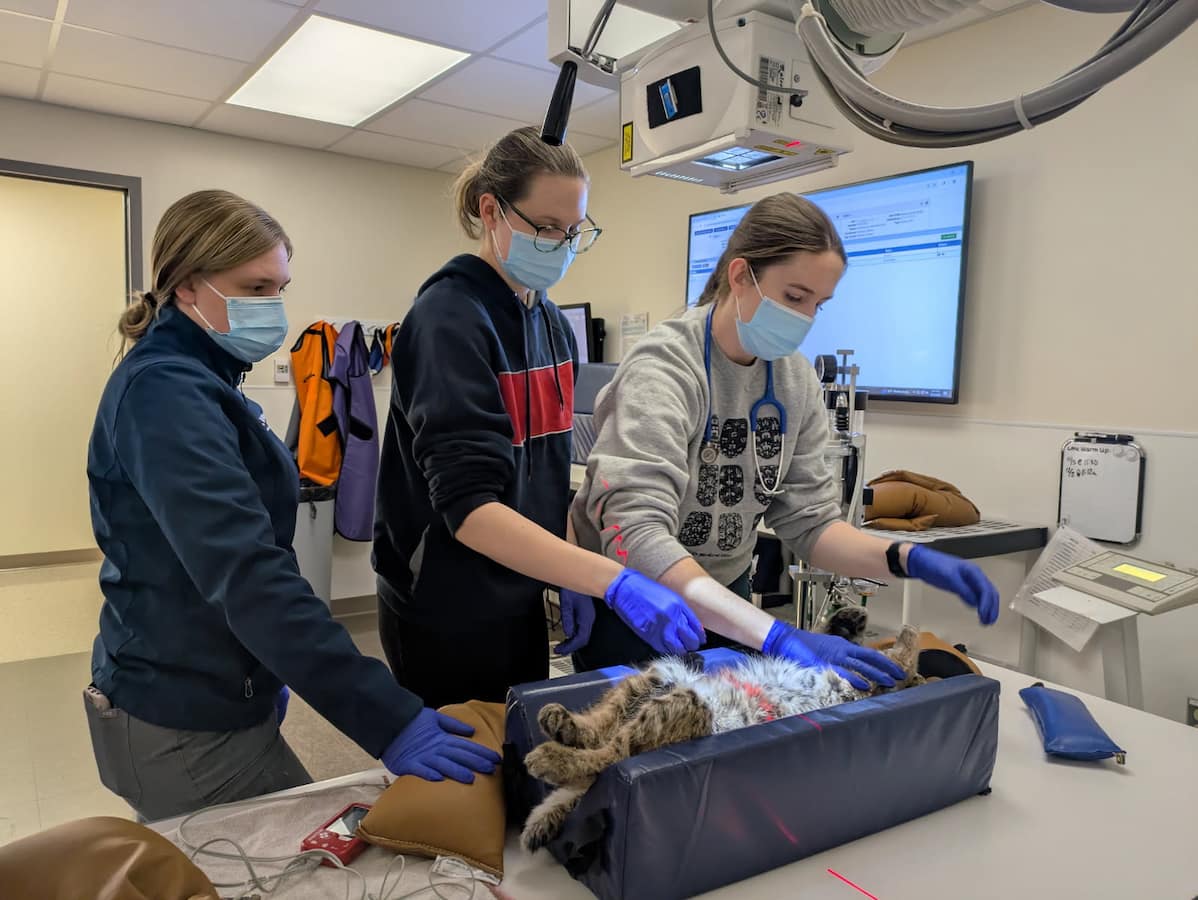
On December 3, 2025, the Wildlife Medical Clinic was presented with a sub-adult male bobcat that had been reported to have been hit with a car. Before being sedated on intake, he had a quiet mentation, didn’t want to move much in his carrier, and did not have much reaction to the people examining him.
Initial Assessment
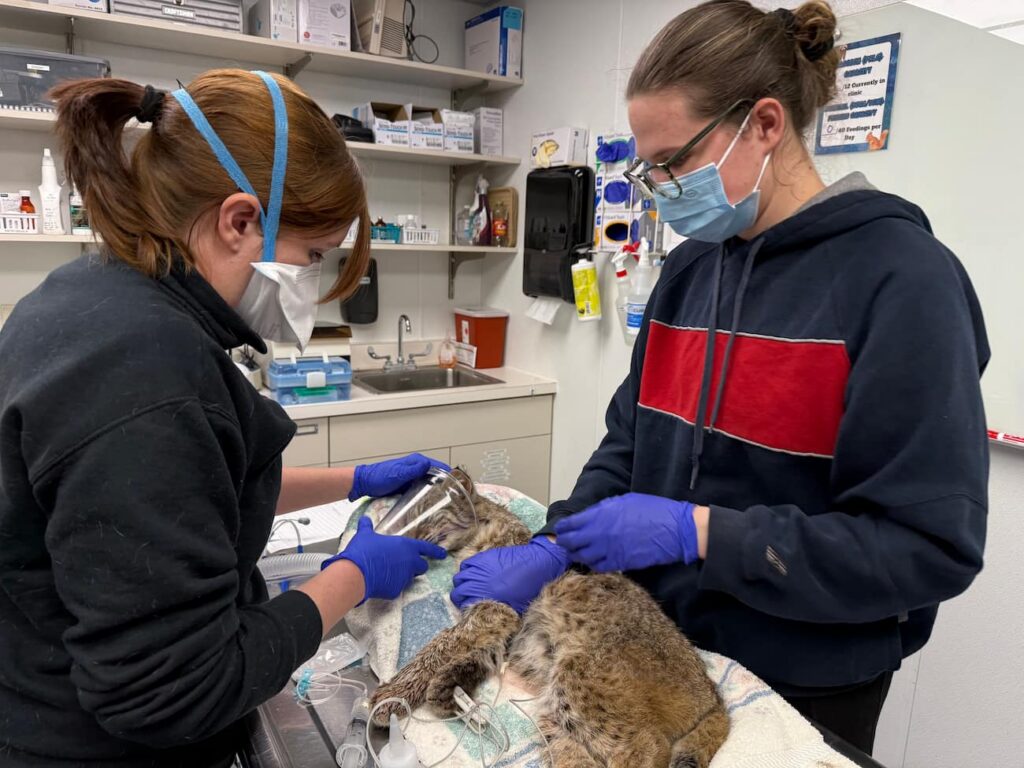
For his initial exam to ensure his safety as well as the safety of our staff he was fully sedated. This also allowed us to complete a thorough exam including: collecting a blood sample to run basic bloodwork and get a baseline on his overall health, x-rays, and an ultrasound. The blood work ended up showing mild signs of muscle injury, but no major signs of organ dysfunction. No broken bones or other major injuries were found on the x-rays. The point of care ultrasound was an abbreviated abdominal and thoracic ultrasound to look for areas of free fluid that could indicate bleeding into the body cavities; this ultrasound was also negative.
Our only concern at this point was the bobcat’s mentation. We started him on some pain medications, anti-inflammatory medications, and fluid therapy. The first round of fluids he received were given intravenous, or in the vein, in order to receive them quicker and help decrease any increased brain pressure. Additional fluids were given underneath the skin, subcutaneously, to give slower and ensure that he had adequate continued hydration. Now it was time to let the medications work and continue to monitor his symptoms.
Continued Care
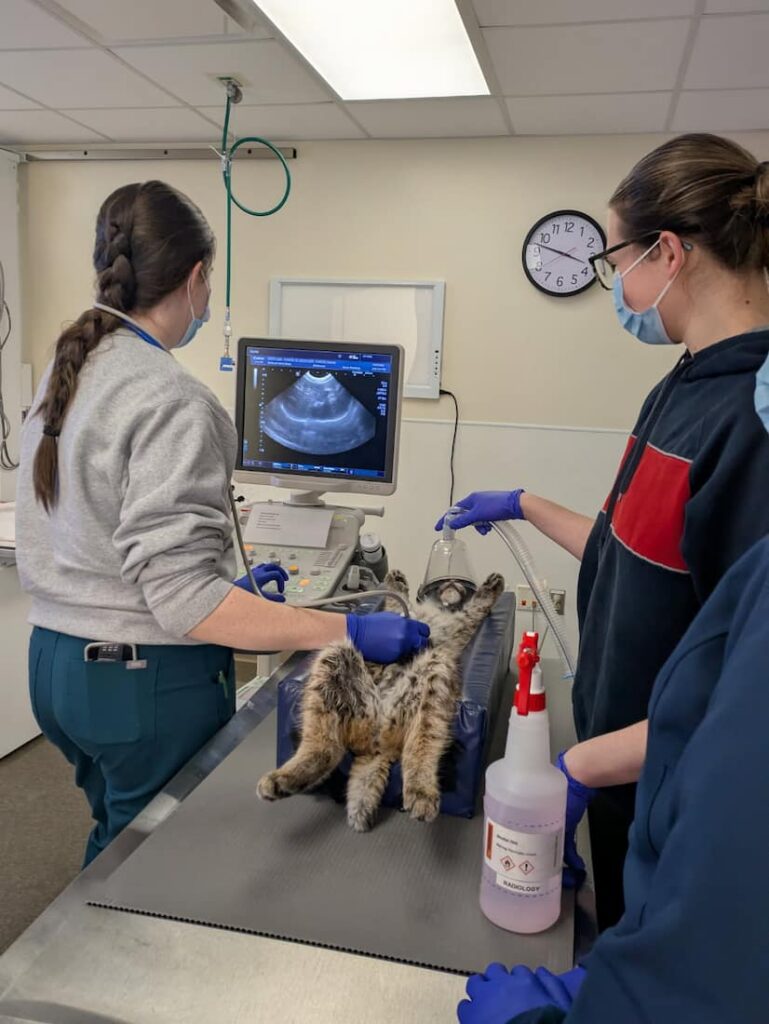
However, over the next few days his mentation was still quiet and he wasn’t moving around the cage or hiding like we would expect, even with the continued pain and anti-inflammatory medications. We also had not seen him eating on his own. We decided to perform another sedated exam, and did another point of care ultrasound and reran the same bloodwork. The ultrasound was still negative and the bloodwork showed signs of improvement in the values indicating muscle injury. We decided to give another round of fluid therapy and also added some anti-nausea medication.
In the days after this exam the bobcat regained his appetite and began acting more appropriately by vocalizing when people were nearby the cage, and hiding from view when we were present. We continued to monitor over the next few days, and waited for the weather to be more appropriate for his release.
Final Assessment and Release
Our last step of the process was to perform an awake ambulation exam in one of our larger flight cages to ensure that he had full use of all his limbs and did not have any signs of limping or other injury. After being let out of the transport carrier he immediately ran and proceeded to climb up the wall with no issues or hesitation showing that he was back to normal. He received a clean bill of health from our staff veterinarian and was cleared for release. We were able to quickly secure him back in his carrier and he was immediately transported back to where he was found for release. Once we arrived and opened his carrier, it took a few seconds of figuring out where he was, but once he realized, he sprinted off into the woods and was gone in the blink of an eye.
Written by: Riley D., Class of 2027