Meet TECA 25-1413
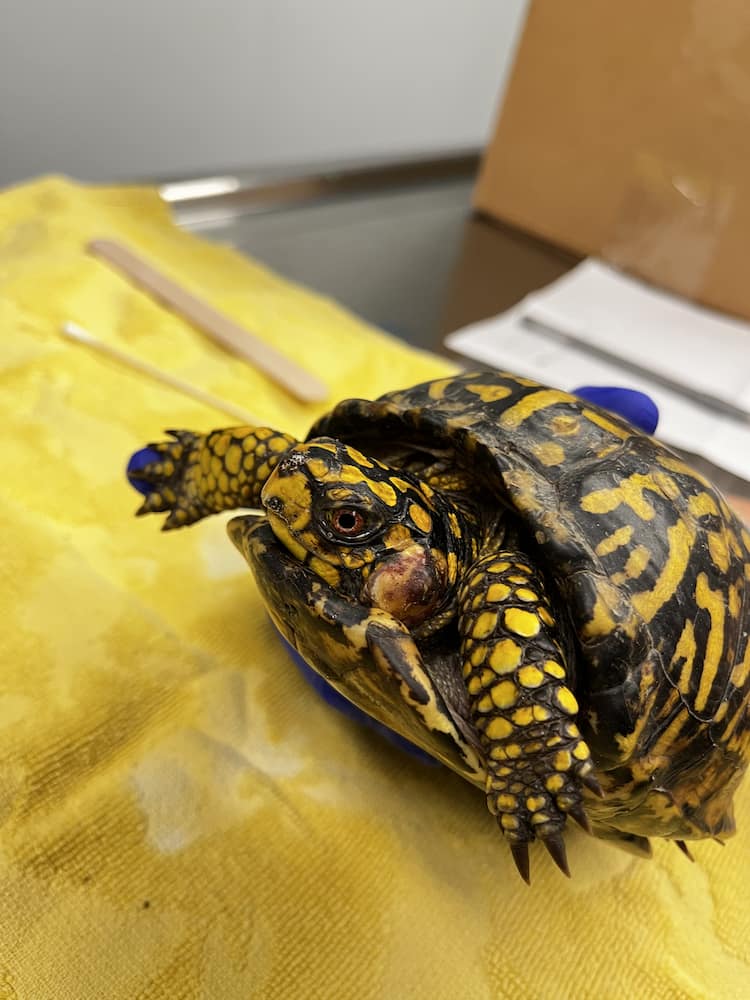
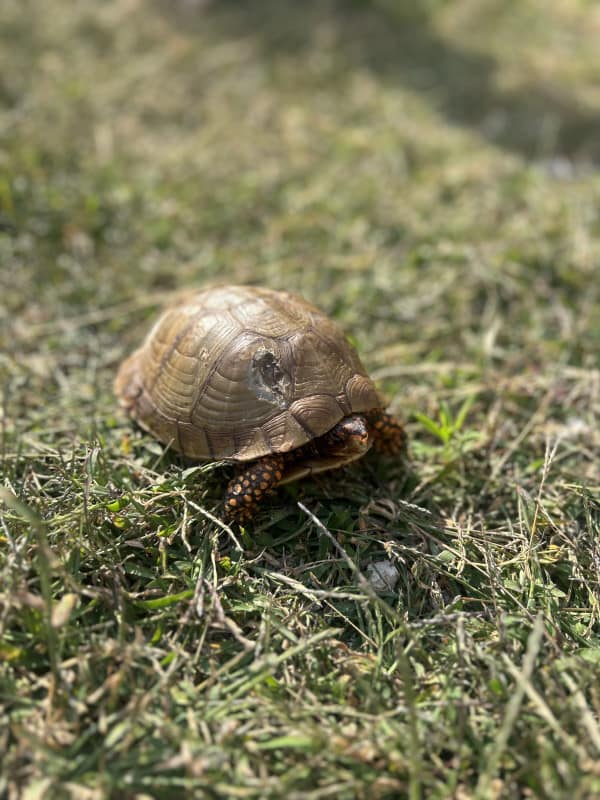
This unique patient is a three-toed box turtle that was brought into the Wildlife Medical Clinic from Missouri after being hit by a vehicle this past summer. Box turtles are remarkably durable due to their strong, bony shell–a protective feature normally used to keep them safe from natural predators and the elements in the wild. Incredible as these animals are, they unfortunately aren’t invincible and the same goes for this guy.
His Medical Journey
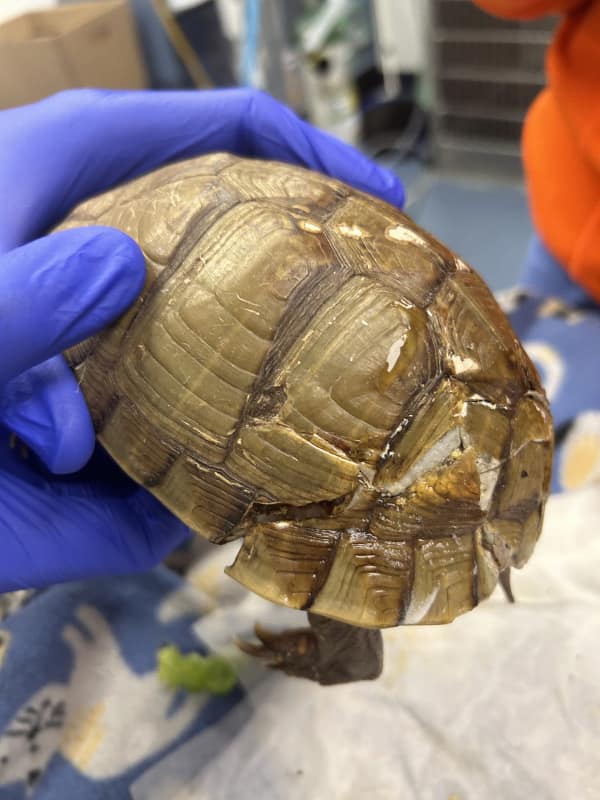
When he was first brought to our care, our veterinary team had identified fractures along the back of his shell which we had carefully and deliberately removed to allow for proper healing. We also noticed he could not fully extend his left hind leg. After following up with radiographs, we discovered fractures around his pelvis and his left femur. To improve his ability to ambulate the leg, we performed a femoral head ostectomy at the end of July. This procedure removes the end of the femur bone with the goal to stabilize the hip joint in order to help alleviate pain and improve mobility. His recovery has been promising so far–a combination of physical therapy and outdoor enrichment time has led to some notable improvement in ambulation, which is wonderful! He is being overwintered at the Wildlife Medical Clinic and will stay with us until he is fully healed and deemed releasable by our veterinary staff.
Overwintering
So, what is overwintering? Overwintering is when we keep patients in rehabilitative care throughout winter until we reach warm spring temperatures. We choose overwintering for some of the species that present to the clinic who are unable to be released during the fall or winter either due to migration patterns or, as in the case with this three-toed turtle, due to brumation tendencies. Since they are cold-blood species, if turtles and other brumation species are released in too-cold temperatures, they are at risk for cold-stunning which leaves them weak and vulnerable or can make it difficult to find a safe brumation site. Turtles tend to do well while overwintering and we commonly have them in our care due to their prolonged healing times. Certain species or individuals may not do well overwintering due to the high stress nature of captive care to our wild friends. When considering if an animal should be overwintered, we have to keep a few items in mind. Firstly, do we have the ability to maintain an appropriate level of care for the animal’s entire duration of stay. Secondly, will the animals welfare will be severely impacted by extended captive care. Lastly, do we expect a full recovery and to release the patient at the end of the overwintering period. Overwintering is not always a simple decision, but it is a wonderful option for the patients that need just a little extra time to get back to 100%!
Written By: Zoey W., Class of 2028