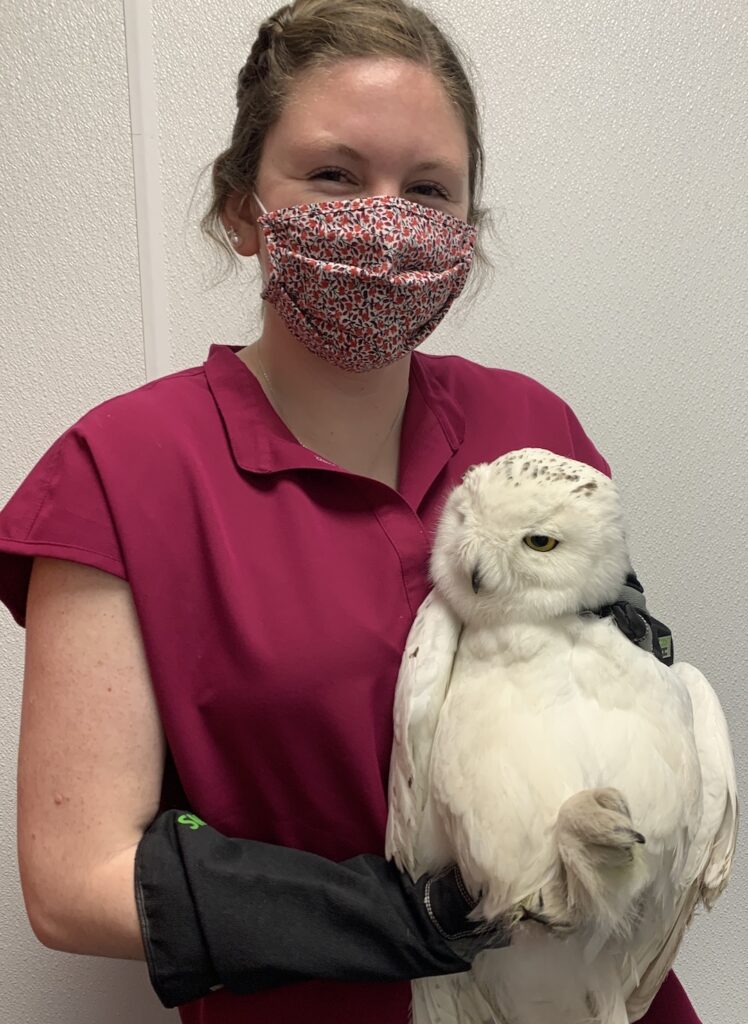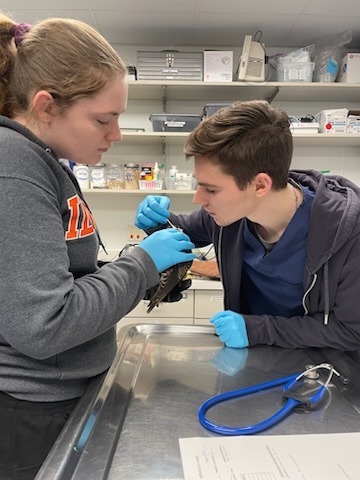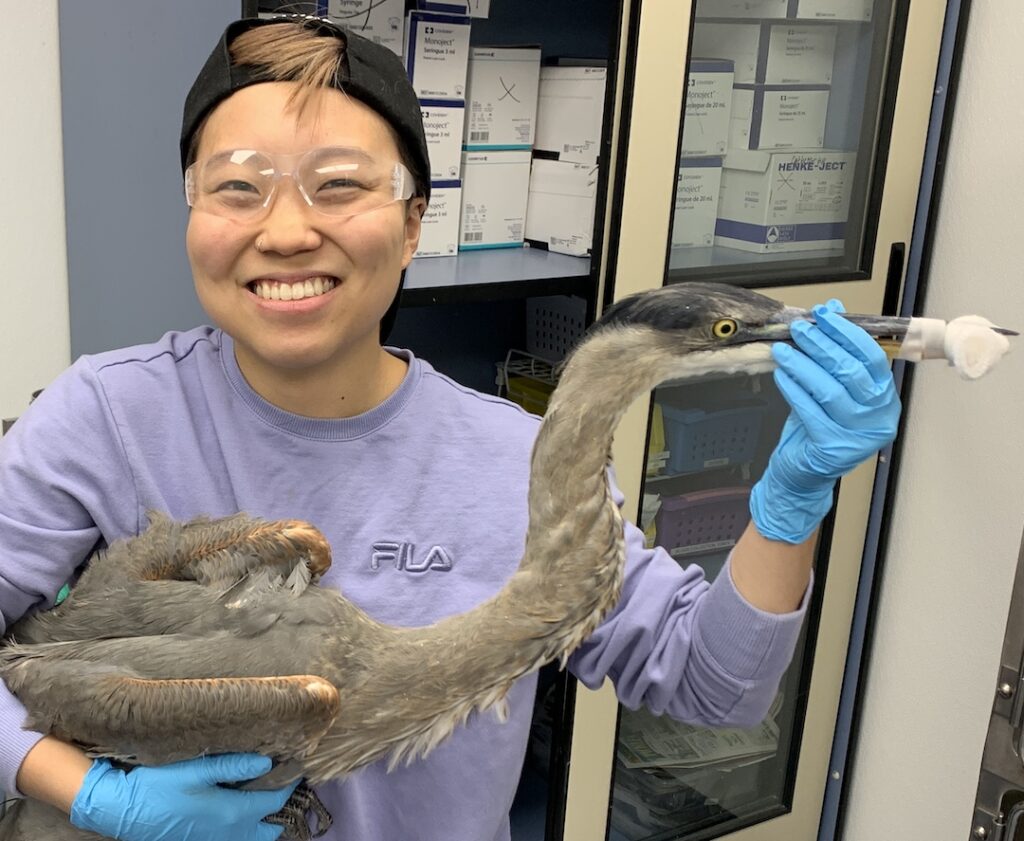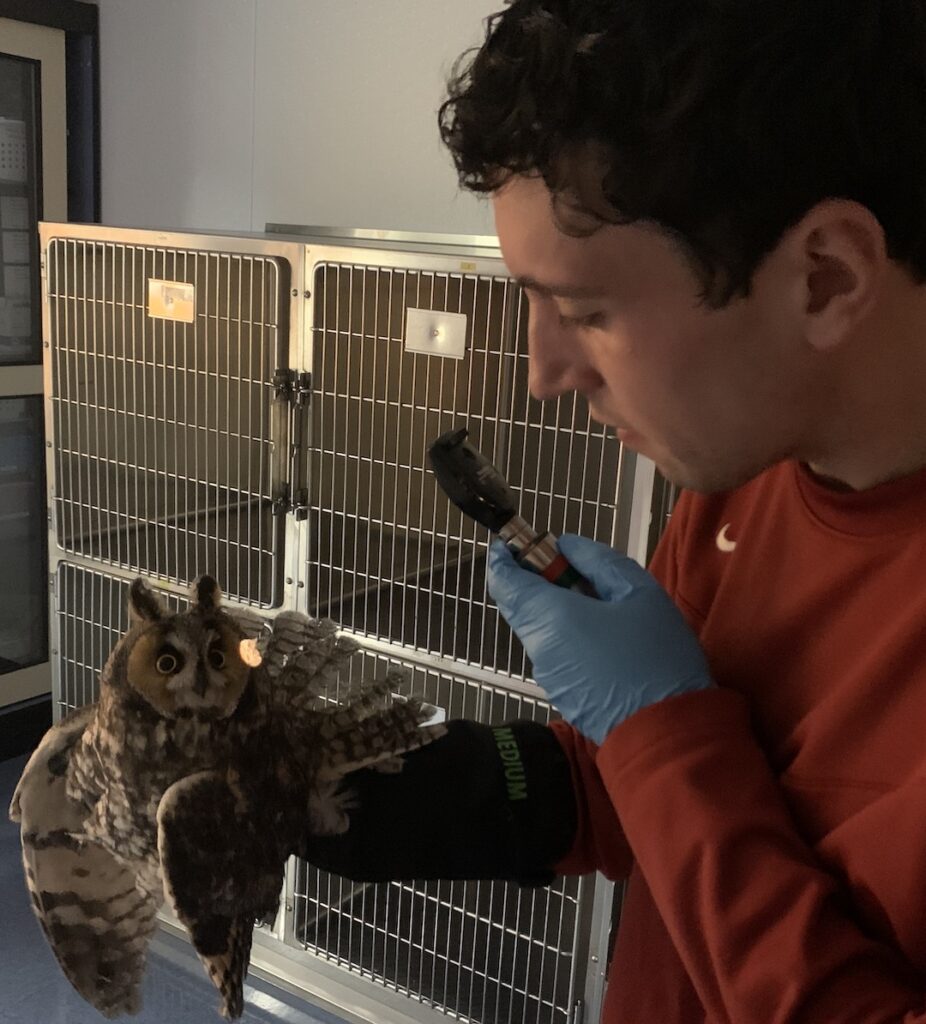
Not All Heroes Wear Capes – But These Veterinary Students Do

What do Spiderman, Iron Man, Wonder Woman, and the Veterinary Student all have in common? They are all heroes. Ever since I was a child, I have dreamt of becoming a superhero. I pictured myself as this fearless, gallant character in a comic book. A bold superhero who saves the lives of animals and people. Now that comic book is coming to life.

Let us begin with our exposition. Some heroes acquire their abilities, while others are born with them. The poor sickly orphan, Peter Parker gained his superhuman strength and speed once he was bitten by a radioactive spider, then took on the heroic name of Spiderman. It is simply not that straightforward for us. Veterinary students are special as they must work super hard to become the heroes that they are today. It was their unconditional love for animals of all shapes and sizes that called them to this career. A career that is centered around mute patients who can’t communicate their problems, so you are left with detective work to discover solutions. The average veterinary student knew they wanted to become a veterinarian the day that they knew that they could use the power of science and medicine to save animals. An ordinary moment that is captured at the beginning of many veterinary students’ journeys through a baby picture is them wearing their elevated costume of scrubs covered by a white coat with the dynamic equipment known as the stethoscope wrapped around their neck sitting next to their beloved pet sidekick. Our costumes might not look as marvelous in comparison to Superman, the Flash, or Black Widow. However, once we put on our costumes, we feel invincible.
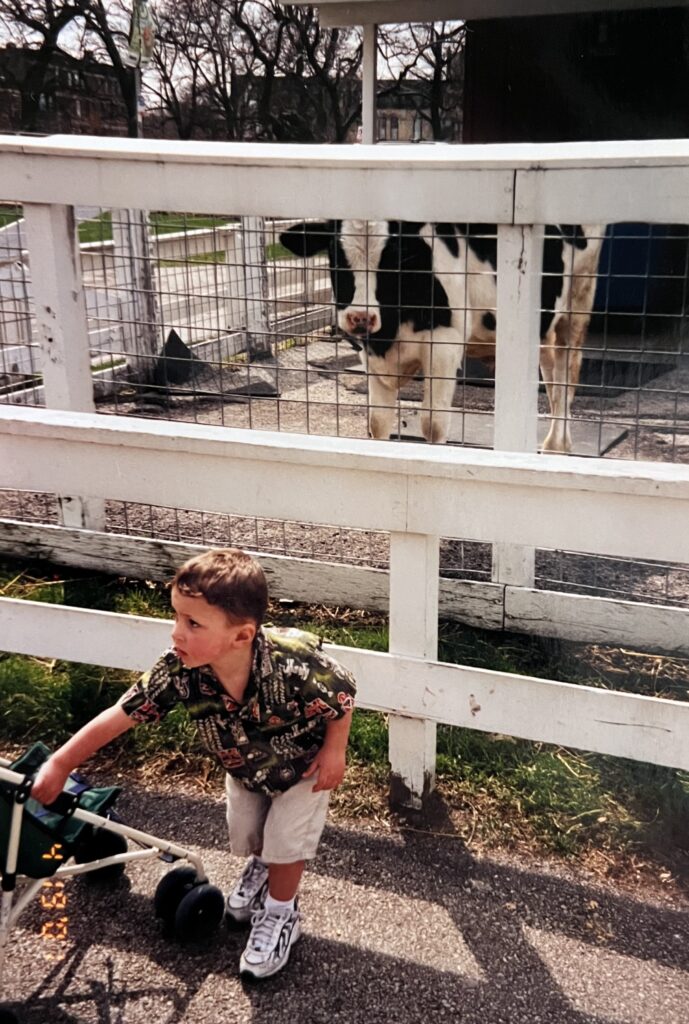
A little boy in front of a cow pen
As a child, I would beg my mom to take me to the zoo almost every weekend because I was fascinated by all the unique zoo animals. My mom expressed to me that she knew that I would become a veterinarian when she simply saw the joy that animals would bring me.

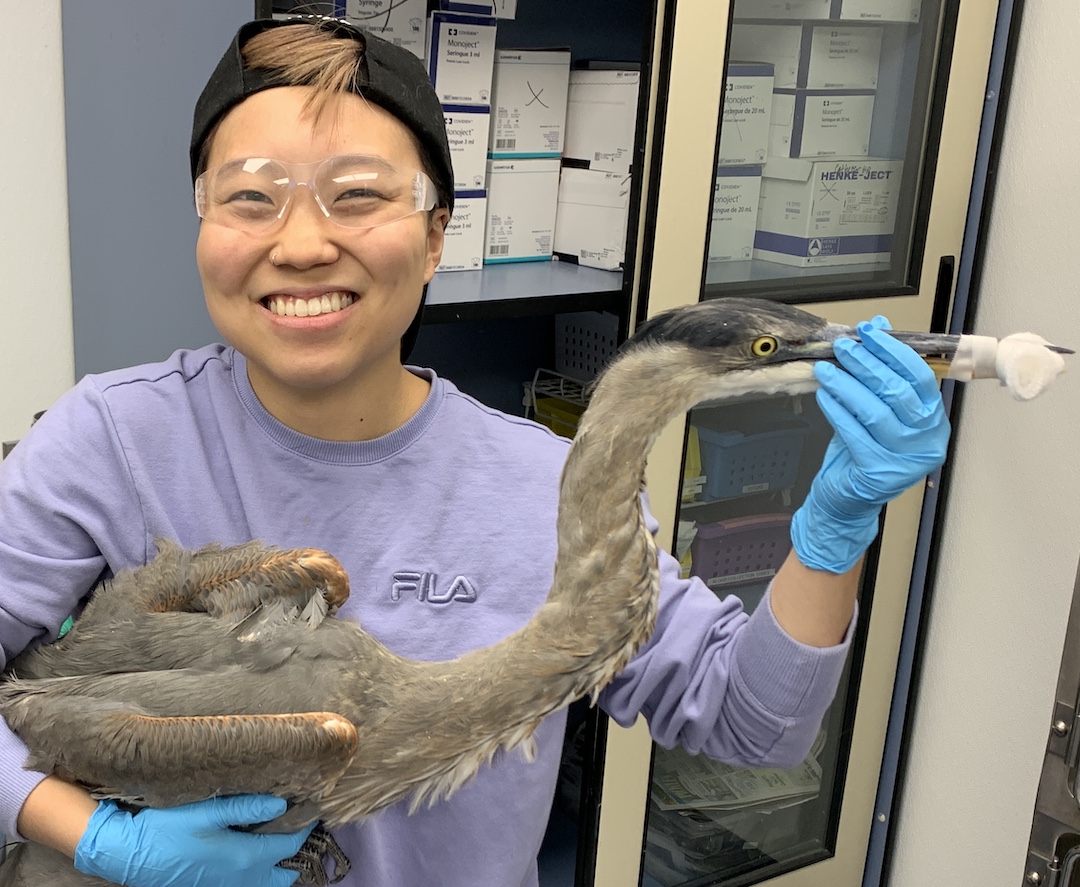
The road to veterinary school is complex. Most students attend veterinary school after obtaining a bachelor’s degree from an undergraduate college. However, others go through a nontraditional path and return to academics once they discover that veterinary medicine is their true passion. To become a Doctor of Veterinary Medicine, it requires precision, devotion, and intensive training. The exposure to numerous specialties allows students to find their calling to work in specific fields such as companion, farm, equine, zoological, aquatic, and wildlife medicine. Our opportunities are endless. They all share one similarity: being a healer for animals. When I first stepped into the Wildlife Medical Clinic, I was mesmerized by the ability to save the lives of injured and orphaned wildlife. I knew that this was my calling. A future in saving nontraditional species such as zoological, aquatic, and wildlife animals.

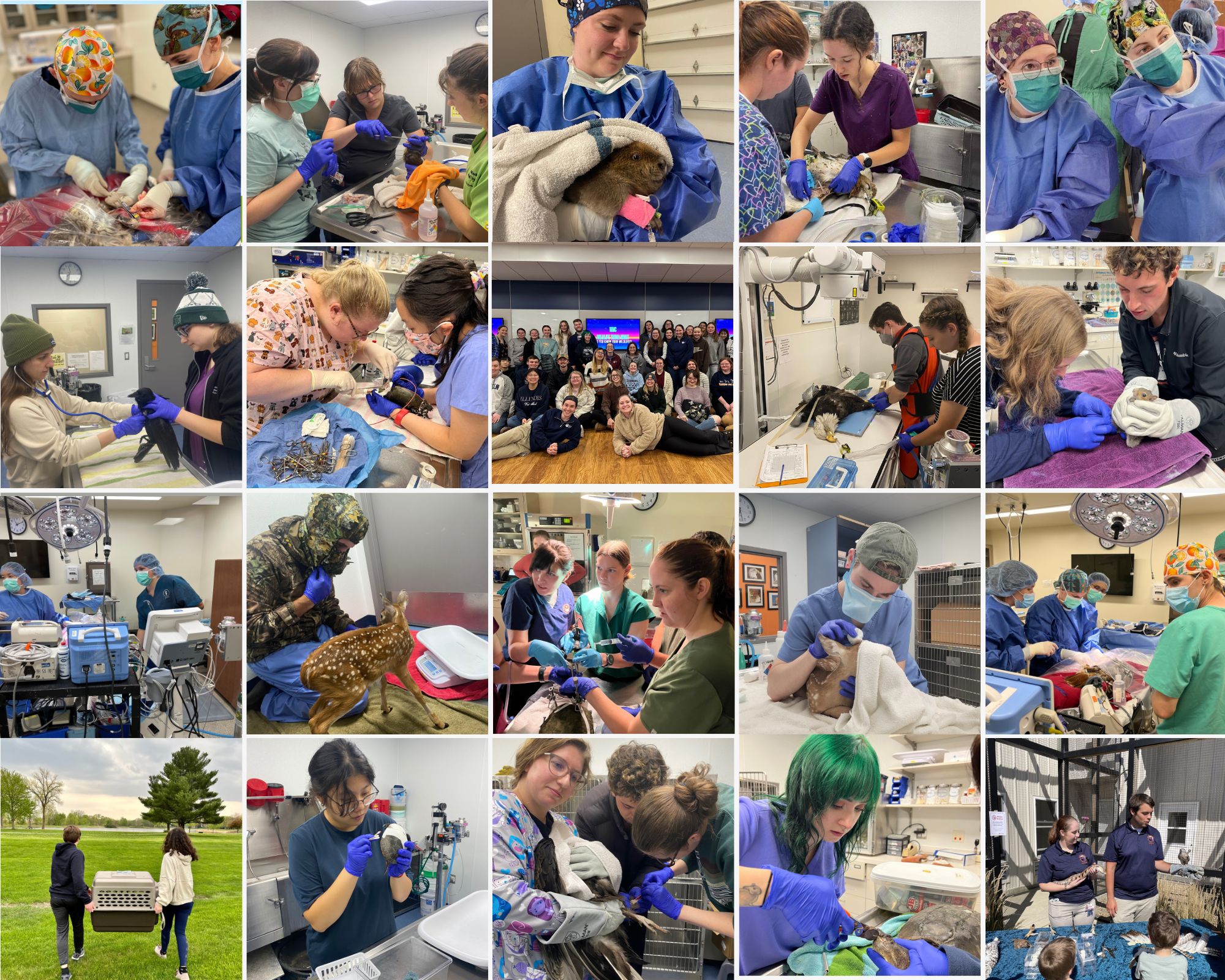
Like all superheroes learn quickly, team dynamic is necessary to become successful. We cannot do this alone. This clinic is student-run with the managers directing over eighty students broken into six teams with bold, courageous team leaders guiding the team members. We are a community of heroes. This clinic operates 365 days with the help of undergraduate students, veterinary students, house officers, and faculty members devoting countless hours. Outside of an intensive rigorous curriculum, students volunteer their time when they are not in class to provide the best care to patients. Many students dedicate their time to learning more about wildlife medicine, husbandry, nutritional needs, etc. Overall, we are working together to not only save lives but make a difference in this world. Like all superheroes, we learn the impact of allies. We depend on each other.

The climax is the moment that challenges every superhero and leaves them with difficult choices to make. During the summer of 2023, every day was filled with adventure from feeding orphans to triaging patients to providing medical treatment. At the end of a very long day, we were notified that an injured five-day-old white-tailed deer was waiting in the front lobby to be admitted to the clinic. This patient was in rough shape and presented as weak, non-ambulatory, and almost lifeless. The team quickly sprang into action and used whatever power that they had left and put it into this fawn. After providing intensive medical care, the outcome was not what they hoped and worked for. We spend most of our days in the clinic staying positive and living through joyful moments. Even so, we are sometimes faced with the realization that we can’t save them all. We are reminded that even for the patients that we lose, so many others are given another chance at life and released back into the wild through incredible care such as a red-tailed hawk with an ulnar fracture, a bald eagle with lead toxicosis, or a sickly red fox with mange. Even when we are faced with a difficult decision, supporting an animal through its toughest moments is the most courageous thing that we can do. That is the true power of our field.

Our journey through the Wildlife Medical Clinic has taught us to be advocates for all animals. Our work is not only done in an examination room. We can inspire the world to strive for lifelong education and preserve the environment through conservation efforts. We are in this field to be heroes for our patients. We are here to make a difference in this world. My comic storyline is not over. I have many unwritten pages awaiting me. Patients for me to learn and grow from. The Wildlife Medical Clinic will always be a monumental moment in my journey as a veterinary student.

Not all heroes wear capes – but these veterinary students do.
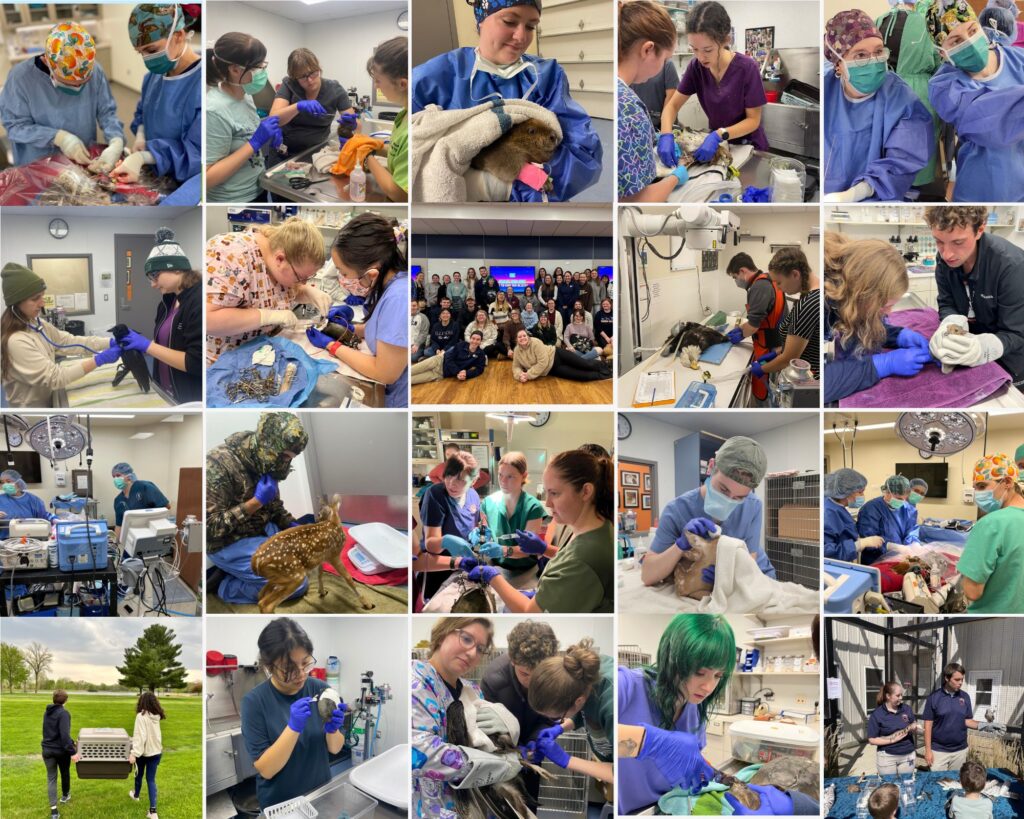
Collage of veterinary students in action

This article was written by Hassan, Class of 2025 DVM Candidate
Mothers Gone Wild!

The season of spring is known for a couple of aspects. It’s the time when flowers bloom, people begin to venture outside and wildlife give birth and raise their young. Being a mom in the wild is hard! In honor of Mother’s Day, here are several unique maternal strategies these local species have developed to keep their young safe and healthy.

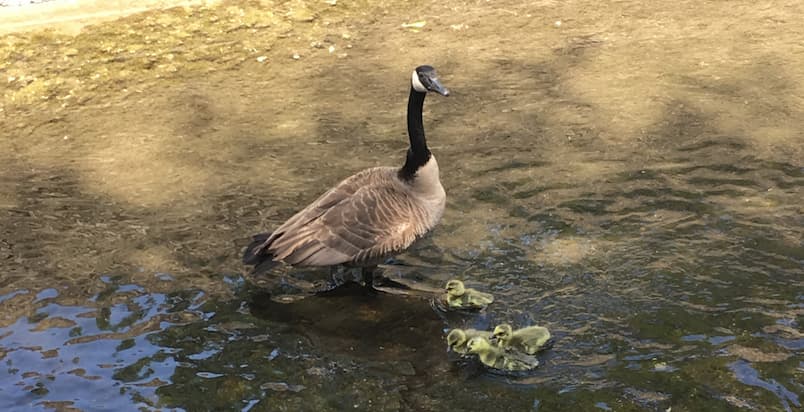
Geese are great adoptive parents!

In humans, it’s important to remember that the term mother doesn’t always have to refer to someone that is biologically related. A mom can take the form of a grandma, a cousin, or a family friend. The same idea applies to Canada geese! Despite the aggressive perception that the public has of them, Canada geese are very caring and fantastic parents. A mother Canada goose will adopt an orphan gosling if it is around the same size as her other goslings and take care of it as if it was her own. Geese truly look out for each other! Goslings spend a lot of time with their mom, as they are constantly with her, traveling, eating and sleeping. In fact, goslings may end up staying with their mom for their entire first year of life. Mother geese will keep her babies under her wings at night to not only protect them from predators but to keep them warm. The willingness of Canada geese mothers to accept goslings that are not their own, allows wildlife rehabilitators and clinics (like the Wildlife Medical Clinic) to release goslings back into the wild and know that they are being well cared for! However, it is important to know that this is specific to Canada geese, doing this with baby ducks or mammals will not work out the same way!

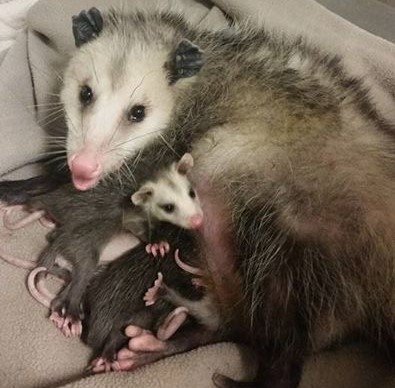
An opossum mom is a walking jungle gym!

When people think of animals with a pouch, they commonly think of kangaroos! Many people overlook the Virginia opossum, which is the sole marsupial that lives in North America. Opposed to kangaroo mothers who can raise up to 3 joeys simultaneously in her pouch, opossum mothers may raise up to 13 babies in her pouch at once! That’s a lot to carry for one mom! As the babies begin to open their eyes, their curiosity gets the best of the them and they end up venturing out of their mom’s pouch on their own for longer and longer periods of time. Older babies spend a lot of time on their mother’s back and so mothers end up walking through the wild and searching for food with their own baby backpack. The babies are extremely good at gripping. This is very helpful because if they fall off, the mother will not go back for them, and they will be left to fend for themselves. Babies usually stay with mom for around 5 months, so opossum mothers have their hands full for a while! The next time you see an opossum, don’t be fooled, it may be a mom carrying more than meets the eye!

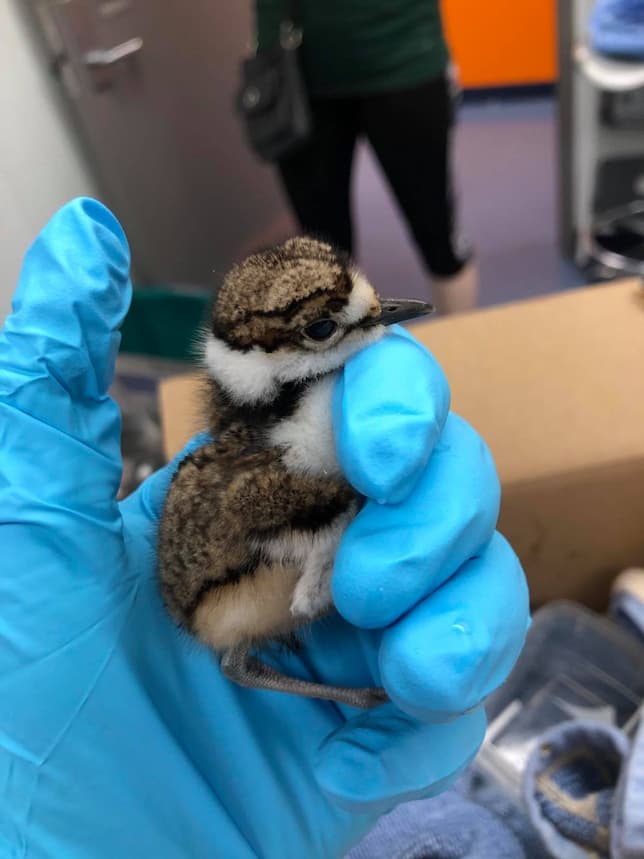
A killdeer mom is quite the actress!

Killdeers are a small, very vocal plover that like to nest in rocky, open areas. They make a small depression in the ground and usually lay four to six mottled eggs that resemble rocks. While their nest is quite camouflaged to the untrained eye, to a predator they are a little easier to spot. If this occurs, have no fear, mom has a trick she uses to lure those predators away. She first will make a lot of noise to alert the predator of her presence. Once she is seen, she will actually fake an injury and appear to have a broken wing. She gets so into it that you may even see her lay or roll around on the ground while moving her wing up and down, appearing to be in distress. This usually pulls the predator far enough away from her nest or if she has chicks, it gives them time to disperse and hide. Then mom has a miraculous recovery and flies away from the predator and back to her chicks, once it’s safe. Here is a great video that includes her nest and eggs https://www.youtube.com/watch?v=4t0sFIW-G_0.

Written by Nina, Class of 2026

Snakes!

Snakes, an animal group that frequently causes fear in people. Whether it be due to them having scales, their quick and unique locomotion, or maybe it’s the fact that some are deadly.
Unfortunately, due to this fear, most snakes get grouped as dangerous and sometimes are killed because of this misconception. I was encouraged to hear that studies have shown that learning more about snakes and the species in your area can help alleviate some of these fears and hopefully cut down on people harming these beneficial creatures. As an outspoken snake lover, I would like to address some common questions people may have.

Are snakes venomous or poisonous?

Snakes are not poisonous, but rather venomous. A poisonous animal is one that contains a toxin that can infect a predator through skin contact or consumption. For example, if I were to eat a Poison Dart Frog, I would consume something poisonous. Venomous animals are ones that inject a toxin into something through a bite. Since some species of snakes inject venom through their fangs, they are referred to as “venomous.”

How can I tell the difference between a venomous/nonvenomous snake?

It is incredibly important to know the difference between venomous and nonvenomous snakes. While this article talks a lot about venomous snakes, it is important to remember that most of the snake species in Illinois are non-venomous. Illinois has forty species of snakes and only four of those species are venomous. Of those four species, two are only found in southern Illinois.

One way that you may realize you have encountered a venomous snake is by the presence of a rattle on the end of the tail. While only two of the venomous snakes in Illinois have rattles, the other two behave as if they have a rattle and will shake their tail and create a buzzing noise if disturbed. These venomous snakes with rattles are called rattlesnakes and they have specialized hollow scales at the tip of their tails that make a buzzing noise when they vibrate against each other. If you hear this noise or see a snake that has this structure on their tail, it’s best to stay away.

Of course, there are exceptions to the tail rule for both venomous and non-venomous species. Rattlesnakes can lose their rattles due to injury, and they do not grow back. In these cases, the snakes will have a blunted tail, not extending to a fine tip like non-venomous species. There are several species of non-venomous snakes that have also developed mimicry as a defense mechanism. For example, Fox snakes are known to rattle their tail against leaves to imitate the sound of a rattle. This video demonstrates how well they can replicate the sound:
https://youtu.be/_G3db-dnZ8A.

Since there are exceptions to the tail rule, it is important to have other ways to identify venomous snakes. Non-venomous snakes generally have rounded snouts, heads, and pupils. Venomous snakes generally have pointed snouts, heat sensing pits, and elliptical-shaped pupils. There are also differences in the scales below their vent, but this would be difficult to see from a distance. A good rule of thumb is to just keep your distance from any snake if you are not sure.

What are some local species?

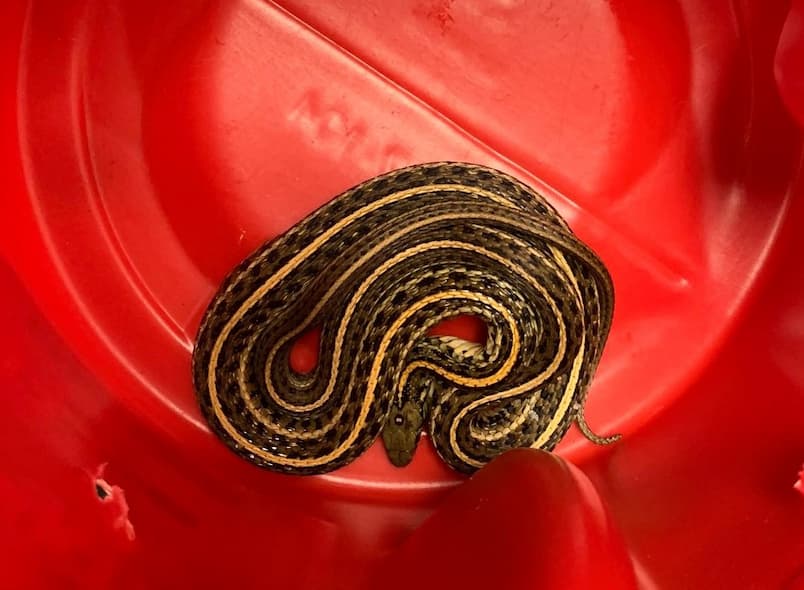
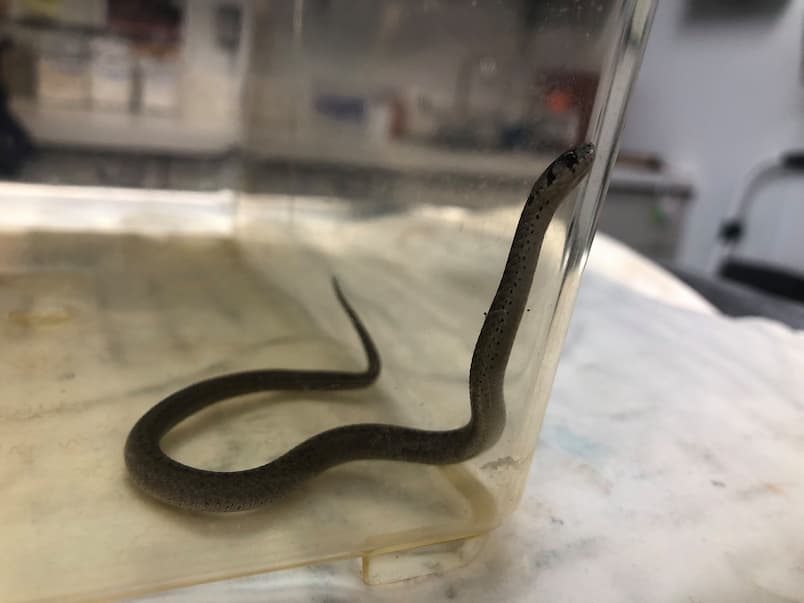
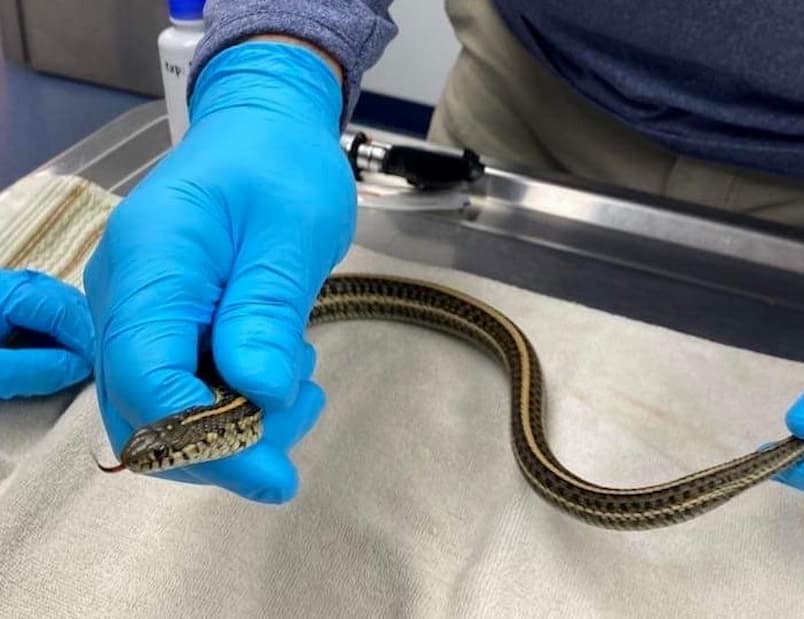
Though they are mostly elusive animals that are skilled in not being seen, here are several local species in the Urbana-Champaign area that you may come across. The most common species are Garter Snakes, Northern Water Snake, Fox snakes, Rat Snakes, Smooth Green snakes, Red-Bellied Snakes, and Dekay’s Brownsnake. Though rare, you may come across an Eastern Massasauga, which is a venomous species. While the population has greatly decreased since 1980, it may still be possible to find remaining individuals. A full list of Illinois species can be found here: https://www.wildlifeillinois.org/gallery/amphibians-and-reptiles/snakes/

Why are snakes important?

Snakes play an integral role in the ecosystem. They can be predators but also prey for some. They are very beneficial as they keep rodent and insect populations at bay. They are food for birds of prey, some mammals, and even other snakes. Some snakes specialize in eating other snakes and one of those species resides right here in Illinois, the Kingsnake. While I know not everyone likes snakes, I hope we can all respect them and see their importance in the environment.

Written by Marg, class of 2026

Hoppy Spring!

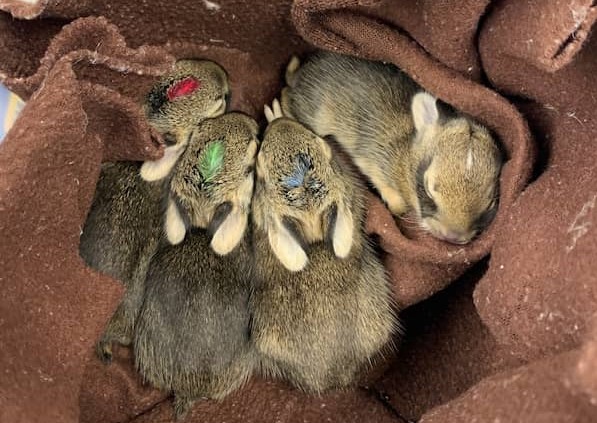
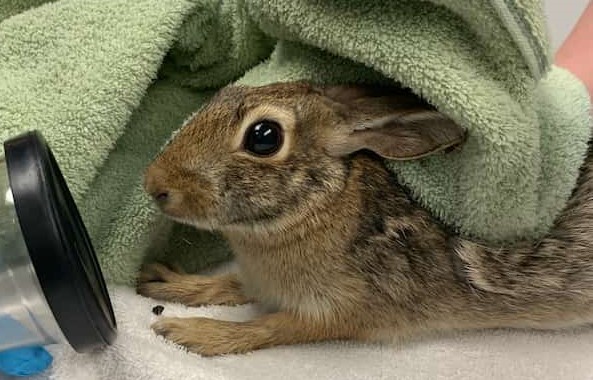
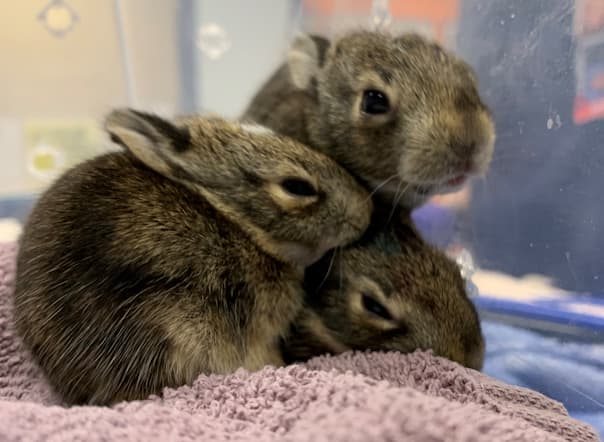
We are in the midst of the most wonderful time of year for the Eastern Cottontail Rabbit
(Sylvilagus floridanus). Spring comes with plentiful food and nourishment to support the
birth of many new young rabbits. The rabbit breeding season begins around early
March and continues into September. Since rabbits have such a short gestation period,
28 days, one rabbit can have upwards of three litters per year. An average litter has
anywhere from two to seven baby rabbits, also known as kits.

The cottontail rabbit gives birth in shallow, grassy depressions in the ground. The
mother rabbit will return only twice per day to feed her young, usually around dawn and
dusk. Outside of feedings, the mother will often put some distance between herself and
her young so as not to attract predators to her babies. The timeline from newborn to
self-sufficient is truly short with rabbits.

  • The kits are born blind and with little hair.
  • Their eyes will begin to open about four days after being born.
  • By twelve to sixteen days old they will begin to adventure out of their nest.
  • As early as four or five weeks old, young rabbits will start to fend for themselves.
  • They may begin to sexually reproduce as early as three to four months of age.


Unfortunately, many young kits do not survive to adulthood, partially due to the high risk
of predation. The average lifespan of a wild cottontail rabbit is about one to three years.

It is quite common for rabbits to make their nest in residential yards. The best thing you
can do if you find baby rabbits in your yard is leave them alone! It is a common
misconception that the mother will not return to feed her babies if they smell that a
human has touched them. Unless it has been confirmed that the mother is injured or
deceased, young kits have their best chance of survival when left in the wild for their
mom to care for them.

Dog owners often have concerns for a dog getting to the babies, and there are a couple
easy solutions for this. You can create a protective shield for the nest by placing a
laundry basket or small pen around the nest with a hole just big enough for the mother
rabbit to fit through. Alternatively, a weighted basket can be placed over the nest during
the day and removed at night for mom to return. If all else fails, leash-walking your dog
for potty time is another feasible option. As previously mentioned, the young rabbits
should be ready to move out of the nest within four to five weeks, so it is a temporary
inconvenience that makes a world of difference to the kits’ survival.

Celebrate the Spring season with some fun facts about the Eastern Cottontail Rabbit


1. The Eastern Cottontail Rabbit (Sylvilagus floridanus) is a different species than
the common domestic rabbit (Oryctolagus cuniculus), and therefore, they are
unable to reproduce with each other.
○ It is important to note that the wild rabbit can transmit the fatal virus,
known as Rabbit Hemorrhagic Disease Virus Type 2, to domestic rabbits,
so they should not be allowed to mingle.


2. Eastern Cottontails are generally a solitary species but if found in a group, they
would be called a “fluffle.”


3. To escape predators, the Eastern Cottontail Rabbit can run as fast as 29km/hr.,
or 19mph.


4. Rabbits are usually non-vocal, but they can emit a grunt or scream if they are in
true danger.


5. Rabbits are crepuscular beings, meaning they are most active at dawn and dusk.


6. Eastern Cottontail Rabbits will sometimes do a courtship dance in which they will
leap up into the air and race under one another.


7. An adult cottontail rabbit can weigh up to 2.5lbs. Female rabbits are typically
larger than male rabbits.


8. Eastern Cottontail rabbits do not hibernate. During the winter, rabbits usually
survive on twigs and branches or any seedlings they can find. They take a break
from mating to preserve their energy as food sources are limited

This blog post was written by second year Alli

Ringing in the New Year at the Wildlife Medical Clinic

The veterinary students at the University of Illinois College of Veterinary Medicine are some of the most driven and goal-oriented people I have ever met. Knowing this, I wanted to ask my fellow Wildlife Medical Clinic volunteers what their resolutions were for the new year. More specifically what their goals were related to the WMC, so I posed the following question, “What are your New Year’s Resolutions for your time in the WMC?” Here are some answers from our dedicated volunteers:  

Allison Wallace, VM 24:  

My New Year’s Resolution for my time with the WMC is to have an owl as a patient and to participate in its successful rehabilitation and release. I would also like to participate in a surgical procedure.  

Danielle Money, VM 24:  

I want to make the best of my last two months in the clinic. I have enjoyed my time as a volunteer so much and I am sincerely going to miss it. (Third year students will be moving on from the program in March of 2023 as they start clinical rotations).  

Billy Wright, VM 24:  

I want to help a first-year student confidently triage an incoming patient on their own.  

Brianna Huff, VM 25, soon to be senior WMC student manager:  

My goal is to make sure the incoming manager feels welcomed and has the resources necessary to start the year off right!  

Tyson Jenkins, VM 26, soon to be junior WMC student manager:  

I would like to improve my ability to formulate a treatment and diagnostic plan based off the findings of the triage exam. I also want to sharpen my blood drawing skills on smaller patients.  

Christina Parsnick, VM 25:  

I want to work on my ophthalmic exam skills!  

Jacquelyn Merx, VM 26:  

I want to keep sharing knowledge about wildlife through social media and conversations with friends, family, and others. This will help increase knowledge and awareness on issues animals face and help people learn when to help and how to help.  

I also want to learn more about reptiles and amphibians this year. Besides turtles, I really don’t know much about these animals. We recently had a salamander come through the clinic and it made me realize that I need to become more familiar with our local reptiles and amphibians and their care. This will allow me to give them the best care possible and to help educate others in the future. 

Haley Kenyon, VM 25:  

Unfortunately, I have had a string of cases where the animals are so severely injured or ill that the most appropriate and compassionate measure to take was humane euthanasia. Due to this, I am hopeful that I will receive a case where the animal is able to be successfully rehabilitated and then released back into the wild.   

Fayth Kim, VM 24:  

As a team leader, I want to make the best out of the year and help the students on my team feel more comfortable making treatment plans for their patients.  

Hassan Hanna, VM 25:  

My top three resolutions are to be a primary case manager caring for a North American River Otter, to be well rounded and knowledgeable about wildlife and to be able to rattle off random bird facts at dinner. I would also like to strengthen some of my clinical skills including blood draws, diagnostic methods, and sample collection.  

Amanda Wong, DVM, ZCA Resident II:  

I would like to participate in more surgical procedures with students to help them feel more comfortable with potentially complex treatment options for wildlife.  

As for myself, my WMC New Year’s Resolution is to continue to improve the program as the current senior student manager. I hope those that follow in my footsteps feel comfortable taking on the role of the manager and enjoy being in the position they hold. We are all excited to see what the new year has in store for us at the Wildlife Medical Clinic!  

Written by Chloe Dupleix, current senior WMC student manager.

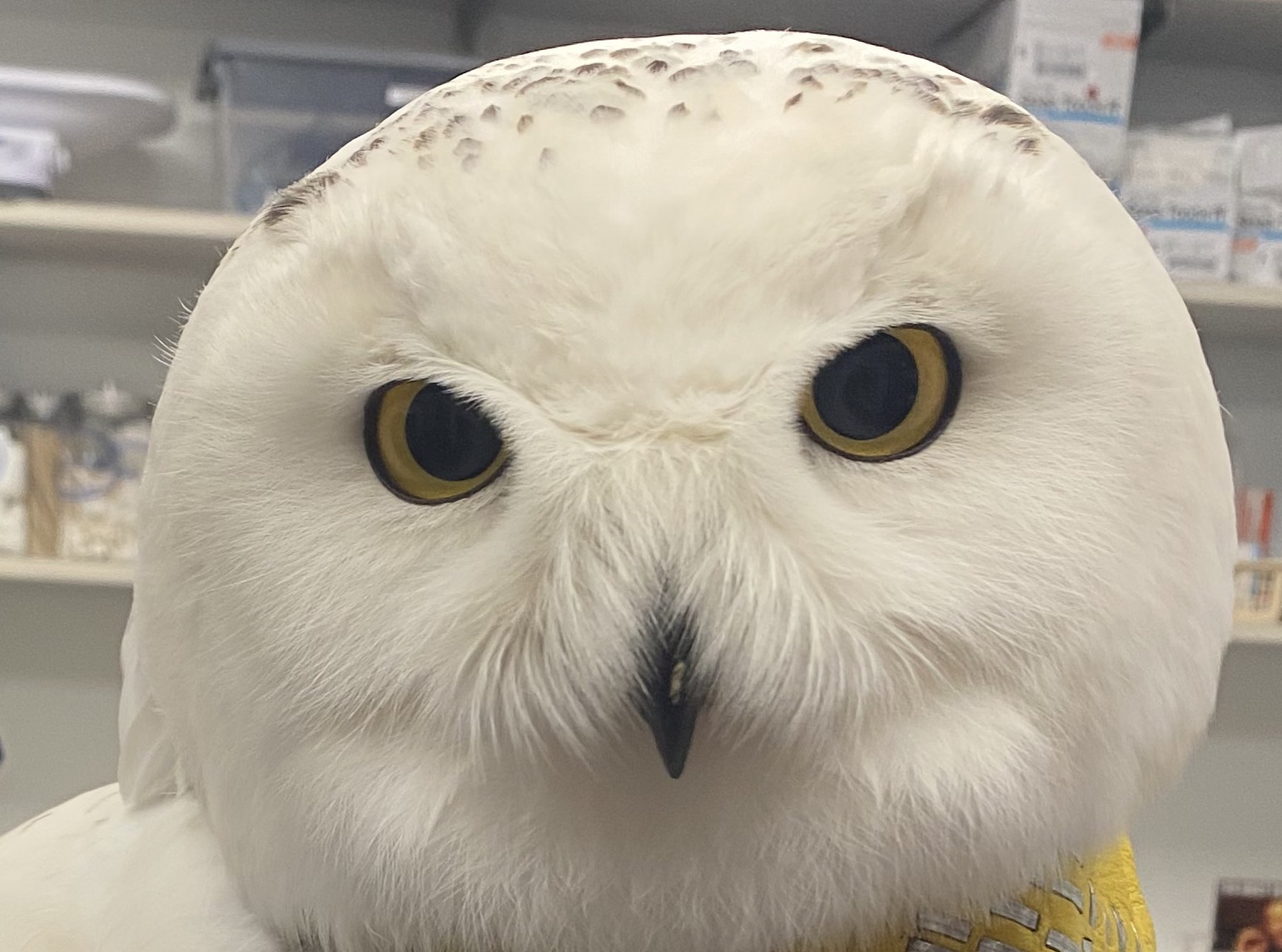
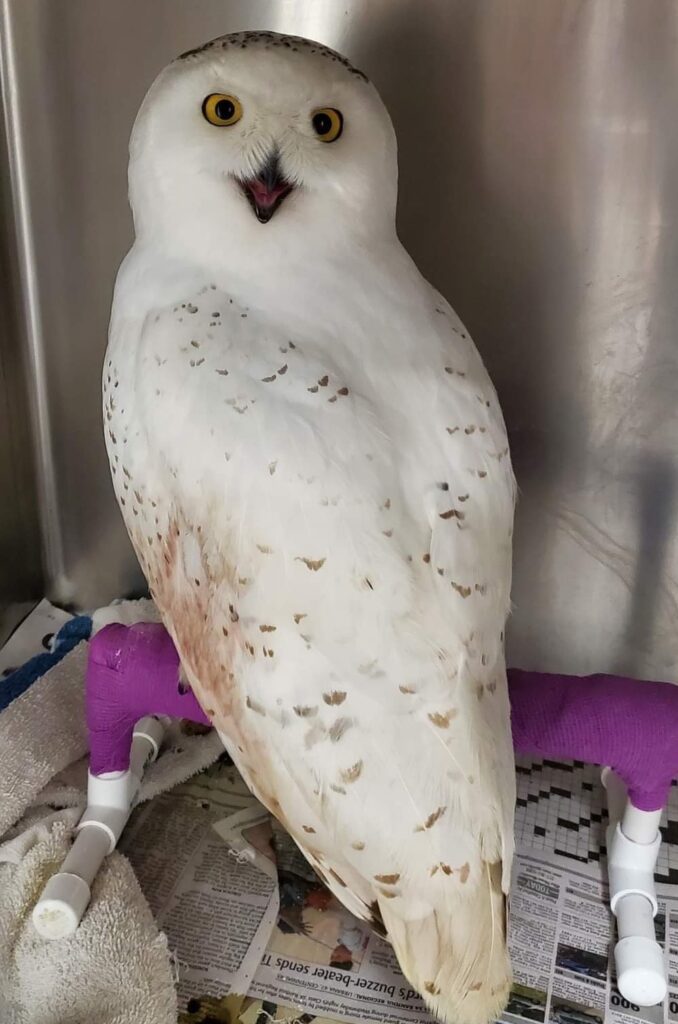
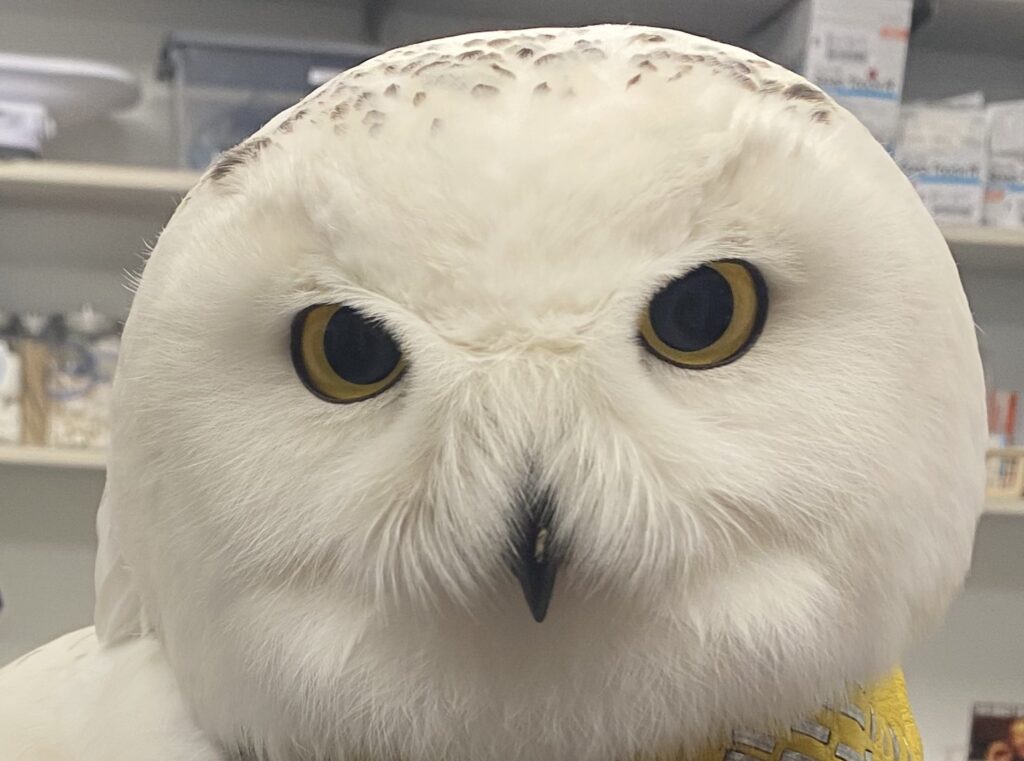
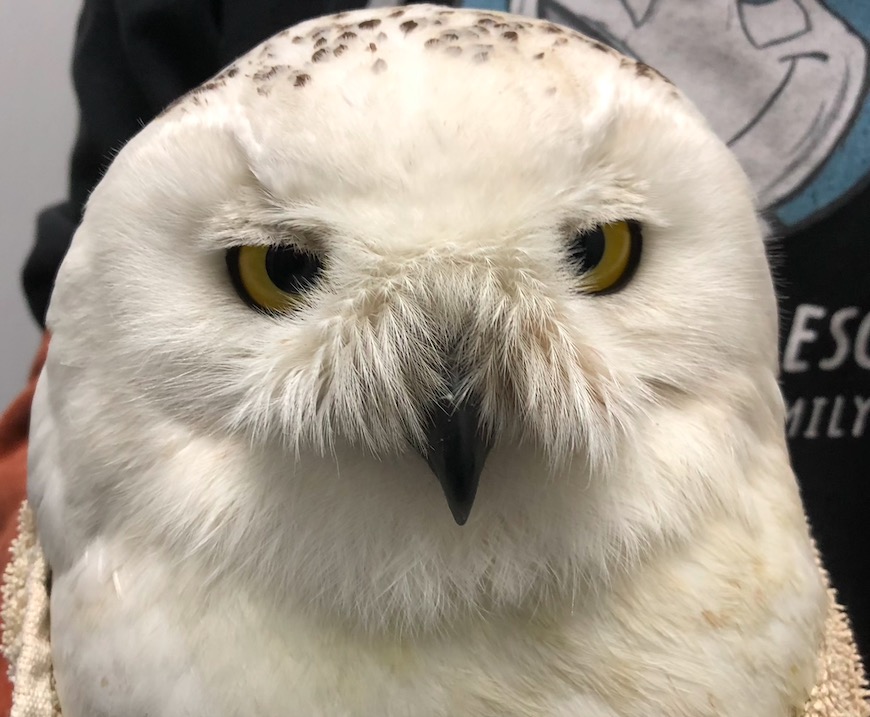
The Snowy Owl

As winter creeps in, bringing its brisk winds and snowy skies, this feature is about one animal who does not mind these chills! The snowy owl (Bubo scandiacus) which is an Arctic species that periodically may be seen in Illinois during the winter months. Their characteristic white feathers and dark flecks are perfect in camouflaging this bird in the white winter snow. With a close eye or maybe some binoculars to help, you might be lucky enough to spot a snowy owl this winter. This species migrates south from the Arctic, coming as far as central Illinois in search of food. While they do not have consistent migration patterns like many other species of bird in Illinois, the snowy owl movements can be described as irruptions. This occurs after an increase in food availability causes an increase in breeding, and thus population growth. As their population increases, owls must fly longer distances in search of available food in less crowded hunting grounds.  

Now you might be wondering how you can best increase your chances of spotting one of these mysterious winter owls! They are often found in prairies, fields, or lake edges where they can easily spot their prey running across the snow-covered ground. While they typically feed on small prey such as lemmings and voles, they will not turn down larger prey such as ducks and artic hare. Snowy owls are a diurnal species, meaning they are active during daylight hours, which will help increase your chances of seeing one. In Illinois, we get an occasional visitor near the Champaign-Urbana area, but they are more common closer to Lake Michigan by Montrose Harbor.  

The Wildlife Medical Clinic has had the privilege of aiding in the care and rehabilitation of these mighty owls the past two winters! While they are a magnificent sight to see, we are grateful for all the unique Illinois wildlife that makes their way into our areas seasonally. Keep your eyes peeled! The snowy owl does not stay long before making its way back to the Arctic to nest before spring comes.  

Written by Ellie Petree, class of 2024.

Wildlife Medical Clinic
John A. Coyne South Clinic
2100 South Goodwin Avenue
Urbana, IL 61801
217-244-1195