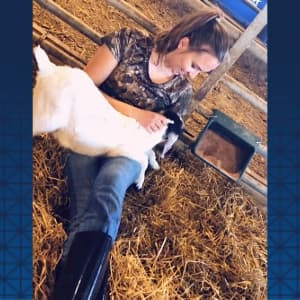
Suzie Migut

Full-Time and In-Person Student

Tell us about your background (education and current work experience).

I graduated from the University of Illinois at Urbana-Champaign with a Bachelor’s degree in Animal Sciences. I have worked as a veterinary assistant and am currently working as a teaching assistant.

How did you become interested in the Master of Veterinary Science degree program?

I have always wanted to expand my knowledge and experience different paths in my career. I learned about the Master of Veterinary Science degree through my college advisors and fellow ANSC peers. The program immediately felt right for me.

What sets the MVS degree/program apart from other programs you’ve either participated in or considered?

The MVS degree has been so incredibly different in a great way than other programs I considered. This program has already helped me grow as a person as well as academically. I have been learning many useful things and have met incredible people through this program that will stick with me forever.

Tell us about a course in the program that impacted you. How was the content useful?

The courses in this program are all very impactful and fulfilling, but I have especially loved VCM 507/509 so far. The content is very intriguing and relevant while the format of the class has helped me be successful as a student and prepare me for a future career.

The MVS degree helps students “discover what’s next” in their career. What’s next for you?

My path hasn’t always been clear, but the MVS degree has helped me develop my passion(s) that I didn’t know would be so important for me. I plan on starting off working in conservation programs and helping design new efforts! I also will be considering applying for veterinary school in the future as well.

What is one thing about the program you would say to someone considering this degree?

The MVS degree is incredibly helpful even if you aren’t planning on going to veterinary school. It has so many options and opportunities for you to really explore and dive into.

Return to Student Spotlight

Elisabeth Sullivan

Full-Time and In-Person Student

Tell us about your background (education and current work experience).

I completed my undergraduate studies in Animal Science at the University of Illinois Urbana-Champaign and am currently pursuing a Master’s in Veterinary Science. Alongside my academic journey, I work as a veterinary assistant, where I find great fulfillment in caring for large animals. My passion for animal care and veterinary medicine continues to grow as I gain hands-on experience and expand my knowledge in this field.

How did you become interested in the Master of Veterinary Science degree program?

I first became interested in the program during my undergraduate studies when my advisors introduced me to it. After exploring the UIUC program page, I quickly realized it was the perfect fit for my goals and aspirations.

What sets the MVS degree/program apart from other programs you’ve either participated in or considered?

The high quality of the in-person classes in the MVS program, coupled with its one-year structure, has allowed me to achieve more in a shorter period of time than I ever anticipated. This intensive program has provided me with a depth of knowledge and hands-on experience that far exceeds my expectations, enabling me to grow both personally and professionally at an accelerated pace.

Tell us about a course in the program that impacted you. How was the content useful?

VCM 568, taught by Dr. Lowe, has had the greatest impact on me because it offers a real-world perspective on business and management. This course has provided a valuable opportunity to expand my knowledge beyond animal health, enriching my understanding of broader concepts that will benefit me both professionally and personally.

The MVS degree helps students “discover what’s next” in their career. What’s next for you?

The MVS program has truly set me up for greater career opportunities, with the guidance of faculty who are always eager to advise and support your future goals. Dr. Lowe, in particular, has been instrumental in helping me define the next steps in my career. While I plan to apply to veterinary school, I will be pursuing farm management in the meantime to gain further experience and broaden my skill set.

What is one thing about the program you would say to someone considering this degree?

I would tell someone considering this degree that the MVS program offers a unique combination of hands-on experience and expert guidance, which not only deepens your knowledge in animal health but also expands your understanding of business and management. The faculty are incredibly supportive and invested in helping you achieve your career goals, providing invaluable advice and opportunities for personal and professional growth.

Return to Student Spotlight

Alicyn Tilk

Full-Time and In-Person Student

Tell us about your background (education and current work experience).

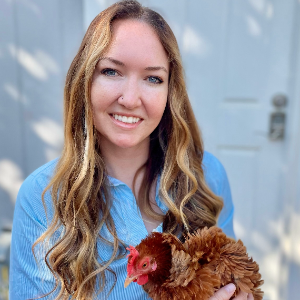
I graduated in 2021 from the University of Findlay (OH) with a BS in Animal Science, with a Pre-Veterinary emphasis. I spent the last three years working with Case Western Reserve’s Animal Resource Center, first as a husbandry technician, and later as a veterinary assistant, where I got to work with a multitude of species! Now I’m attending U of I’s Master of Veterinary Science program, while working full time as a vet assistant with the Veterinary Teaching Hospital’s Intermediate Care team.

How did you become interested in the Master of Veterinary Science degree program?

After I didn’t get into vet school last cycle, it was recommended that I take a few post-baccalaureate classes or a master’s program to increase my GPA and experience. A few Google searches brought me across the MVS degree, and it checked all the boxes!

What sets the MVS degree/program apart from other programs you’ve either participated in or considered?

The MVS degree at U of I offered a well-rounded course list that allowed me the freedom to explore my interests while targeting skills I could utilize in any animal science career. With the accelerated timeline that I was looking for (1 year), I was really excited that they offered an in-person degree option. The face-to-face interactions with faculty and fellow students truly help solidify the material covered while allowing us substantial networking opportunities around campus.

Additionally, I toured the vet school campus and the “Chambana” community a few years ago, and it immediately felt like a second home. I knew if I was going to succeed in any fast-tracked opportunity, I would be able to have the support and resources available to do so here.

Tell us about a course in the program that impacted you. How was the content useful?

I’ve had a few impactful courses! I just started VCM 568 “Livestock Systems I” with Dr. Jim Lowe on campus. So far, we’ve had some deep, thought-provoking discussions about the concepts of company/ production goals and the psychology of managing any livestock operation.

I also liked taking BADM 509, “Managing Organizations” through the business college as an approved elective for my degree last fall. While I historically struggled with online courses, the U of I faculty and staff truly put the effort into engaging with the students and connecting us to the material, and each other.

Right now, my goal is to be a well-rounded professional, and adaptable to any career path I might find myself in. I hope to stay in animal science and medicine, as I love the hands-on aspect of problem solving, but I would be open to moving into administration one day if the opportunity arises.

In alignment, material from these courses has helped me develop into a better coworker and team member for group projects. Science is my forte, and the MVS courses do well to cover those in-depth. But, the opportunity to take a “break” from the science-intense course work was a welcome challenge and I believe what takes this program to the next level!

The MVS degree helps students “discover what’s next” in their career. What’s next for you?

Taking a full-time course load in a master’s program can be intense. With the MVS, I’m finding it just as rewarding! It is solidifying that animal science/ medicine is the industry in which I’d like to develop a career.

I’m currently waiting to hear back from a few veterinary schools to see if I’ll be starting as a student this fall. However, the MVS program is truly reinforcing my confidence that I would succeed in a rigorous professional degree program, whenever that time comes. If I end up applying in the next vet school application cycle too, I’ll be going into the process feeling more prepared than before.

What is one thing about the program you would say to someone considering this degree?

Go in with an open mind! I feel like some of my cohort, myself included, came in with the idea that this would “just boost the GPA.” While straight-A’s can help your overall GPA a little (as a veterinary school hopeful), but that isn’t the sole purpose. The lessons surrounding industry and life you come across have much more impact if you’re willing to be receptive to them.

As with any post-baccalaureate program, there’s a lot you’ll have to do and figure out on your own, and that’s ok! It’s not undergraduate, the professors won’t hold your hand, but they are readily available and willing to guide you if you need it. It’s an incredible balance of challenging and supporting the students that I believe the majority of the MVS program faculty and staff have mastered.

Return to Student Spotlight

Camila Mendez

Part-Time and Online Student

Tell us about your background (education and current work experience).

I hold a diverse educational background and extensive work experience in the field of veterinary science. My educational journey began at the Universidad del Tolima in Colombia, where I earned my degree as a Veterinary Zootechnician. Since then, I have been committed to continuous learning and professional development, pursuing various specialized courses and degrees to enhance my skills and knowledge.

I furthered my education with a Specialization in Animal Nutrition at the Universidad de Ciencias Aplicadas y Ambientales, followed by a postgraduate course in University Teaching at the Universidad del Tolima. Additionally, I completed a Specialization in Animal Health at the same institution. Most recently, I embarked on the Master of Veterinary Science at the University of Illinois Urbana-Champaign, which has been a transformative experience in broadening my understanding of veterinary science and its applications in livestock systems.

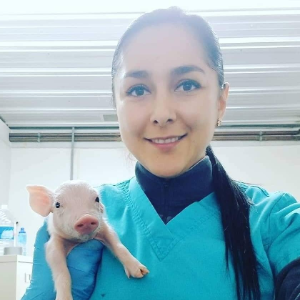
My work experience spans over 17 years, during which I have held various roles in both academic and industry settings. From teaching pig production, nutrition, and reproductive management at universities to serving as a Technical Assistant at porcine farms, I have gained hands-on experience in all aspects of animal care and management. Currently, I serve as a Sr. Animal Technician Specialist at the Center for Discovery and Innovation in Nutley, New Jersey, focusing on research for infectious diseases like COVID-19 and tuberculosis.

How did you become interested in the Master of Veterinary Science degree program?

My journey into the Master of Veterinary Science program at the University of Illinois Urbana-Champaign was fueled by my passion for the swine industry and my desire to advance both personally and professionally. Living and working in the United States, I’ve witnessed firsthand the advancements and innovations in veterinary science that contribute to the sustainability and profitability of the swine industry. However, my ultimate goal is not only to excel in my career here but also to bring back enriched knowledge and expertise to my home country. I am driven by the desire to contribute to the development of the swine industry in Colombia, where I can apply the insights and skills gained from the MVS program to make a meaningful impact.

What sets the MVS degree/program apart from other programs you’ve either participated in or considered?

The Master of Veterinary Science (MVS) degree program distinguishes itself through its comprehensive curriculum covering a wide array of subjects crucial for effective animal care and management. Unlike other programs I have explored, which tend to focus narrowly on specific disciplines such as business or science, the MVS program offers a multifaceted approach to veterinary science. It equips students with diverse knowledge and skills essential for addressing various challenges in animal welfare and husbandry.

Moreover, the flexibility of online learning distinguishes the MVS program, enabling students to pursue their education without interrupting their professional commitments. This aspect is particularly valuable for individuals like myself, allowing for the seamless integration of academic pursuits with ongoing professional responsibilities.

Tell us about a course in the program that impacted you. How was the content useful?

One course that significantly impacted me in the Master of Veterinary Science program is VCM 565 (Biostatistics, Information Management, & Data Analytics). This course was particularly influential because it introduced me to the importance of statistical analysis and data interpretation in veterinary science.

Additionally, VCM 568 (A Systems-Based Approach to the Operation of Livestock-Based Food Production Systems I) was another impactful course. It challenged me to consider the interconnectedness of various components within livestock production systems and evaluate the holistic impact of proposed changes. This systems-based approach broadened my perspective on animal health and management, enabling me to identify constraints within systems and devise comprehensive solutions.

The content covered in both VCM 565 and VCM 568 provided me with valuable insights into how data can be utilized to enhance decision-making processes in animal health and production management. Learning about statistical methods, data analytics, and systems thinking empowered me to analyze large datasets effectively, identify trends, and derive meaningful conclusions.

Moreover, the practical applications of the course content were immensely useful in my professional endeavors. As a veterinarian, being able to interpret data accurately and understand the broader context of livestock production systems allows me to make informed recommendations for optimizing animal welfare, improving production efficiency, and mitigating health risks.

The MVS degree helps students “discover what’s next” in their career. What’s next for you?

The Master of Veterinary Science (MVS) degree program indeed fosters a sense of exploration and discovery, empowering students to envision their future career paths and pursue their aspirations with confidence. For me, the MVS program has been instrumental in broadening my horizons and equipping me with the skills and knowledge necessary to navigate the dynamic landscape of veterinary science. As I near the completion of my MVS degree, I am excited to embark on the next chapter of my professional journey. One option that I am considering is pursuing a Ph.D. in veterinary science. Building upon the foundation laid by the MVS program, a Ph.D. would offer me the opportunity to delve deeper into a specific area of interest within veterinary science, conduct advanced research, and contribute to the advancement of knowledge in the field.

What is one thing about the program you would say to someone considering this degree?

I would encourage anyone considering the Master of Veterinary Science (MVS) degree program to embrace the opportunity for growth and exploration it offers. This program is not just about acquiring knowledge; it’s about discovering new perspectives, challenging assumptions, and unlocking your potential as a veterinary professional.

The interdisciplinary nature of the MVS program is truly remarkable. It exposes students to a diverse range of subjects, from animal health and nutrition to data analytics and management principles. This breadth of knowledge not only expands your skill set but also broadens your understanding of the complex issues facing the veterinary profession today.

Moreover, the flexibility of online learning makes the MVS program accessible to students from diverse backgrounds and geographic locations. Whether you’re a practicing veterinarian looking to enhance your expertise or a recent graduate eager to jumpstart your career, this program offers the flexibility you need to pursue your educational goals without sacrificing your professional or personal commitments.

Ultimately, the MVS degree equips you with the tools and knowledge you need to make a meaningful impact in the field of veterinary science. Whether you aspire to work in clinical practice, research, academia, or industry, this program provides a solid foundation upon which to build your career and make a difference in the lives of animals and the communities you serve.

Return to Student Spotlight
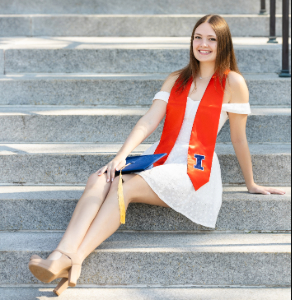
Marissa Pietz

Part-Time and Online Student

Tell us about your background.

I originally started as a kennel assistant when I was 16 in high school, and this year is my 12th year working in veterinary medicine. I received my veterinary certificate in 2015, and then earned my Associate’s in Natural Sciences and Mathematics at Napa Valley College. I graduated in 2021 with my Bachelors in Animal Science from UC Davis where I specialized in companion/captive species and minored in Medical-Veterinary Entomology.  I currently work at UC Davis as an Instructional Support Facilitator and Animal Health Technician II, it’s a mouthful, but I basically just support didactic instruction for our School of Veterinary Medicine. I absolutely love working here with my team and enjoy our students and the menagerie of creatures we get to experience!

How did you become interested in the Master of Veterinary Science degree program?

I was looking for a graduate-level program that was something I was truly passionate about. I didn’t feel like general animal science or microbiology were the right fit, and I really wanted to focus on veterinary sciences and challenge myself with a subject I love studying. It turns out options for programs are limited- especially for someone who works as much as I do! I spoke with a counselor (Clarissa) on the phone after looking at other colleges and knew immediately it was the right fit! I felt right at home.

What sets the MVS degree/program apart from other programs you’ve either participated in or considered?

I love that I am able to focus on livestock and herd health, since that is something I have less formal education on. It has helped with shifting my focus from that ‘individual patient’ mindset to herds as their own living breathing entity.

Tell us about a course in the program that impacted you? How was the content useful?

I have been able to expand my skills with biosecurity through learning how to formally create protocols. I love Dr. Lowe and Dr. Blairs textbooks and that they don’t try to overcomplicate things or make ideas harder than they need to be. Occam’s Razor is something Lowe mentions, and that has stuck with me!  Specifically, the two biosecurity courses (VCM560/561) have been really useful to me.

The MVS degree helps students “discover what’s next” in their career? What’s next for you?

I am pursuing my DVM next! I was just accepted into veterinary school, although I have not yet decided where I will be going yet. I am so excited to be moving on to this next chapter in my life and continue my path of lifelong learning. I believe working on my MVS made me a more competitive candidate and helped to better prepare me for veterinary school.

What is one thing about the program you would say to someone considering this degree?

Two words: DO IT! I have really enjoyed the instructors, counselors, and curriculum in this course! I feel connected despite being all the way in California and have even made some friends! The instructors understand and respect that most of the students work full-time and have very realistic expectations. I am so happy that I have had this opportunity, and it has been very manageable for me with my job.

Return to Student Spotlight
Master of Veterinary Science
2938 Veterinary Medicine Basic Sciences Building
2001 South Lincoln Avenue
Urbana, IL 61802
217-300-7439