From research laboratories to clinical settings, students in the Master of Veterinary Science program gain hands-on experience while developing skills for careers in animal health.
What does it take to turn classroom knowledge into workplace experience?
For students pursuing the on-campus Applied Veterinary Science (AVS) major within the Master of Veterinary Science (MVS) degree at the University of Illinois College of Veterinary Medicine, the capstone provides that opportunity.
Over 24 weeks, students work alongside faculty researchers and professionals on projects addressing real-world challenges in veterinary medicine, animal health, and scientific research. Along the way, they apply what they have learned, develop new skills, and gain experience they can carry into their careers.
Finding the Right Project
The capstone experience begins well before students start their projects.
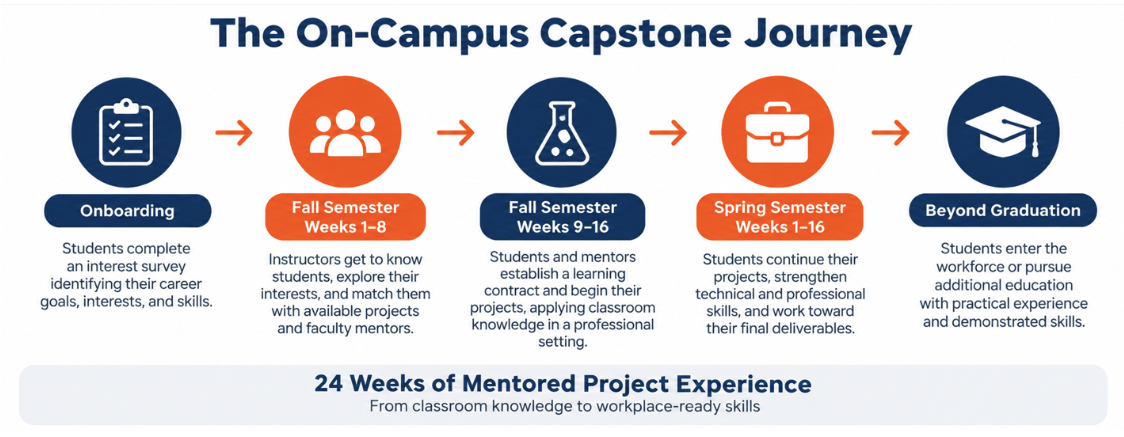
During onboarding, students complete an interest survey to share their career goals, areas of interest, and existing skills. Throughout the first eight weeks of the fall semester, instructors get to know students and help identify projects that align with their interests, abilities, and professional aspirations.
Projects begin during the second eight weeks of the fall semester and continue throughout the spring, providing 24 weeks of applied experience.
Before beginning, each student and their project mentor sign a learning contract outlining expectations, responsibilities, and learning objectives. This ensures students understand their role and how their contributions support the larger project.
Real Projects. Real Experience.
The range of available projects reflects the many career opportunities within animal health. Students may work in research laboratories, clinical environments, or projects focused on data analysis, animal welfare, and scientific communication.
Examples of available project areas include:
- Clinical medicine and diagnostics: Investigating gastrointestinal disease in horses, evaluating veterinary dermatology techniques, and exploring clinical research questions in small animal medicine.
- Wildlife health and animal welfare: Studying American alligator population health and developing evidence-based husbandry recommendations for nonhuman primates.
- Biomedical and laboratory research: Investigating cancer vaccine development, antibiotic resistance, infectious diseases, and the effects of environmental contaminants on animal health.
- Animal health innovation: Collaborating on the development of a canine rehabilitation device and evaluating new approaches to equine health monitoring.
- Livestock health and production: Exploring dairy herd health, infectious disease, and challenges affecting food animal production systems.
While the projects differ, each provides an opportunity for students to contribute to meaningful work under the guidance of experienced professionals.
Building Skills Employers Value
The capstone is about more than completing a research project. It is an opportunity for students to demonstrate the knowledge and professional skills they have developed throughout the MVS program.
Depending on their project, students may gain experience in laboratory techniques, clinical observation, data collection and analysis, scientific literature review, technical writing, or research presentations.
Just as importantly, they practice skills that translate across animal health careers: problem-solving, critical thinking, communication, collaboration, time management, and professional accountability.
Students learn what it means to contribute to a project, meet expectations, navigate challenges, and communicate their findings.
More Than a Degree
For students preparing for veterinary school or exploring careers across the animal health industry, the capstone offers something valuable: experience they can discuss with confidence.
Rather than simply describing what they learned in a course, graduates can point to a project they helped complete, explain their contributions, and demonstrate how they applied their knowledge in a professional setting.
“I hope students leave with a deeper understanding of how science and innovation address real-world challenges, and greater confidence in their ability to collaborate and develop meaningful solutions to complex problems in animal health.”
— Dr. Brian Aldridge, Dean of Educational Innovation
The goal is simple: students leave with more than a master’s degree. They leave with experience, demonstrated skills, and a clearer understanding of where their education can take them.
Explore the on-campus Applied Veterinary Science major within the University of Illinois Master of Veterinary Science program and discover how learning extends beyond the classroom.
Beyond the Classroom
Stories of learning, discovery, and impact from the Master of Veterinary Science.