Jenna Nist: Becoming a Student Ambassador for the MVS Program

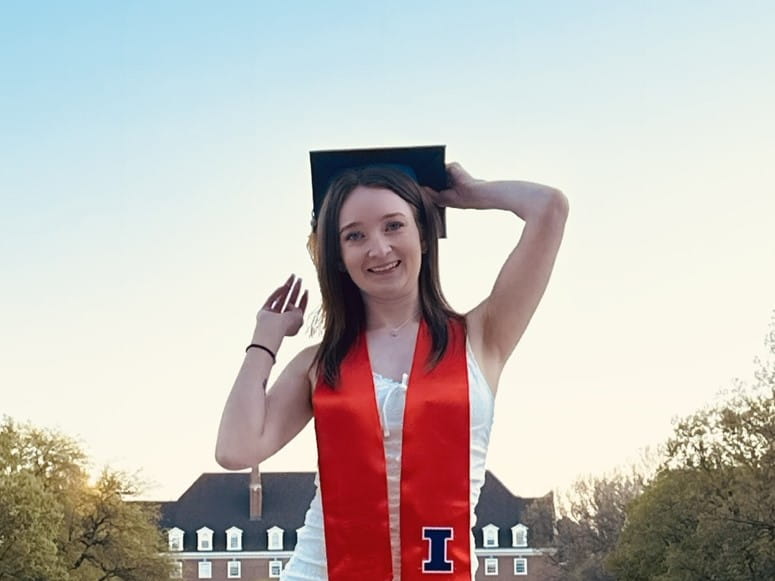
Jenna, originally from Canton, Ohio recently graduated from John Carroll University in Cleveland, earning her undergraduate degree in biology in May 2024. She decided to step out of her comfort zone for her graduate studies, applying exclusively to larger schools, which ultimately led her to the University of Illinois and the Master of Veterinary Science (MVS) program.

What drew Jenna to Illinois was the MVS program’s in-person option, the one-year duration, and its comprehensive curriculum, offering a broad overview of veterinary medicine. She wanted a concise program that would prepare her for vet school while allowing her to explore different areas of the field.

The in-person program has exceeded Jenna’s expectations. With a cohort of just 10 in-person students and over 100 online peers, the small class size fosters close connections with professors. “They do try to go above and beyond for us,” she says. Faculty members value the cohort’s commitment to attending in person, frequently going the extra mile by introducing innovative courses and professional development workshops.

Jenna appreciates the opportunity to engage in meaningful, face-to-face interactions, something she missed during the pandemic. “I learned from COVID that online learning wasn’t for me,” she admits. “I knew I needed an in-person program to thrive.”

Jenna became a student ambassador unexpectedly during a casual conversation with a classmate and Dr. Jim Lowe, the Associate Dean of Online Programs and Extension. “We had compliments and critiques, and he listened to those,” she says. “It was really nice to see that someone was listening to our feedback and actively making changes.” Her honest feedback about the program led to her selection for the role. As an ambassador, Jenna promotes and supports the MVS program through marketing initiatives, provides constructive feedback for improvement, and shares insights with prospective students.

“We’re here to give honest answers, not just what someone might want to hear,” Jenna explains. “We know students are making an investment, and it’s important they find the right fit.” She’s excited to share her experiences, whether answering questions about the program or giving tips on campus life, housing, and dining.

Living in Sherman Hall, Jenna enjoys the convenience of being on campus and regularly explores. Her favorite place to study is the veterinary medicine library, a quiet spot with beautiful views where she feels surrounded by like-minded individuals. Outside of academics, Jenna stays active by playing pickleball and practicing at local parks. She’s an avid reader and frequents the ARC gym, balancing her academic responsibilities with her personal interests.

Jenna plans to take a year off after completing the MVS program to gain more experience before applying to veterinary school. Her goal is to attend vet school and explore her interests in equine medicine, though she remains open to other specialties.

If you’re interested in the MVS program or want to talk with an MVS Student Ambassador, reach out here.

Return to News and Media

In the Press: Instructor Spoke With Student Doctor Network About the MVS Degree Program

Student-Doctor Network November 7, 2024– Dr. María Juárez Byrd spoke with Student Doctor Network about the University of Illinois Vet Med Master of Veterinary Science Program. She is an exotic and small animal veterinarian and an Instructor for the University of Illinois Urbana Champaign Certificate of Veterinary Science (CVS) and Master of Veterinary Science (MVS) programs. She discusses how the MVS may be part of a student’s journey to veterinary school or other career paths.

“Our programs help transition students to the intensity of veterinary school courses with an active focus on reducing the stress of evaluations, encouraging students to enjoy the learning process while they develop the critical thinking skills required to excel in graduate or professional school. Students are tasked with learning anatomy, physiology, and pathophysiology by working through cases of real patients and clients. Beyond mastering foundational knowledge of anatomy and physiology, the students practice communication skills, spectrum of care, and clinical reasoning required of veterinary professionals.”

Dr. María Juárez Byrd

https://www.studentdoctor.net/2024/11/07/ask-the-professional-university-of-illinois-vet-med-master-of-veterinary-science-program

Return to News and Media

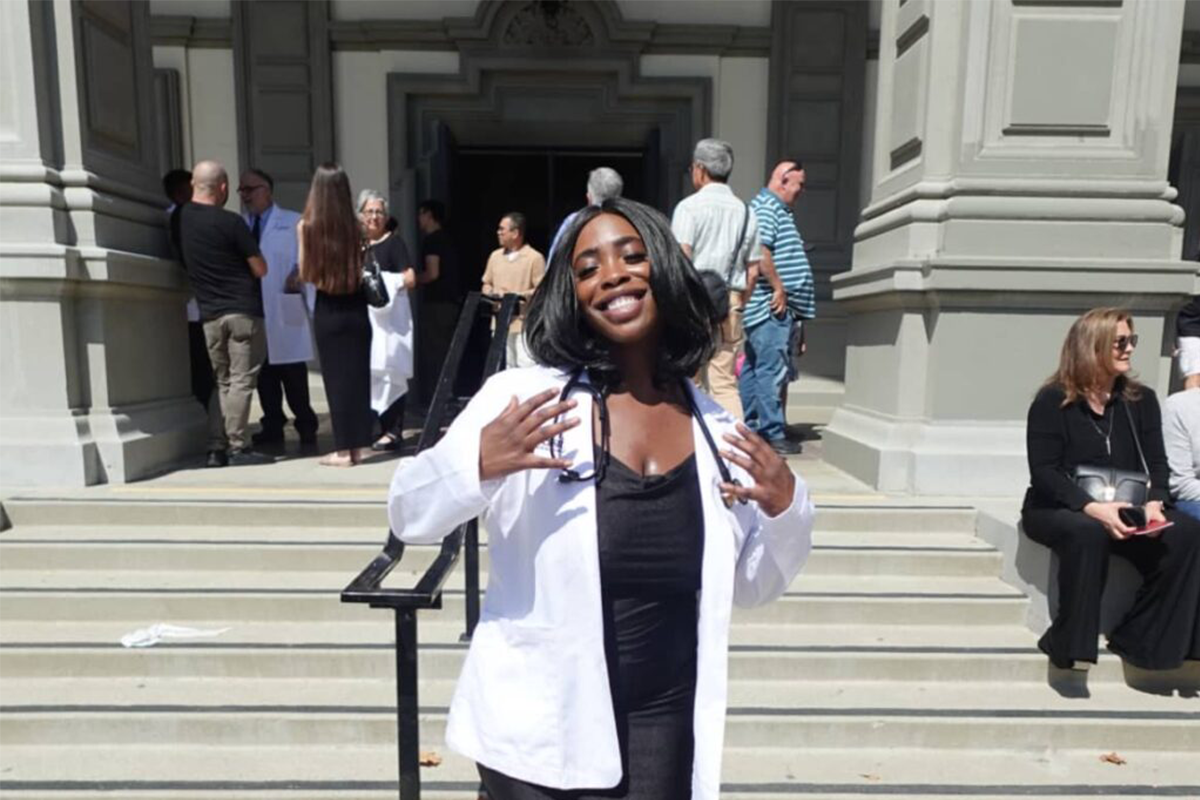
Shabria’s Resilient Journey to Becoming a Veterinarian

Shabria grew up in Norfolk, Virgnia, a small and relatively low-income area. There were many stray cats and dogs running around that she would take home, much to her mother and grandma’s dismay. “It’s always been natural for me to see an animal outside and talk to it like Dr. Doolittle,” she jokes.  

While much of her family had a natural inclination towards the arts, she always felt a deep connection with animals. Her love for animals at a young age set her down a path in veterinary medicine to develop the skills and experiences necessary to turn that passion into a profession. 

The journey was far from easy. “It was trial by fire, for sure,” she says about the process of applying to veterinary school multiple times. This year marked her fifth attempt, and with each rejection came a deeper understanding of herself and her dreams. “The hardest part of the journey was letting it go,” she says. “I needed to keep getting rejected until I could figure out how to be okay if I didn’t become a veterinarian.”  

Despite advisors and instructors in her field suggesting she pursue alternative career paths such as human medicine, Shabria remained steadfast. She contemplated her options but ultimately decided that her journey wasn’t over yet. “Having the perseverance to say, ‘This doesn’t feel finished yet,’ was crucial.” 

A turning point for her was when she discovered the Certificate in Veterinary Science (CVS) degree program, a certificate program within the Illinois College of Veterinary Medicine specifically designed for aspiring veterinary students. “It was like a spark,” she says about joining the program. “I just needed to be in the right environment.” The CVS program offered her a chance to learn in a supportive atmosphere that felt like a perfect fit. It was here that she experienced a profound shift in her approach to education and personal growth.  

Prior to joining the CVS program, Shabria found it difficult to separate her worth from getting accepted into veterinary school, having been rejected by multiple schools throughout the years. “Once I finally let that tie go, I could really embrace how I learned, and I learned that through the CVS program.” Instead of viewing rejections as a reflection of her self-worth and capabilities, she reframed it as an opportunity to build skills that would make her a stronger applicant. “Looking back, I think if I had been accepted into vet school not knowing what I do now, I wouldn’t have succeeded.” 

For Shabria, one of the most significant aspects of the CVS program was the faculty. “I had never met professors who truly cared in an intentional way,” she says. She remembers a challenging moment in class when she and her peers felt overwhelmed after a difficult exam. Instead of allowing the students to spiral into self-doubt, the faculty stepped in to mediate and reassure students that they can improve and will do it together. “I had never had a professor say, ‘Calm down, let’s do this together’,” she says. This encouragement helped her realize that her weaknesses were not impossible obstacles but opportunities for growth. 

After years of perseverance and toying with the idea of a different career path, she finally received acceptance into veterinary school. All her hard work — the various jobs, experiences, and education — had paid off.  This fall, Shabria will be attending veterinary school at Western University in Pomona, California. Moving from the East Coast to the West Coast, she is eager to gain more exposure in her field and determined to approach her studies with greater control over her learning and well-being.  

Shabria’s journey to veterinary school has been one of perseverance, growth, and dedication to her passion for animals. As she steps into this new chapter, she does so with the confidence that she is ready for whatever challenges lie ahead.


Learn more about the Certificate in Veterinary Science here and see what other students are saying about the CVS program.

Return to News and Media

Staff Spotlight: Jennifer Fugate

Meet the Staff!

Name: Jennifer Fugate

Titles: Academic Advisor and Program Coordinator

Quick note: Jennifer is an Academic Advisor and Program Coordinator for Online Programs and Extension at the College of Veterinary Medicine.

Tell us about your background!

I grew up in McHenry County, Illinois. As a first-generation college student, I earned my Associate’s degree from Harper College before coming to the University of Illinois in 2014 to complete my Bachelor’s in Psychology—and I’ve been here ever since! Currently, I’m pursuing an EdM in Education Policy, Organization, and Leadership with a concentration in Diversity and Equity in Education. My professional journey at the University began as a Child Development Associate at a preschool within Family & Graduate Housing. Later, I transitioned to the Graduate College as a Degree Auditor, where I verified Master’s and PhD degree requirements, awarding degrees to thousands of students each semester. While I enjoyed working in higher education, I wanted a more student-facing role, which led me to my current position as the Academic Advisor and Program Coordinator for the College of Veterinary Medicine!

What are your special interests in your field of work?

I’m passionate about learning each student’s unique journey and understanding what has brought them to where they are today. Knowing their background and career aspirations allows me to tailor their path to success in a way that best suits them as individuals. Education isn’t a one-size-fits-all system, and I appreciate that in my role as an advisor, I have the opportunity to work with students on a personal level, supporting them every step of the way.

What’s your role in the College of Veterinary Medicine and what do you enjoy the most about it?

I help oversee the Master of Veterinary Science program for online and on-campus students. I provide academic advising services to help students pick courses each semester, outline their path to degree completion, and provide general academic support and policy guidance. I really enjoy getting to witness our student’s academic journeys with us from start to finish, starting as a prospective student all the way to graduating with a Master’s. I also always enjoy hearing how helpful and relatable our courses are to student’s and how they apply their knowledge to their careers!

What do you like to do in your spare time?

I have two little girls, Reyleigh (7 years old) and Noelle (4 years old), so my spare time is typically spent parenting! We love to have dance parties, play video games together, do lots of messy crafts, and read comics. We also recently got two kittens, Rukia and Toji, so our house is full of play!

Learn more about Jennifer here!

Return to News and Media

Dr. Chris Chase Introduces New Immunology Course to Master of Veterinary Science Program

For the past 30 years, Dr. Chris Chase has taught virology and immunology to undergraduate and graduate students across college campuses. This past summer, he collaborated with Dr. Brian Aldridge to teach a new 3-credit hour course in the Master of Veterinary Science (MVS) curriculum, VCM 515: The Dynamics of the Immune System in the Maintenance and Defense of Health, where he guided a cohort of 20 students through an immersive learning experience in immunology.

“Our approach from day one in the course was that immunity is a major variable in the maintenance of health,” Chase says about the direction he took with the course. Rather than teaching immunology from the classic approach of the three stand-alone tiers of immunity, he centered the course on how immunity is part of an integrated system that works together for positive and negative health outcomes. For practical applications to further students’ critical thinking and problem-solving skills, he integrated casework into the curriculum.

Throughout the course, students are expected to engage in both individual and group activities designed to further their knowledge on immunology. “If you want to understand more about the big picture of immunology and get more practical, hands-on experience problem solving about disease and health, this is the course for you,” Dr. Chase says. While the course is laden with information, students learn to integrate this information into productive discussion during live class sessions.

Sample a course lecture below, and learn more about our MVS program and curriculum here.


Learn more about the Master of Veterinary Science degree here and see what other students are saying about the MVS program.

Return to News and Media

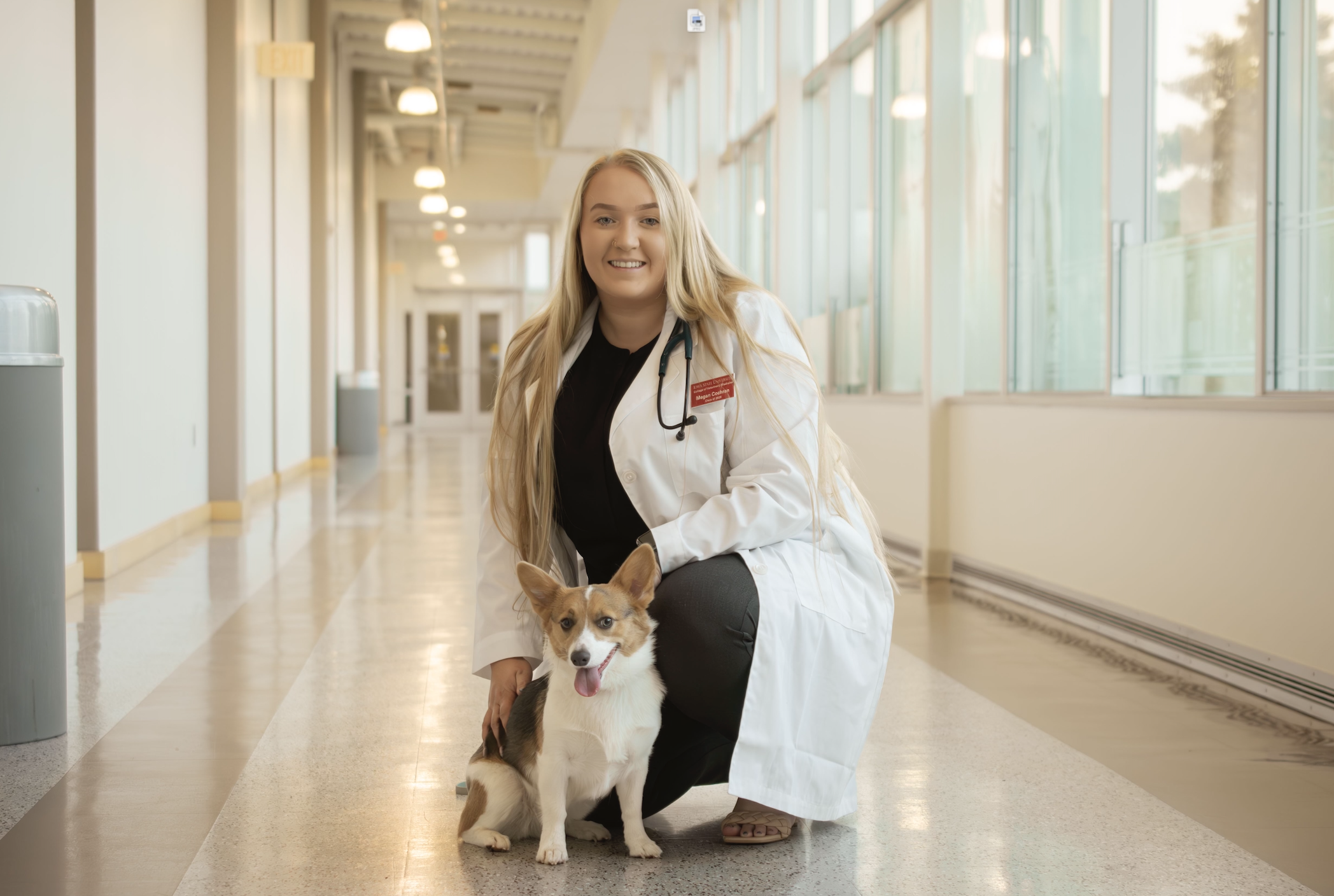
Megan’s Inspiring Journey to Veterinary School

From a young age, Megan’s love for animals was undeniable. Whether riding horses or caring for family pets, she always knew that her future lay in working with animals. “I’ve always known since I was little that I loved animals, and I just had to work with them,” Megan says. This passion carried her through undergrad, where she couldn’t picture herself pursuing any other career path.

When Megan first applied to veterinary school, she faced one of the biggest obstacles many students face when achieving their veterinary school dreams: a competitive GPA. “I didn’t have a GPA I was the proudest of,” she admits. But instead of being discouraged, she took immediate action, “I was like, ‘A lot of people don’t get in their first try, how can I improve for the next?’” This forward-thinking led her to enroll in the Master of Veterinary Science (MVS) degree program, a step in her journey that allowed her to enhance her academic credentials and deepen her knowledge in the field she loved.

The program offered her the flexibility she needed. She took it online and at her own pace, ensuring she could complete the program by the next application season. “I really liked that I could sit down with advisors and pick what kind of classes I wanted,” she says, appreciating the tailored approach of the program that allowed her to focus on large animal science. Megan also fondly remembers instructors from the MVS program who took a personal interest in her academic progress and the status of her veterinary school applications. Through her hard work and determination and the support of her new academic community, Megan saw a notable improvement in her grades, maintaining a high GPA in the MVS program.

During this time, she also travelled from upstate New York to Texas where she worked for Tom McCutcheon Reining Horses, a big name in the industry. “We had an outstanding roster of 12 stallions, including some of the best in the reining and AQHA industries,” she says. Her experience at Tom McCutcheon honed many of the skills she would need in veterinary school and her career, such as giving shots, monitoring horses’ health, and most notably, foaling out mares and working with the foals.

Despite her enriching experience in the field, the challenge of gaining additional veterinary experience was far from over. “For me, getting vet experience was hard, especially with COVID,” she says. She noted how difficult it can be as an unemployed student finding hours at a clinic, but she persevered and eventually landed a position as a veterinary assistant in a small animal clinic. The doctors employed there played a significant role in expanding her knowledge of her field. Ultimately, her hands-on experience allowed Megan to apply her MVS course content to real-world situations and vice versa.

Megan equates her experiences during the Master of Veterinary Science program with a different outcome in her second application to veterinary school, and this fall, Megan will be attending veterinary school at Iowa State University. While she is excited to start a career in veterinary medicine, she also looks forward to building up her clientele. Whether it’s the regulars who frequent the animal clinic she works at, or professionals in her field, Megan shares that “you get really close to the same people and their pets, and they kind of become your family.”

For future veterinary school applicants, Megan recommends documenting experiences and hours as you get them. “Everything you do counts in some way,” she says, but she also emphasizes that it’s not solely the hands-on experiences veterinary schools are searching for in their applicants. “They want to know you’re a person beyond wanting to be in vet med—your hobbies, things you can do outside of your career, having work-life balance.”

Megan’s journey to veterinary school is a testament to perseverance and passion. Her dedication to the field, despite the challenges along the way, will undoubtedly serve her well as she embarks on this new chapter at Iowa State University. 


Learn more about the Master of Veterinary Science degree here and see what other students are saying about the MVS program.

Return to News and Media

The Master of Veterinary Science Degree Program: Innovating Through the Capstone Course

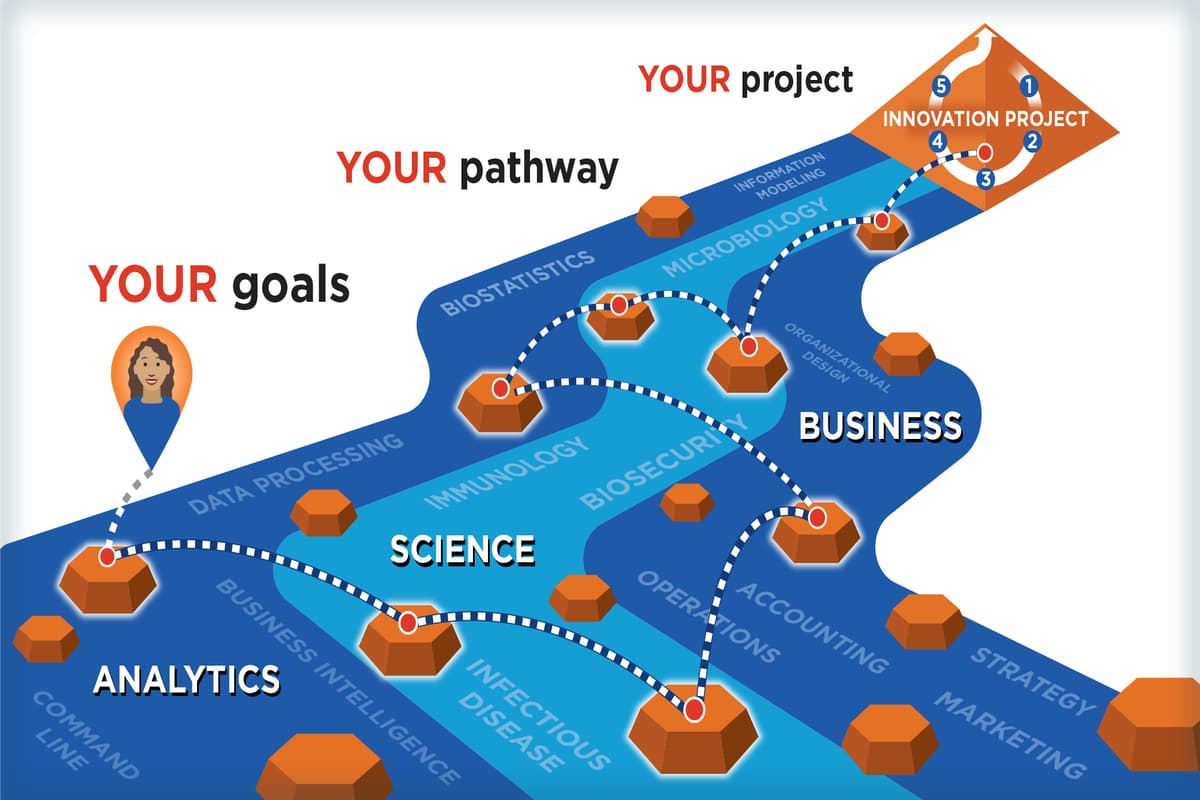
The Master of Veterinary Science degree provides students with a comprehensive and flexible program of interdisciplinary elective courses. The degree is designed to support animal health professionals at career stages in advancing to the next level. An essential component of the MVS curriculum is the Capstone course where students perform extensive research on a real-world problem through a rigorous series of checkpoints. 

Dr. Katherine Rutherford, an instructor for the MVS program who has overseen this past Capstone series, spoke on what students should expect and take away from their work in the two-semester-long project: “The Capstone course is an opportunity for students to have a research design challenge that lets them further develop a lot of different skills they have been learning and working on as they’ve moved through the MVS program.” Students begin by choosing a specific problem or challenge and then walk it through a structured, problem-solving tool that helps identify root causes, scope, and possible solutions. The last two iterations of the capstone project were delivered using the human-centered design (HCD) thinking process in collaboration with the University’s Siebel Center for Design. Siebel Center for Design has done a great amount of work integrating HCD into curriculums to create unique opportunities for students to design solutions to complex problems.   

The purpose of completing a capstone project is for students to harness their creativity and innovation by integrating theory, practical experience, research, data collection, analytical skills, and critical thinking into solving a real-world problem. Typically, students pursue a Master of Veterinary Science because they want to acquire knowledge and build up skills that help advance their careers. The capstone project is a way for each student to showcase what they learned to help move them forward. 

HCD unfolds through multiple phases: understand, synthesize, ideate, prototype, and implement which are done in an iterative process. Students learn how to define the problem, identify the root cause, have empathy for the end-user, and brainstorm solutions. The capstone is a challenge for the students to apply the critical thinking skills developed in the degree program and HCD is the vehicle used to help them through the project. Project final deliverables vary based on the project. While some projects will make it to prototyping and implementation, others will only utilize the first three phases of HCD (understand, synthesize, and ideate). 

The Master of Veterinary Science degree program allows for a customized curriculum based on the individual’s knowledge, skills, and abilities. A student who has 25 years of experience in the animal health industry will most likely need a project different than a student who is just entering the workforce.  

Students research their problem through literature reviews, stakeholder interviews, sampling, and process mapping before they reach the ideate phase where they explore possible conclusions. Rutherford emphasizes that the Capstone isn’t just about these technical components, but it’s about “getting out there and talking to people… That’s part of the human-centered part of this [design-thinking]. We want to be empathetic and focused on the humans involved in these problems as well.”  

After critically evaluating each of their potential solutions from many different criteria, students will measure the feasibility of putting their solution into action and what it may look like for an entity to implement in real life. This helps in narrowing down their solution to be real-world applicable. The result of this process is students developing and transforming their problem-solving skills while applying their knowledge to an issue in veterinary medicine. 

Applying problem-solving techniques to design solutions for complex problems is a key learning objective for the MVS degree program. However, it doesn’t stop there. One of the most important skills a professional can develop is the ability to communicate. Throughout the degree program and capstone project, students are challenged to communicate their project concisely and efficiently to stakeholders by distilling the problem into one problem statement, synthesizing the data collected, and proposing solutions through presentations. Several students in the program choose a problem within their workplace for their capstone project while others work in a group to solve a provided problem. The value students receive from the degree program is their confidence in using these skills and tools in the workforce and in their final deliverables to showcase their abilities.  

Students working in a group were intentionally organized into teams, all with diverse backgrounds to mimic real-life workplace culture. In organizing students into teams, they could work more efficiently and balance the workload the project demands. Rutherford adds, “You are also going to be much more creative and successful in finding your optimal solution when you’ve got more brains working on a problem.” 

“You are also going to be much more creative and successful in finding your optimal solution when you’ve got more brains working on a problem.”

Dr. Kate Rutherford

Andrew Johnson, a student who participated in the Capstone series this past year, began the MVS program immediately after completing his MBA in Accountancy at U of I. His project focused on job satisfaction and the lack of employees in veterinary clinics from his customer base in downstate Illinois.  

 Andrew works in pharmaceutical sales where he interacts with veterinarians across Illinois. “In my field, we work in teams,” he says. “Whether in person or virtual, via Teams or Zoom, this is just how business is conducted now–in groups.” Time management and communication are his most refined skills from working on the Capstone project.   

Much of the project demands students to take control of their own learning experience. In doing so, they learn the value of hitting deadlines, peer reviewing, and working closely with their classmates, both within and outside their assigned teams. “I learned as much from my classmates as I may have learned from instructors”, Andrew says. He adds, “I learned a lot about the way people are practicing medicine and animal husbandry from some of my classmates.” This opportunity to learn from peers provides students with a richer educational experience that goes beyond the scope of the Capstone project itself.  

The MVS program, and specifically the Capstone, aims to equip students with a skill set that will best serve them throughout their careers. Students completing this program will learn valuable, problem-solving applications, and communication skills. 

To learn more about the Capstone and MVS program, click here.  

Return to News and Media
Staff Spotlight: Sarah Reed

Meet the Student Intern!

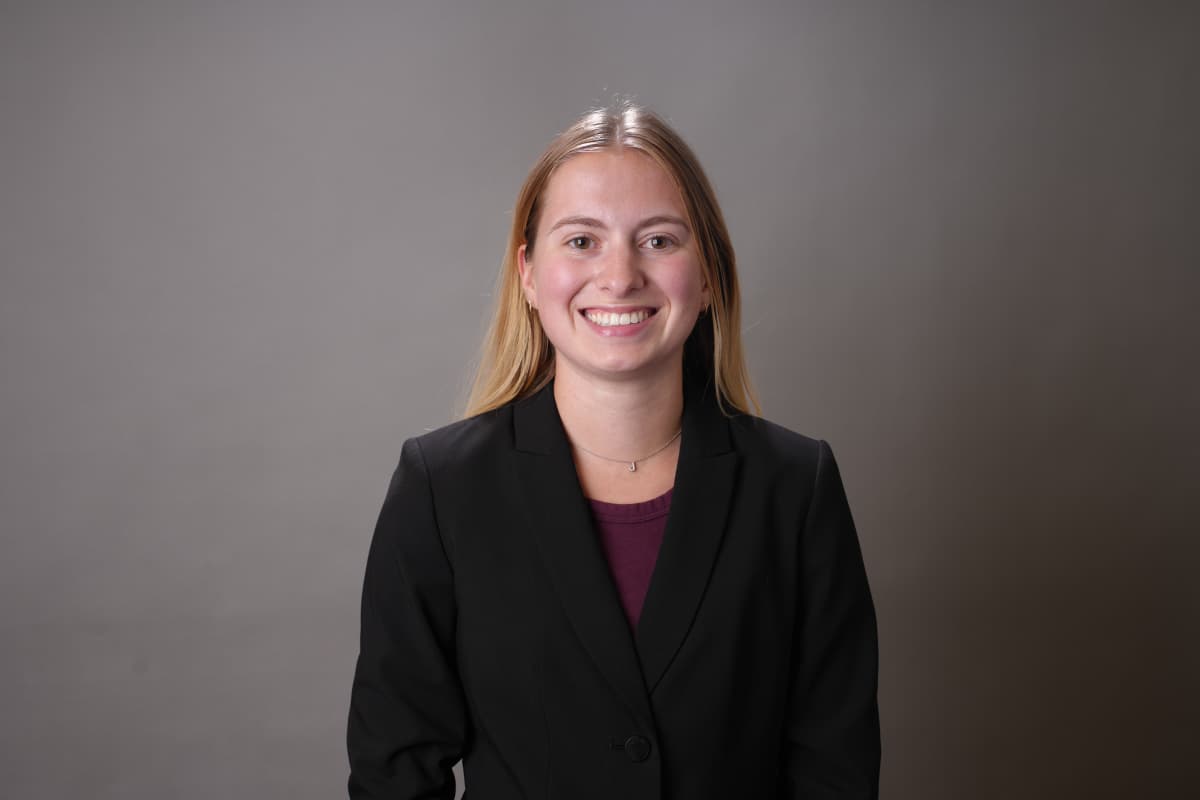
Name: Sarah Reed

Title: Online Programs and Extension Student Communications Intern

Sarah Reed joined our team in June of 2024 as a summer internship to help create and execute our communication strategy. Sarah will be continuing as a member of our team in the fall of 2024 when she returns to campus.

Tell us about your background!

I’m a rising Junior majoring in Marketing and Information Systems in the Gies College of Business. Before going to college, I took a gap year, where I spent my time working at a coffee shop in my hometown and applying to college. This summer, I’m working at that same coffee shop as well as working remotely in my communications position. In my free time, I like to read, collage, and sell clothes online!

What’s your role in the College of Veterinary Medicine and what do you enjoy the most about it?

I’m a Communication Intern for the Online Programs and Extension team at the College of Veterinary Medicine. This summer, I’ve created social media templates and posts, written articles for the OPE website, composed marketing emails, and more. I’ve enjoyed getting to grow in this position and working alongside such a passionate group of individuals. I’m excited to continue my position through the fall and finally meet everyone in person!

What do you like to do in your spare time?

I’ve worked at a coffee shop on and off for about three years now and love to make coffee and try new drinks! I also enjoy reading, thrifting, collaging, and writing reviews on Letterbox for all the movies I watch. When I’m at school and have free time, I love to spend time with my friends, whether it’s just having a relaxing night in or going to a sports game.

Return to News and Media

From Aspiring Vet to Vet Student: Julia’s Journey at the University of Illinois

August 9, 2024 – Julia Bellefontaine has dreamt of pursuing a career in veterinary medicine since she was a young girl. Her journey to veterinary school has included hands-on animal care experience, academic commitment, and valuable professional skills development. She has worked with a variety of animals, including feral cats, horses, and shelter animals. After working as a kennel attendant, she eventually progressed to a role as a receptionist at an animal clinic.  

It was in her position at the animal clinic that she was significantly able to hone her communication skills by working closely with clients and veterinary professionals. “That was the job where I started getting more used to people and figuring out how to talk to them,” she says. “[Veterinary Medicine] is not just about working with animals—it’s hugely people-related.” 

Julia’s dedication to diversifying her experiences played a crucial role in enhancing her veterinary school application. One standout experience that strengthened her application was her role as a teaching assistant during her undergraduate studies at the University of Illinois. By advocating for and securing this position, she became the first undergraduate TA for her professor, showcasing her initiative and leadership skills. 

The application process for veterinary school is known for its rigor and competitiveness. “You have to list everything you’ve done,” Julia says, emphasizing the importance of a comprehensive application. “I listed everything, even pet- sitting or pet ownership, anytime I interacted with a person in an animal clinic. I put those jobs in there because I feel it’s important, and I think the one thing they’re looking for is a well-rounded person.” 

Julia decided to take a gap year before applying to veterinary school to gain more experience and secure stronger letters of recommendation. During this time, she participated in the Certificate of Veterinary Science program at the University of Illinois College of Veterinary Medicine.  “It was really helpful—they did case studies with us which is really beneficial when going into vet school because it’s such a huge workload,” she says about the program. “They did a really good job with applying each case to what you would do in real life.”  

The Certificate in Veterinary Science (CVS) is a program designed to help deepen the understanding of veterinary concepts and prepare students for veterinary school through advanced courses and mentorship. When she applied for veterinary school the following year, Julia secured a more personalized letter of recommendation from a mentor within the program.  

Julia applied to six veterinary schools and secured an interview at Illinois. Throughout her interview process, she was able to showcase her skillset acquired from her past and current experiences. Despite initially being waitlisted from Illinois, that did not stop her from building upon her existing skillset. She applied as a wildlife intern at a rehabilitation center to work with new species and learn more about one of her interests, zoo medicine.  

Julia was later pulled off the waitlist and is attending veterinary school at the University of Illinois College of Veterinary Medicine in the Fall of 2024. She looks most forward to the hands-on learning opportunities available that set Illinois apart from other veterinary schools with clinical rotations in her first year, unlike many other schools that begin in the third or fourth year. She knows from her experience in the CVS program that integrating classwork with real-world learning is the best way for her to learn. 

Looking ahead, Julia is enthusiastic about managing patient care, particularly emergency care, and tackling the unique challenges of veterinary medicine. “I think what’s interesting about vet med is you’re challenged. You can’t talk to your patients and your patients can’t talk to you,” she says. “It’s like putting puzzle pieces together when you’re diagnosing them.”  

Her advice to aspiring veterinary students is to avoid comparison and focus on their unique journey, “Every school is looking for something different in an applicant. Focus on what you’re doing and make it individualistic.”  

Julia has fostered her education and many applicable skills at the University of Illinois, having graduated in 2023 and participating in the CVS program. Her journey reflects a blend of passion, dedication, and initiative, making her a standout applicant and future Class of 2028 student at the University of Illinois College of Veterinary Medicine.  

Read more here about Julia’s experience as a student in the Certificate of Veterinary Science program.

Return to News and Media

Staff Spotlight: Ying Xiu

Meet the Staff!

Name: Dr. Ying Xiu

Titles: Instructional Designer

Dr. Xiu is an instructional designer for the Veterinary Medicine Online Programs and Extension.

Tell us about your background!

I came to the United States in 2012 from China. I then received my Ph.D. in Educational Technology from Oklahoma State University in May 2018. I have been at the University of Illinois since then.

What are your special interests in your field of work?

My research passion revolves around harnessing the power of technology to enhance the learning design process, particularly in its ability to cater to the needs of a diverse student population.

What’s your role in the College of Veterinary Medicine and what do you enjoy the most about it?

I am an instructional designer. I enjoy the moment that I meet students or instructors’ special needs using technology to improve the course.

What do you like to do in your spare time?

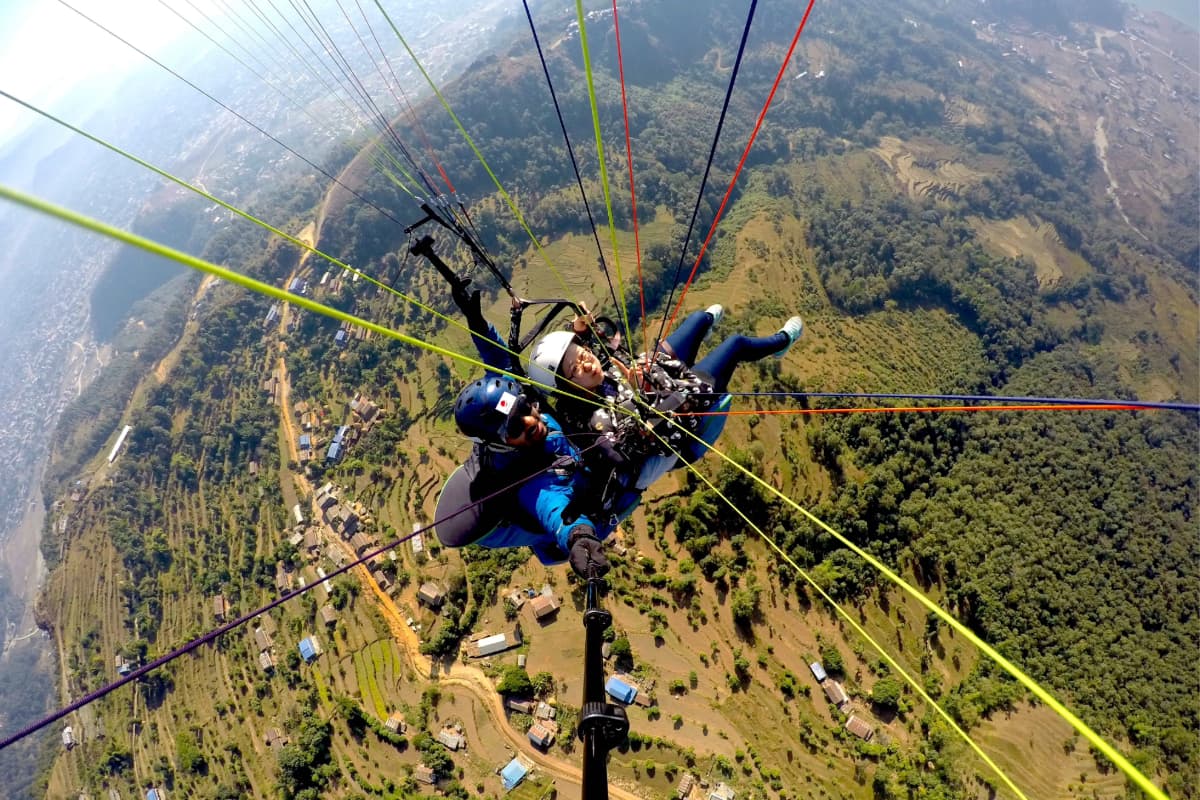
I don’t have spare time anymore since I had my son, Matthew. The attached picture was me paragliding in Nepal.

Learn more about Dr. Xiu here!

Return to News and Media
Graduate Programs
2938 Veterinary Medicine Basic Science Building
2001 S. Lincoln Avenue
Urbana, IL 61802
217-300-7439