Research
Research in the Won Lab focuses on understanding the autoimmune mechanisms that drive autoimmune myocarditis and on developing novel immunological approaches for its prevention, diagnosis, and treatment.
Join Our TeamResearch
Research in the Won Lab focuses on understanding the autoimmune mechanisms that drive autoimmune myocarditis and on developing novel immunological approaches for its prevention, diagnosis, and treatment.
Myocarditis is an inflammatory condition in the myocardium that can lead to inflammatory dilated cardiomyopathy, cardiac remodeling, fibrosis, and ultimately heart failure. The 10-year mortality rate can be as high as 40%. Current clinical management of myocarditis primarily focuses on reducing heart failure symptoms, and for patients with end-stage disease, heart transplantation is the only option. This highlights the urgent need for innovative strategies to effectively prevent and treat myocarditis.
Cardiac myosin is a well-known self-antigen associated with the development and progression of myocarditis in patients and animal models. In previous research, Dr. Taejoon Won uncovered that autoreactive T cells targeting cardiac myosin drive the development of immune checkpoint inhibitor (ICI)-associated myocarditis, a novel form of autoimmune myocarditis (Won et al., Cell Reports, 2022).
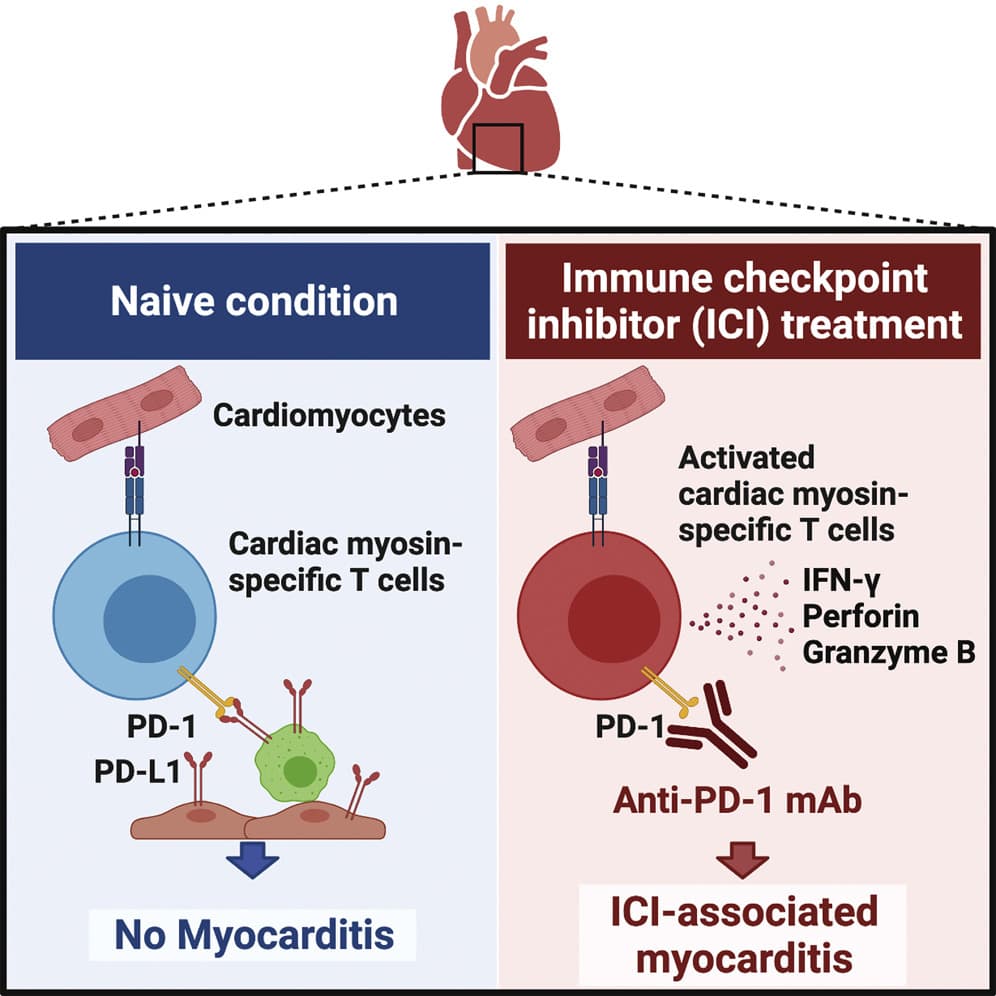
Based on Dr. Won’s previous finding, the Won Lab is currently investigating the pathogenic role of cardiac myosin-specific autoreactive T cells in other types of autoimmune myocarditis. The lab is also developing innovative strategies to reprogram the pathogenic role of autoreactive T cells into a protective one.
Research areas in the Won Lab:
Pathogenic role of cardiac myosin-specific T cells in lupus myocarditis.
Autoimmune conditions such as systemic lupus erythematosus (SLE) and antiphospholipid syndrome are strongly associated with myocarditis, but the underlying mechanisms remain unclear. The lab investigates how existing autoimmune conditions promote the generation of cardiac myosin-specific autoreactive T cells, potentially contributing myocarditis development.
Protective role of cardiac myosin-specific T regulatory (Treg) cells in autoimmune myocarditis.
Previous studies from Dr. Won have shown that cardiac myosin-specific T cells preferentially traffic to the heart and drive myocarditis development. Using this characteristic, the lab is engineering antigen-specific Treg cells as a cell-based therapy that can home to the heart and suppress autoimmune inflammation.
Comprehensive mapping of self-antigens and autoreactive T cells across organs.
The lab hypothesizes that each organ presents a unique repertoire of self-antigens that may be targeted by autoreactive T cells, driving organ-specific autoimmune disease. The lab is systemically identifying these self-antigens and autoreactive T cell clones that are particularly activated during immunotherapy.